The High-Temperature Reality: Why 80% of Landscaping Fails Before it Starts
Designing a garden for the 2026 climate requires a shift from aesthetic decoration to thermal engineering and biological resilience. To withstand sustained 100-degree heat waves, a landscape must prioritize deep root architecture, soil moisture retention, and thermal mass management through specialized mulch and permeable hardscaping. I always drill into my new crew members: if you don’t fix the soil grading and subsurface biology first, every plant you put in the ground is just expensive compost. Most homeowners see a dying plant and reach for the hose. By then, it is often too late. The plant is not just thirsty; it is suffering from cellular collapse because the soil temperature has exceeded the thermal threshold for nutrient uptake. In my 20 years of running a crew, I have seen thousands of dollars in nursery stock incinerated because the contractor ignored the hydrostatic realities of the site. We are no longer planting for the spring; we are building for the August furnace.
“High soil temperatures, especially those exceeding 95 degrees Fahrenheit, can significantly inhibit root growth and reduce the plant’s ability to transport water and minerals to the foliage.” – Texas A&M AgriLife Extension
The Physics of Heat-Resistant Soil and Grading
To survive a heat wave, your soil must act as a thermal buffer. This starts with subsurface decompaction. Most residential yards are compacted to a density that rivals concrete, preventing oxygen and water from reaching the rhizosphere. You need a minimum of 12 inches of friable soil. We use a mechanical broadfork or a subsoil ripper to break the hardpan without flipping the soil profile. This preserves the existing mycorrhizal networks. Mycorrhizae are the secret weapon for 2026. These fungi extend the root system’s reach by up to 100 times, scavenging for water in micro-pores that a standard root hair cannot penetrate. If your soil is dead, your plants will die. It is that simple. Don’t skip the soil test. If your pH is off, the plant cannot regulate its stomata correctly, leading to rapid transpiration and death. Use organic matter—specifically leaf mold or aged compost—not that bagged dyed mulch from the big-box stores. Dyed mulch is often shredded construction waste and can actually reflect heat back onto the plant stems.
The Hardscape Heat Sink: Managing Surface Temperature
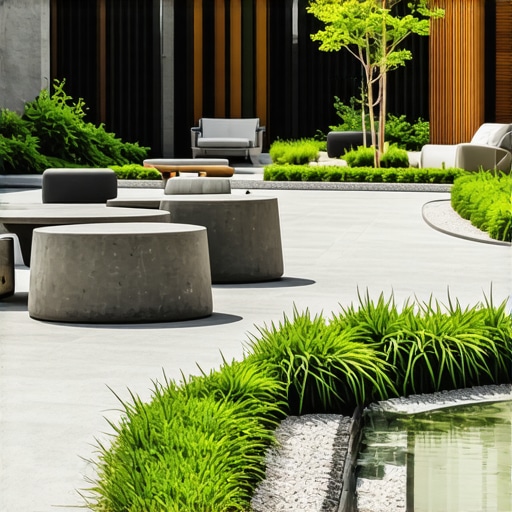
Hardscaping is the most overlooked element of heat management. Standard concrete and dark asphalt act as massive thermal batteries, soaking up UV radiation all day and radiating it back into your garden at night. This prevents the ambient temperature from dropping, which the plants need to recover. Permeable paving systems are the solution. By using a 6-to-8-inch base of #57 stone topped with #8 aggregate and permeable pavers, you allow the earth to breathe. The moisture stored in the sub-base evaporates through the gaps, creating a localized evaporative cooling effect. It lowers the surface temperature by as much as 15 degrees. We also use geotextile fabrics to separate the subgrade from the base material, ensuring that the drainage remains functional for decades, not just seasons. If you are building a retaining wall, you must account for the hydrostatic pressure that builds up during the flash droughts and sudden downpours common in our changing climate.
“Permeable interlocking concrete pavements (PICP) reduce heat island effects by allowing evaporation of moisture from the underlying soil and base, cooling the surrounding air.” – Interlocking Concrete Pavement Institute (ICPI)
How much modified gravel do I need for a patio base?
Calculating your base material is a matter of civil engineering and compaction ratios. For a standard pedestrian patio, you need a minimum of 4 to 6 inches of compacted 21A or 3/4-inch modified gravel, which usually requires ordering 1.3 times the loose volume to account for settling. To calculate this, multiply your square footage by the desired depth in feet, then multiply by 1.3 to get the total cubic feet needed. Divide by 27 to find the cubic yards. Don’t eyeball this. If your base is thin, the first freeze-thaw cycle or extreme heat expansion will heave your pavers. Use a vibratory plate compactor. The machine should literally bounce off the ground when you hit peak compaction. Anything less is a failure.
The 2026 Plant Palette: Biology Over Aesthetics
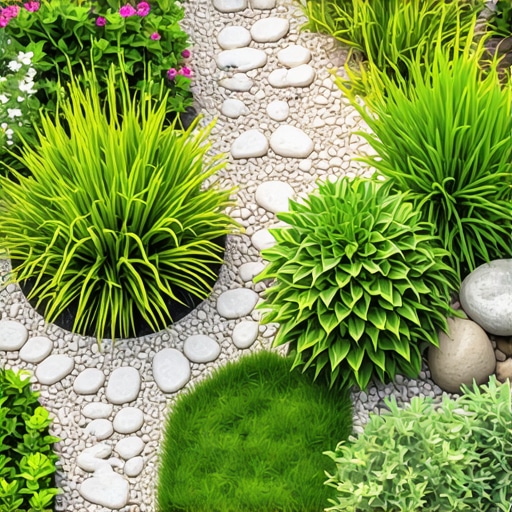
In 2026, we are moving away from water-hungry turf like Kentucky Bluegrass and toward heat-tolerant cultivars and native perennials. You need plants that have evolved for the “flash drought” cycle. Think Echinacea, Asclepias, and deep-rooted bunchgrasses like Schizachyrium scoparium (Little Bluestem). These plants don’t just sit there; they drill down. Little Bluestem can send roots 5 to 8 feet deep. That is where the water is. When the surface is 100 degrees, the soil 4 feet down is a cool 65 degrees. We also implement bioswales to capture every drop of rain. Instead of piping water to the street, we pipe it to a depressed garden area filled with engineered soil (60% sand, 20% compost, 20% topsoil) that filters the water and recharges the groundwater table. It’s a closed-loop system.
| Feature | Traditional Landscaping | 2026 Heat-Ready Design |
|---|---|---|
| Soil Approach | Surface tilling / Synthetic fertilizer | Deep decompaction / Mycorrhizal inoculation |
| Mulch Type | Dyed wood chips (2 inches) | Arborist wood chips or leaf mold (4 inches) |
| Irrigation | Overhead spray (high evaporation) | Subsurface drip / Smart weather controllers |
| Hardscape | Solid concrete (heat sink) | Permeable pavers (evaporative cooling) |
| Plant Choice | Ornamental hybrids | Deep-rooted natives / Heat-tolerant cultivars |
What are the best heat-tolerant plants for 2026?
The best heat-tolerant plants are native species with high xeric ratings and physiological adaptations such as silver foliage or waxy cuticles that reflect sunlight. Species like Artemisia, Sedum, and Agastache are essential because they maintain their structural integrity even when transpiration rates peak. Silver-leaved plants, like Stachys byzantina, actually have tiny hairs that trap moisture against the leaf surface and reflect UV rays. This isn’t just about looks; it’s about survival. Avoid planting in the heat of July. Your survival rate will drop by 60%. Plan your installs for late fall or early spring to allow the root flare to establish before the 100-degree threshold is hit.
- Step 1: Soil Test. Know your pH and cation exchange capacity (CEC).
- Step 2: Grade for Drainage. Ensure water moves away from foundations but stays on the property.
- Step 3: Subsoil Decompaction. Use a subsoiler to break the hardpan at 12-18 inches.
- Step 4: Install High-Efficiency Irrigation. Drip lines should be under the mulch, not on top.
- Step 5: Apply 4 inches of organic mulch. Maintain the “donut” around tree trunks to avoid root rot.
- Step 6: Monitor Soil Moisture. Use a tensiometer, not your finger.
The “settling in” period for a heat-ready garden is roughly 24 months. During the first year, you will need to supplement water, but the goal is water independence. By year three, the roots should have reached the deeper soil horizons. Expect some leaf scorch in the first season; the plant is diverting energy to the roots. Don’t panic and over-fertilize. Synthetic nitrogen forces rapid, weak top growth that the roots can’t support during a heat wave. It will rot. Keep it lean, keep it deep, and trust the engineering. This is how you build a landscape that lasts a century, not just a season. Forget the mow-and-blow guys. Build for the dirt, and the garden will follow.