How to create a woodland garden in the shade
Engineering the Understory: Why Planning Trumps Planting
To create a woodland garden in the shade, you must first perform a site-wide hydrological and soil analysis to address light penetration, soil pH, and drainage issues. Successful woodland gardening requires mimicking the natural stratification of a forest, moving from a high canopy to an understory layer, and finally to the herbaceous ground layer. I always drill into my new crew members: if you don’t fix the soil grading first, every plant you put in the ground is just expensive compost. I have seen too many rookies throw five-gallon ferns into compacted clay and wonder why the plants mummify within three months. It is not about the green; it is about the brown. If the soil biology is dead, the garden is a graveyard. We start with the geology. We look at how the water moves across the property during a two-inch rain event. If you have standing water, you don’t have a garden; you have a breeding ground for root rot. We use transit levels to check the slope. A 2% grade away from the home is the minimum. If we are building a woodland garden on a slope, we are looking at terracing or dry creek beds to manage hydrostatic pressure. This is engineering, not just aesthetics. Don’t skip the site prep. It will fail.
The Forensic Analysis of Shade and Soil Chemistry
Before buying a single hosta, you need to understand the physics of your shade. Is it high-dappled shade from mature oaks, or is it the deep, sterile shade of a north-facing wall? We measure light in foot-candles or PPFD (Photosynthetic Photon Flux Density) because ‘partial shade’ is a marketing term, not a scientific measurement. Most woodland species require a specific fungal-to-bacterial ratio in the soil that differs drastically from turf grass.
“Woodland soils are dominated by fungal networks rather than the bacterial dominance found in tilled fields or standard suburban lawns.” – Soil Biology Primer (USDA-NRCS)
This fungal dominance is what facilitates nutrient exchange between mature trees and new plantings. When you use high-nitrogen synthetic fertilizers, you kill these mycorrhizal networks. Stop it. Use composted leaf mold instead. We aim for a soil organic matter (SOM) content of at least 5-8% for woodland environments.
How do I prepare soil for a woodland garden?
Soil preparation for a woodland garden involves de-compacting the earth to a depth of 12 inches and incorporating organic leaf mold or composted pine bark to lower pH and increase porosity. Do not use a rototiller if you are working under the drip line of existing trees. You will sever the feeder roots. Use an air-spade or a hand fork to gently incorporate amendments. We are looking for a bulk density of less than 1.3 g/cm3 to allow for gas exchange.
| Plant Category | Light Requirement (Foot-candles) | Preferred Soil pH | Root Depth (Inches) |
|---|---|---|---|
| Canopy Trees | Full Sun (5000+) | 5.5 – 6.5 | 18 – 36 |
| Understory Shrubs | 1000 – 2500 | 5.0 – 6.0 | 8 – 12 |
| Herbaceous Perennials | 200 – 800 | 5.5 – 6.5 | 4 – 8 |
| Ephemerals | Varies (Spring Sun) | 6.0 – 7.0 | 2 – 4 |
The Structural Hardscape: Paths and Drainage
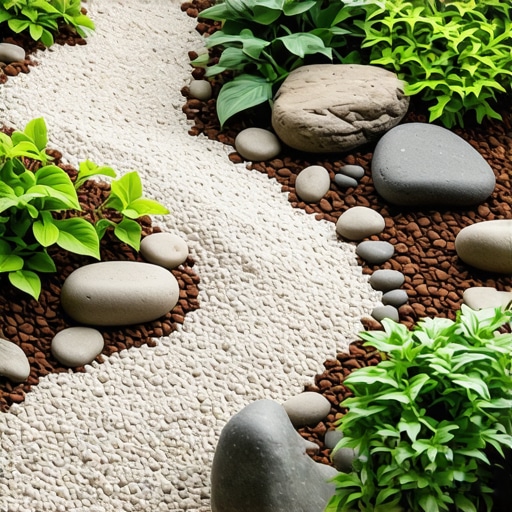
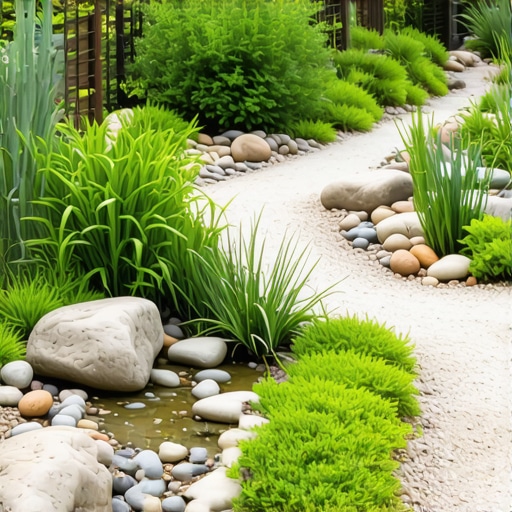
In a woodland setting, hardscaping must be permeable. We don’t use poured concrete here. It interferes with the root respiration of the very trees providing the shade. We use reclaimed wood chips, flagstone with wide gaps, or permeable gravel. When we install a path, we excavate 4 inches, lay down a non-woven geotextile fabric to prevent soil mixing, and then backfill with 1/4-inch minus crushed stone. This allows water to infiltrate the soil rather than sheeting off and causing erosion. If the site has a high water table, we install a French drain system using 4-inch perforated PVC (not the cheap corrugated stuff) encased in a 12-inch wide trench of #57 stone. Drainage is the difference between a thriving ecosystem and a stagnant swamp.
How much modified gravel do I need for a path base?
For a standard 3-foot wide woodland path with a 4-inch depth, you will need approximately 1 ton of modified gravel for every 20 linear feet. Always factor in a 20% compaction rate when ordering materials to ensure you hit your finished grade.
The Planting Protocol: Root Flares and Hydration
Planting too deep is the leading cause of tree and shrub mortality in professional landscaping. I see it every day.
“Proper root flare exposure is the single most critical factor in long-term plant health and structural stability.” – International Society of Arboriculture (ISA)
When we install understory trees like Cercis canadensis (Eastern Redbud) or Cornus florida (Flowering Dogwood), we find the structural roots and ensure they are at or slightly above the finished grade. If you bury the flare, you encourage adventitious roots that will eventually girdle and kill the plant.
- Step 1: Dig a hole twice as wide as the root ball but no deeper.
- Step 2: Score the sides of the hole to prevent ‘glazing’ in clay soils.
- Step 3: Remove all burlap and wire cages. No exceptions.
- Step 4: Backfill with native soil. Do not heavily amend the planting hole; it creates a ‘bathtub effect.’
- Step 5: Mulch with 2 inches of aged arborist chips, keeping the mulch 3 inches away from the trunk.
The Woodland Maintenance Cycle
Forget everything you know about lawn care. In a woodland garden, we leave the leaves. That leaf litter is your free, high-quality fertilizer. It breaks down to create the O-horizon of the soil profile. We only intervene to remove invasive species like English Ivy or Japanese Honeysuckle that can overwhelm the slower-growing natives. Irrigation must be delivered via drip lines, not overhead sprays, to prevent fungal pathogens like powdery mildew or leaf spot. We set controllers for deep, infrequent cycles—1 inch of water once a week—to force roots to penetrate deeper into the soil column. This makes the garden drought-resistant. Don’t baby them with daily light mists. It makes them weak. It makes them fail. Your goal is a self-sustaining system where the biomass recycled on-site provides the necessary nitrogen, phosphorus, and potassium. Check the pH every two years. Adjust with elemental sulfur if it creeps above 7.0. This is a long game. The garden you plant today won’t reach peak performance for five years. Be patient. Build the soil, and the plants will follow.