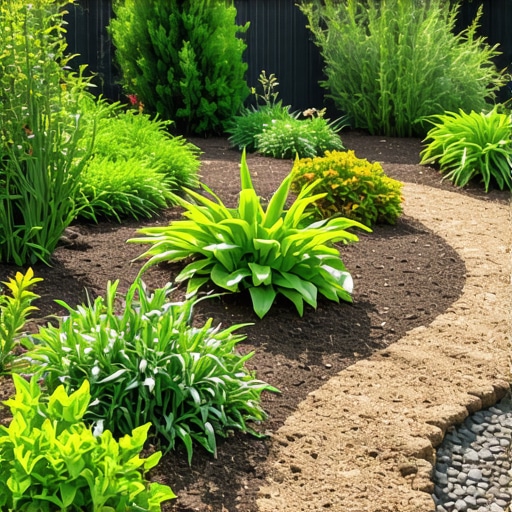
How to fix drainage issues in a flat yard
Fixing drainage issues in a flat yard requires precise site grading and the installation of subsurface management systems.
To fix drainage in a flat yard, professionals focus on creating artificial gradients through regrading, installing French drains to intercept subsurface water, or utilizing catch basins for surface runoff. Effective remediation hinges on the 1-2% slope rule, ensuring water moves away from the foundation and toward a viable discharge point. I recently got called out to tear up a $30,000 patio that was sinking because the previous contractor didn’t account for the heavy clay soil’s zero-percolation rate. The homeowner was literally watching their investment disappear into a soup of mud every time it rained. I walked onto the site, and the first thing I noticed wasn’t the pavers; it was the smell of anaerobic soil. When soil stays saturated for too long, oxygen is choked out, and the biology dies. That patio didn’t just ‘settle’—it drowned because the sub-grade was flat as a pancake and held water like a bathtub. You can’t fight physics with a pretty stone; you have to engineer your way out.
“A retaining wall doesn’t fail because of the stone; it fails because of the water trapped behind it.” – Hardscape Engineering Axiom
Why Flat Yards Fail: The Physics of Saturation
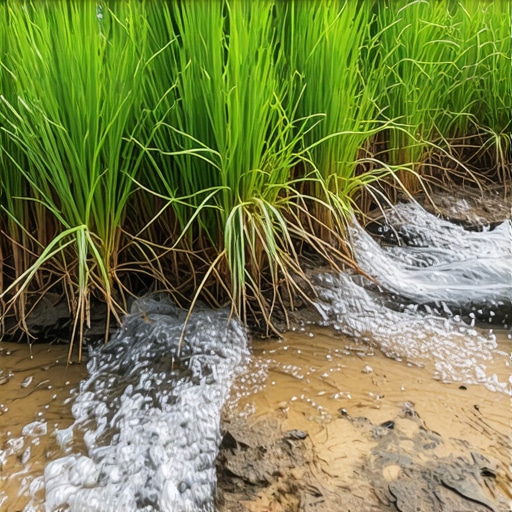
Water follows the path of least resistance, but in a flat yard, there is no path. This leads to hydrostatic pressure, where the weight of the standing water pushes against your home’s foundation or under your hardscape. If your soil has a high clay content, it won’t absorb the water; it just holds it until the entire root zone becomes a slurry. You need to understand your percolation rate. Dig a hole 12 inches deep, fill it with water, and see how long it takes to drain. If it’s still full after 4 hours, you have a major drainage failure. Most ‘pros’ will tell you to just throw more mulch at it. They’re wrong. Mulch absorbs water, then rots. It will rot. Don’t skip the engineering.
The Drainage Solution Matrix: Material and Labor Comparison
| Solution | Target Issue | Longevity | Engineering Complexity |
|---|---|---|---|
| French Drain | Subsurface water/High water table | 25+ Years | High (Requires 1% slope) |
| Catch Basins | Surface ponding/Runoff | 20 Years | Medium |
| Dry Well | Localized pooling | 15 Years | Medium |
| Regrading | General site slope | Permanent | High (Requires heavy equipment) |
How much modified gravel do I need for a patio base?
For a standard patio base on a flat yard, you need a minimum of 6 inches of compacted 21A or 57 stone to ensure adequate drainage and structural integrity. Calculate your volume by multiplying the square footage by the depth (in feet) and dividing by 27 to find the cubic yardage.
The Forensic Autopsy: Steps to Remediate a Saturated Site
First, we identify the low spots using a transit level. Guessing with your eyes is how you end up with a pond in your basement. We look for the high-water mark on the turf—that grayish, matted grass where the fungus has already taken hold. Step two is excavation. We don’t just dig a trench; we cut a V-shaped swale or a trench for a French drain. Use non-woven geotextile fabric. If you use the cheap woven stuff from a big-box store, it will clog with silt in three years. Guaranteed. Next, we lay 4-inch SDR-35 PVC pipe. Do not use that flexible corrugated black pipe. It’s trash. It collapses, clogs, and rodents love to nest in it. Use rigid PVC with the holes facing down. Yes, down. You want the water to rise into the pipe from the bottom as the water table climbs.
“Surface water runoff must be managed via a minimum 1 percent slope for turf areas and 2 percent for paved surfaces to prevent stagnant ponding.” – Civil Engineering Manual for Residential Grading
The Professional Drainage Checklist
- Verify utility lines via 811 before any excavation.
- Test soil pH and percolation rates before choosing plant material.
- Use 1-inch clean washed stone around all perforated pipes.
- Ensure discharge points (pop-up emitters) are at least 10 feet from the foundation.
- Compact the sub-grade to 95% Standard Proctor Density.
How do I stop my yard from being soggy after rain?
Stopping a soggy yard requires core aeration to reduce compaction and the installation of a subsurface drainage system like a French drain to move water away from low-lying areas. While the internet tells you to water every day, turf grass actually needs deep, infrequent watering—exactly 1 inch per week—to force roots to chase the water down. Shallow roots from daily watering make your lawn more susceptible to rot and drought. Don’t be the homeowner who drowns their own lawn. You need to manage the NPK ratios of your soil too. High nitrogen on a waterlogged lawn is a recipe for Pythium blight. It’s like feeding a sick patient a steak dinner. Fix the drainage first, then the chemistry. If you don’t fix the soil grading first, every plant you put in the ground is just expensive compost. I’ve seen $50,000 planting plans die in one season because the contractor didn’t understand USDA Hardiness Zones and hydrostatic pressure. Use native species like Taxodium distichum (Bald Cypress) if you have areas that stay wet, but for most of your yard, get the water out. Your foundation will thank you.