How to Stop Your Deck from Slipping When it Gets Wet
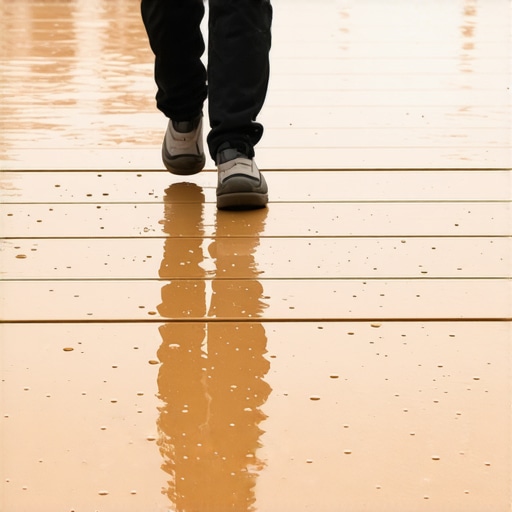
You step out with your morning coffee, and before you can even take a sip, your heel hits a patch of slime that feels like greased lightning. You are on your back before you know it. This is not a design flaw; it is a failure of maintenance and a misunderstanding of biological colonization. A wet deck becomes a hazard because of the intersection of physics and organic chemistry. Surface tension, hydrostatic pressure, and the growth of specific biofilms like Chlorophyta (green algae) turn a structural asset into a liability. Most contractors build for aesthetics, but I build for physics. If you do not manage the moisture and the microbial load, that wood or composite is just an ice rink waiting to happen.
The Anatomy of a Slip Incident
A slippery deck is caused by the accumulation of organic biofilms, standing water, and the loss of surface friction due to wood fiber degradation or improper sealing. To stop the slipping, you must address the moisture retention and physical texture of the surface using abrasive additives or mechanical drainage improvements.
I recently got called out to tear up a deck that the homeowner had just spent thirty thousand dollars on. The wood was beautiful, but the previous contractor had installed the boards tight against each other with zero gap. There was no room for thermal expansion, and more importantly, no room for water to evacuate. Every time it rained, the water sat in a pool, feeding a massive colony of black mold. By the time I got there, the structural joists were starting to rot because they were perpetually damp. It was a forensic nightmare of poor engineering. I had to explain that if you do not fix the soil grading and the board spacing, you are basically just building a very expensive petri dish.
“Slip resistance on external walkways is not merely a preference but a safety requirement governed by the coefficient of friction, which must be maintained above 0.5 on the COF scale to prevent pedestrian falls.” – International Code Council (ICC) Safety Standards
Why Wood and Composite Decks Lose Traction
The loss of traction on a deck is rarely about the material itself and almost always about what is living on top of it. Wood fibers are porous and trap moisture, providing the perfect substrate for algae and lichen. Even composite materials, which are touted as maintenance-free, can develop a thin film of pollen and dust that, when wet, acts as a lubricant. You need to understand the ‘Static Coefficient of Friction’ (SCOF). When a surface is dry, the SCOF is high. Add water and a layer of algae, and that number drops below the safety threshold for human gait.
How do I make my deck less slippery?
The most effective way to make a deck less slippery is to mechanically remove organic growth with a pressure washer set to a maximum of 1,500 PSI, followed by the application of a high-quality penetrative sealer mixed with a micronized slip-resistant additive like shark grip or aluminum oxide.
Mechanical and Chemical Remediation Strategies
You have three primary levers to pull: cleaning, coating, and physical modifications. Cleaning is not a one-time event. You need to use an oxygen bleach solution, not a chlorine bleach. Chlorine bleach (sodium hypochlorite) destroys the lignin in wood fibers, making the wood brittle and prone to splintering. Oxygen bleach (sodium percarbonate) lifts the organic matter without killing the wood itself. Once clean, you must decide on a traction strategy. Abrasive strips are the cheapest fix, but they look like a high-school gym. For a professional finish, I recommend a heavy-duty non-slip coating or a clear sealer with a grit additive.
| Method | Durability | Average Cost | Best For |
|---|---|---|---|
| Pressure Washing | Low (3-6 months) | $ | Annual Maintenance |
| Abrasive Grip Tape | Medium (1-2 years) | $$ | Stairs and Ramps |
| Grit-Infused Sealers | High (3-5 years) | $$$ | Whole Deck Coverage |
| Rubber Matting | Medium (2-3 years) | $$ | High Traffic Areas |
What is the best non-slip coating for wood?
The best non-slip coating for wood is a polyurethane or acrylic-based exterior sealer that contains suspended anti-skid particles, which create a microscopic sandpaper-like texture that provides mechanical grip even when submerged under a film of water.
“Surface drainage is the most critical factor in the longevity of any exterior timber structure; water must be shed away from the grain to prevent fungal colonization.” – USDA Forest Products Laboratory
The Engineering of Drainage and Airflow
If your deck is slippery, look underneath it. Poor airflow is the silent killer. If the area under your deck is a humid crawlspace with no ventilation, the wood will never truly dry. This constant state of dampness keeps the surface boards cool and moist, inviting algae to thrive. You should have at least 1/8 to 1/4 inch of spacing between deck boards. If your boards are butt-jointed, you need to use a circular saw to create gaps, or better yet, rip them up and reinstall them correctly. Don’t skip this. Without airflow, any chemical treatment you apply is just a temporary bandage on a gangrenous wound.
- Check board spacing for at least 1/4 inch gaps.
- Ensure the ground beneath the deck is sloped away from the house foundation.
- Clear out debris and leaves trapped between the joists.
- Trim back overhanging tree limbs to allow UV light to reach the deck surface.
- Install a French drain if water is pooling near the deck footings.
Maintenance Schedule for Long-Term Safety
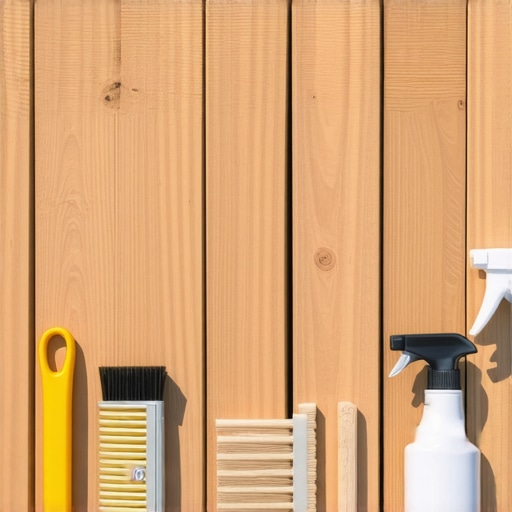
Safety is a process, not a product. You must commit to a seasonal inspection. In the spring, scrub away the winter grime. In the fall, ensure leaves aren’t rotting on the surface. If you see a green tint forming, that is your signal to act. Use a stiff-bristled brush and a pH-neutral cleaner. Avoid metal brushes as they can tear the wood fibers. A well-maintained deck should have water ‘bead’ on the surface. If the water soaks in, your protection is gone. It is time to recoat. I tell my crew: if you wouldn’t walk on it in socks, it isn’t safe for the client.

![Build a $500 Modern Kitchen Island for 2026 [DIY]](https://lawnmajesty.com/wp-content/uploads/2026/06/Build-a-500-Modern-Kitchen-Island-for-2026-DIY.jpeg)