Low-Voltage 2026 Path Lights: Top 5 Brass Fixtures
The Anatomy of a Failed Landscape Lighting System
I recently got called out to tear up a $30,000 patio that was sinking because the previous contractor failed to manage the subterranean environment. While excavating the base, I found the culprit for the dead lighting: cheap aluminum wiring and plastic fixtures that had literally melted under the summer heat of the hardscaping layers. The moisture trapped in the poorly compacted modified gravel had corroded the connections within two seasons. This is the reality of cutting corners. If you do not understand the physics of lawn care and the corrosive nature of soil minerals, you are just throwing money into a hole. Real professionals use solid brass because it is the only material that survives the hydrostatic pressure and chemical volatility of a living landscape. It does not just look better; it functions as a piece of electrical engineering designed for 20 years of service.
The Critical Engineering of Low-Voltage Brass Path Lights
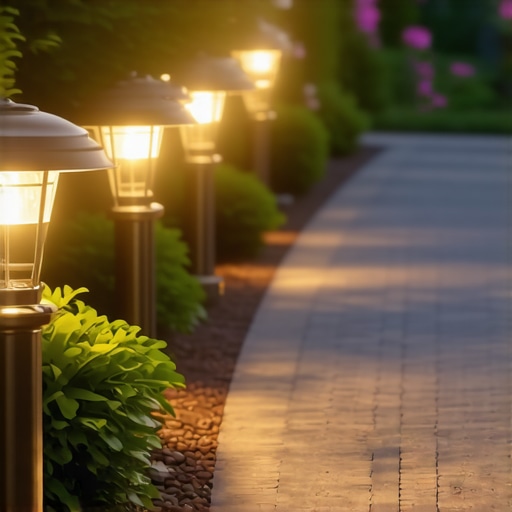
Low-voltage landscape lighting relies on solid brass fixtures to provide superior heat dissipation for LED chips while resisting the corrosive effects of fertilizers and soil moisture. These fixtures ensure consistent garden design aesthetics because they do not peel or crack under UV exposure, unlike powder-coated aluminum or poly-composite alternatives. Choosing the right fixture involves calculating voltage drop and understanding the 2700K to 3000K color temperature range for optimal visual clarity. High-end brass components are essential for maintaining a stable electrical load across long wire runs in complex residential hardscaping projects.
“A retaining wall doesn’t fail because of the stone; it fails because of the water trapped behind it. Similarly, a lighting system fails not because of the bulb, but because of the ingress of moisture at the connection point.” – Hardscape Engineering Axiom
How much modified gravel do I need for a patio base?
To calculate the required hardscaping base, you must measure the total square footage and multiply by the desired depth, usually 4 to 6 inches for walkways. For lighting, this base must be stable enough to support conduit without shifting, which could shear the 12/2 low-voltage wire. A standard calculation for a 100 square foot area at a 6-inch depth requires approximately 2.5 tons of modified stone. This stability ensures your brass path lights remain plumb and do not lean as the lawn care cycles of freeze and thaw occur throughout the year.
What is the best wire gauge for 12V landscape lighting?
Professional installers should never use anything less than 12/2 multi-strand copper wire for standard residential runs. For runs exceeding 100 feet or those drawing more than 100 watts, 10/2 wire is mandatory to prevent voltage drop. Voltage drop is the silent killer of LED performance. If your fixture at the end of the line receives only 10.5 volts instead of the required 12 volts, the driver will overheat and fail prematurely. Brass fixtures are particularly good at managing this thermal load, but they cannot compensate for poor wire gauge selection.
| Fixture Material | Expected Lifespan | Corrosion Resistance | Thermal Management |
|---|---|---|---|
| Solid Brass | 20+ Years | Extreme (Develops Patina) | Excellent |
| Cast Aluminum | 3 to 7 Years | Moderate (Prone to Pitting) | Good |
| Composite/Plastic | 1 to 3 Years | Low (Brittle) | Poor |
The Top 5 Brass Path Lights for 2026 Installations
1. The Heavy-Gauge Integrated Hat: This fixture features a 4-watt LED with a wide 12-foot spread. It is designed for high-traffic areas where lawn care equipment like string trimmers might strike the stem. The thick-walled brass construction absorbs impact without bending. 2. The Modern Brass Bollard: Ideal for contemporary garden design, this fixture uses a 360-degree aperture to illuminate hardscaping edges. It is heavy, often weighing over 4 pounds, ensuring it stays seated in the soil. 3. The Adjustable Hood Path Light: This allows the technician to shield light from the eyes of guests while focusing the beam on specific flagstone textures. 4. The Micro-Path Solid Brass: For tight garden beds where subtle illumination is required. It uses a G4 bipin bulb for easy maintenance. 5. The Hammered Brass Traditional: A classic look that develops a deep verdigris over time, perfect for established estates.
“Voltage drop at the fixture should never exceed 10 percent of the transformer output to ensure the longevity of the solid-state driver.” – Electrical Code Reference
- Verify total wattage does not exceed 80 percent of transformer capacity.
- Use heat-shrink waterproof connectors for every splice.
- Bury 12/2 wire at least 6 inches deep to avoid lawn care aeration damage.
- Check the Kelvin temperature consistency across all 5 fixtures.
- Apply dielectric grease to all bipin bulb sockets to prevent oxidation.
Professional Installation Protocols for Longevity
The installation of these brass fixtures must follow a strict engineering sequence. First, the 120V outlet for the transformer must be verified for ground-fault circuit interrupter protection. We then map the runs to minimize the total length, keeping each run under 100 feet when possible. We do not use the ‘pierce-point’ connectors that come with cheap kits. These are garbage. They create a hole in the wire insulation that allows water to wick up the copper, leading to black wire disease. Instead, we use direct-burial lug connectors or crimp sleeves with waterproof grease. The soil around the brass stem must be hand-tamped. Do not use a power tamper near the fixtures. You will snap the threads. We also ensure a 2-inch loop of extra wire is left at the base of each light. This allows for future garden design adjustments as plants grow and the canopy changes. A landscape is a living organism; your lighting must be able to move with it.
![Build a $250 Stone Retaining Wall [DIY 2026]](https://lawnmajesty.com/wp-content/uploads/2026/06/Build-a-250-Stone-Retaining-Wall-DIY-2026.jpeg)