Stop 2026 Soil Erosion on Slopes with This Jute Mat Hack
The Engineering Reality of Slope Stabilization
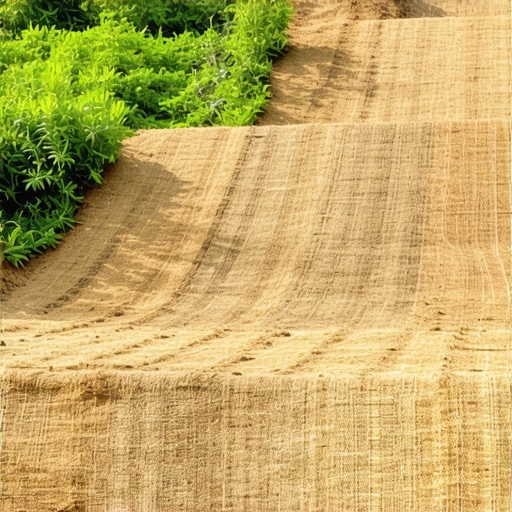
To stop 2026 soil erosion on slopes, professional landscapers utilize jute matting, a biodegradable textile that provides immediate mechanical stabilization while facilitating seed germination. This ‘hack’ involves trenching the mat at the crest and using U-shaped anchors to prevent hydraulic lift under the fabric. If you do not control the water, the water will control your yard. It is that simple. Gravity and hydrostatic pressure do not take days off, and your steep grade is essentially a slide for topsoil if left bare. Most homeowners make the mistake of throwing seed and straw on a 3:1 slope and wondering why their money ends up in the storm drain after the first spring rain. Straw has zero tensile strength. Jute, however, acts as a temporary exoskeleton for the earth. It holds the soil in place for 12 to 24 months—just long enough for deep-rooted fescues or native groundcovers to establish a permanent root matrix. Do not skip the prep work. If the grade is wrong, the mat is just a band-aid on a broken bone.
The Hardscape Autopsy: Why Slopes Fail
I recently got called out to tear up a $30,000 patio that was sinking because the previous contractor ignored a 15-degree incline just ten feet away. They thought they could hold back the earth with a decorative dry-stack wall and some mulch. They were wrong. Within two seasons, the hydrostatic pressure from water saturating that slope forced the soil to migrate downward, undermining the patio’s modified gravel base. The pavers didn’t just settle; they tilted toward the house, dumping water right into the foundation. This is the ‘death by a thousand cuts’ in landscaping. We had to excavate three feet down, install a proper French drain, and stabilize the entire uphill section using heavy-duty jute mesh and rip-rap at the toe. It was an expensive lesson for the homeowner. When you deal with slopes, you are fighting physics. You either win with engineering or lose with aesthetics. Most ‘mow-and-blow’ crews won’t tell you this because they don’t know how to read a transit level. They just see a hill; I see a structural liability.
“A retaining wall doesn’t fail because of the stone; it fails because of the water trapped behind it.” – Hardscape Engineering Axiom
The Jute Mat Hack: Step-by-Step Installation
The secret to using jute matting effectively is the ‘Top-of-Slope Trench’ method which prevents water from getting underneath the fabric and lifting it like a sail. Hardscaping principles apply here even if you are only using bio-materials. Start by digging a 6-inch deep trench at the very top of your slope, at least 12 inches back from the break of the hill. You tuck the leading edge of the jute roll into this trench, staple it every 6 inches with 11-gauge steel staples, and then backfill the trench with soil and compact it. This ensures that sheet flow—water moving across the flat upper surface—goes over the top of the mat rather than under it. It is a game changer. If you just lay it on top, the water will find the gaps. Once the anchor is set, roll the mat down the slope, overlapping the vertical seams by at least 4 inches. Do not pull it too tight; it needs to follow the contours of the dirt. If there are air pockets, the seed will dry out and die. You want ‘intimate soil contact.’ That is the industry term. Use 3 to 5 staples per square yard. In high-wind areas or on slopes steeper than 2:1, double that number. Use a 4-pound sledge to drive those staples home. Don’t be shy.
How do I stop soil from washing away on a steep hill?
To prevent soil washouts, you must mechanically anchor the soil using biodegradable jute or coir matting combined with deep-rooted vegetation. This dual-layer approach provides immediate protection through the fabric’s physical barrier and long-term stability as the plant roots bind the soil sub-strata together. Many people try to use plastic netting, but it is a disaster for wildlife and doesn’t decompose properly. Jute absorbs water, which helps keep the seeds moist. It also adds organic matter back into the soil as it rots. It is the gold standard for garden design on difficult terrain. For 2026 projects, look for ‘open-weave’ jute that allows for heavy plug planting if you aren’t using seed. It gives you the flexibility to install 1-gallon perennials directly through the mesh without compromising the structural integrity of the slope.
The Biology of Erosion Control
Successful erosion control is 20% material and 80% biology. You are not just laying a rug; you are building a nursery. The jute mat acts as a micro-climate generator. It reduces soil surface temperature by up to 10 degrees during the summer, which is critical for lawn care and seed germination. On a bare slope, the sun bakes the soil into a hard crust that repels water—this is called hydrophobicity. When rain finally hits that crust, it shears off the top layer. The jute breaks the impact of the raindrops, preventing ‘splash erosion,’ and allows the water to infiltrate slowly. You need to select the right seed mix for your USDA zone. For most temperate regions, a blend of Creeping Red Fescue and Kentucky Bluegrass works well because the fescue is drought-tolerant and handles the lean soils often found on slopes. If you are in the south, look at Centipede or Bermudagrass. However, the ‘hack’ here is to seed 70% of your total volume under the mat and 30% over the mat after installation. The top layer of seed gets trapped in the fibers and starts growing in the ‘air’ space, while the bottom layer anchors into the earth. It creates a multi-tiered root system.
| Material Type | Longevity | Best Use Case | Shear Stress Limit |
|---|---|---|---|
| Straw Blanket | 3-6 Months | Flat areas, low flow | 1.5 lbs/sq ft |
| Jute Matting | 12-24 Months | Slopes up to 2:1, landscaping | 2.2 lbs/sq ft |
| Coir (Coconut) | 36-48 Months | High-flow channels, 1:1 slopes | 3.5 lbs/sq ft |
| Synthetic Turf Reinforcement | Permanent | Extreme grades, spillways | 10.0+ lbs/sq ft |
“Vegetative cover is the most effective form of long-term erosion control, reducing soil loss by over 90% compared to bare earth.” – USDA NRCS Soil Manual
The 10-Point Slope Installation Checklist
- Ensure 811 has marked all underground utilities before trenching.
- Remove all stones larger than 2 inches from the slope surface.
- Apply a high-phosphorus starter fertilizer (e.g., 10-20-10) to promote root growth.
- Dig the 6-inch anchor trench at the top of the grade.
- Seed the bare soil at 1.5x the normal recommended rate.
- Roll jute from top to bottom; do not roll horizontally across the slope.
- Overlap side seams by 4 inches and end-of-roll seams by 12 inches (shingle style).
- Install U-shaped 11-gauge staples every 18-24 inches in a staggered pattern.
- Walk the mat to ensure 100% soil-to-mat contact.
- Lightly water the area immediately to ‘set’ the seeds and the fibers.
How much does it cost to stabilize a slope with jute?
Professional grade jute matting typically costs between $0.75 and $1.25 per square yard for materials, with labor adding another $2.00 to $4.00 depending on the steepness and accessibility of the terrain. While this is more expensive than bulk straw, the hardscaping value it adds by preventing catastrophic soil failure and protecting your foundation is immeasurable. A failed slope can cost $10,000+ in remediation; a $1,500 jute installation is cheap insurance. Don’t be the homeowner who tries to save $500 only to watch their backyard slide into the neighbor’s pool. Quality costs once; cheap labor costs every year. Check your local municipal codes as some areas require specific permits for disturbing more than 1,000 square feet of a slope. Always call before you dig. It’s the law. If you hit a gas line, your erosion problems will be the least of your worries.
Maintenance and the 12-Month Horizon
Once the mat is down, your job isn’t finished. You have to monitor the ‘toe’ of the slope—the very bottom where the hill meets flat ground. This is where the most energy accumulates. If you see water pooling or soil building up behind the bottom edge of the mat, you need to install a small gravel mulch bed or a ‘bolster’ to slow the water down. In the first 60 days, do not walk on the mat. You will crush the emerging seedlings. By month six, you should see the green blades pushing through the tan fibers. By year two, the jute will have turned into a dark, rich humus, and the grass or groundcover will be the only thing visible. This is how you build a landscape that lasts. It’s not about the flash; it’s about the physics. If you follow this jute mat hack, your slope will be a solid, green fortress by 2026. Use a sharp pair of shears to trim any excess fabric around trees or fence posts. Don’t leave loose edges. The wind will catch them. Secure everything. Trust the process. [{“@context”:”https://schema.org”,”@type”:”HowTo”,”name”:”Slope Stabilization with Jute Matting”,”step”:[{“@type”:”HowToStep”,”text”:”Excavate a 6-inch deep anchor trench at the top of the slope.”},{“@type”:”HowToStep”,”text”:”Apply seed and starter fertilizer to the bare soil surface.”},{“@type”:”HowToStep”,”text”:”Secure the jute mat in the trench using steel staples and backfill with soil.”},{“@type”:”HowToStep”,”text”:”Roll the mat down the slope, overlapping seams and stapling every 18 inches.”},{“@type”:”HowToStep”,”text”:”Finalize with a secondary seeding over the mat and light watering.”}]},{“@context”:”https://schema.org”,”@type”:”FAQPage”,”mainEntity”:[{“@type”:”Question”,”name”:”How do I stop soil from washing away on a steep hill?”,”acceptedAnswer”:{“@type”:”Answer”,”text”:”Install biodegradable jute matting with a top-of-slope anchor trench and use deep-rooted seed mixes to provide both mechanical and biological stabilization.”}},{“@type”:”Question”,”name”:”How much does it cost to stabilize a slope with jute?”,”acceptedAnswer”:{“@type”:”Answer”,”text”:”Material costs range from $0.75 to $1.25 per square yard, plus labor, making it a cost-effective alternative to permanent hardscaping or failed DIY straw applications.”}}]}]
![Build a $150 2026 Gravel Parking Pad [Weekend Fix]](https://lawnmajesty.com/wp-content/uploads/2026/05/Build-a-150-2026-Gravel-Parking-Pad-Weekend-Fix.jpeg)