Stop Giving Mice a Home: 5 Mulch Errors That Invite Rodents
Stop Giving Mice a Home: 5 Mulch Errors That Invite Rodents
As an entomologist and specialist in applied ecology, my career has been dedicated to understanding the intricate relationships between organisms and their environments. I am Daniel Peck, PhD, and I approach pest management through the lens of Integrated Pest Management (IPM) – a science-based decision-making process that identifies and reduces risks from pests and pest management strategies. While homeowners often view mulch as a purely aesthetic or horticultural addition to the landscape, from a biological perspective, it is a complex micro-habitat.
In the New York City and Nassau County areas, the stakes for proper landscape management have never been higher. According to the 2026 Infestation Index, urban and suburban rodent populations have seen a significant uptick due to fluctuating weather patterns and increased urban density. This was a primary focus at the recent National Rat Summit held in NYC, where experts discussed the city’s aggressive gassing of burrows and the need for better “rat-proofing” of residential properties. If your mulch is improperly applied, you aren’t just feeding your plants; you are rolling out a welcome mat for rodents. Understanding the ecological niche that mice and rats fill is the first step in preventing them from transitioning from your garden into your living room.
Error #1: The “Mulch Bridge”, Mulching Directly Against the Foundation
The most egregious error I encounter in Nassau County landscapes is the “mulch bridge.” This occurs when organic mulch is piled directly against the foundation of the home, often touching the siding, brickwork, or wooden framing. From the perspective of a rodent, this is not just ground cover; it is a concealed highway. Mice are thigmotactic, meaning they prefer to move while maintaining contact with a vertical surface. A thick layer of mulch against the foundation provides the perfect “blind” for them to navigate the perimeter of your home without being spotted by predators like hawks or owls.
The biological risk here is structural entry. It is a well-documented fact in pest management that a house mouse (Mus musculus) only needs a gap the size of a dime to enter a structure. When mulch is piled high against the foundation, it obscures these entry points – such as weep holes in brick, gaps in siding, or utility penetrations. Furthermore, the moisture retained by the mulch can soften wooden structural elements over time, making it easier for rodents to gnaw their way in. If you discover that these pests have already bridged the gap into your crawlspace or basement, you will likely need a professional mice exterminator to remediate the interior infestation.
In high-density areas where brownstones and closely packed residential units are the norm, nyc pest control companies frequently cite foundation-adjacent mulch as a primary cause for recurring rodent issues. To mitigate this, I recommend maintaining a “dry zone” or a “buffer strip” of at least 12 to 18 inches between your mulch beds and the foundation of your home. This strip should ideally be filled with inorganic material like pea gravel or river rock, which does not provide the same cover or nesting material as organic wood chips.
Error #2: The “Burrower’s Blanket”, Applying Mulch Too Thickly
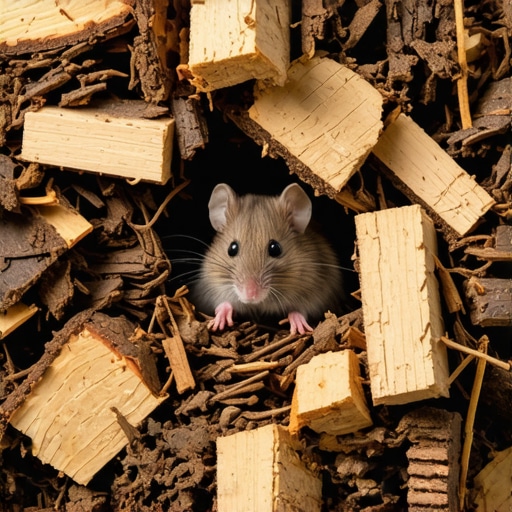
Homeowners often operate under the “more is better” philosophy, but in the world of entomology and rodent control, excessive mulch depth is a recipe for disaster. When mulch layers exceed 3 to 4 inches, they create a phenomenon I call the “Burrower’s Blanket.” This deep layer of organic matter acts as a thermal insulator. Even during a harsh New York winter, the decomposition process within a thick mulch bed generates a small amount of heat, while the upper layers shield the ground from freezing. This creates a stable, temperature-regulated environment that is ideal for nesting.
Research from organizations like Orkin and Good Earth Pest highlights that thick organic mulch doesn’t just attract rodents; it supports an entire ecosystem of secondary pests. The moisture trapped beneath a 6-inch layer of wood chips is a primary attractant for several species, leading to the need for cockroach pest control and carpenter ant pest control. These insects serve as a high-protein food source for mice, further incentivizing them to stay in the mulch bed.
To prevent your yard from becoming a sanctuary, follow these professional guidelines:
- Limit depth: Maintain a mulch layer of no more than 2 to 3 inches.
- Avoid “Mulch Volcanoes”: Never pile mulch high around the trunks of trees. This not only harms the tree via bark rot but creates a protected nesting site at the base of the tree.
- Rake regularly: Periodically disturbing the mulch disrupts the nesting cycles of rodents and allows the material to breathe, reducing the moisture levels that attract ant pest control issues.
Error #3: Choosing the Wrong Material (Organic vs. Inorganic)
The choice of mulch material is a critical decision in Integrated Pest Management. Organic mulches, such as shredded hardwood, pine bark, or straw, are favored for their ability to improve soil health as they decompose. However, this decomposition is exactly what attracts rodents. Wood-based mulches provide both cover and, in some cases, a supplementary food source (in the form of fungi and insects living within the wood). Furthermore, certain organic materials like straw or hay are highly sought after by mice as nesting insulation.
In contrast, inorganic mulches – such as gravel, river rock, or crushed stone – are significantly less attractive to rodents. They do not provide the same “diggable” medium for burrows, they don’t hold the same level of nesting-friendly warmth, and they offer zero nutritional value to the local fauna. If you are struggling with persistent rodent activity, transitioning your foundation beds to stone can be a game-changer. For those interested in DIY landscape modifications, you might consider how to Build a $250 Gravel Path That Blocks 2026 Weeds, which serves the dual purpose of weed suppression and pest deterrence.
It is also worth noting that wood-based mulches can attract more than just furry pests. In the NYC metro area, improperly managed wood mulch is a known contributor to subterranean termite activity. The damp wood provides a perfect conduit for these insects to reach your home. This is why termites new york residents often deal with are frequently linked to mulch beds that have been neglected. If you suspect your mulch has invited these wood-destroying organisms, seeking a professional pest control termite inspection is essential to protect your property’s equity.
Error #4: Neglecting Moisture and Drainage
Biology 101 teaches us that all living creatures require water. Rodents are no exception. A mulch bed that stays perpetually saturated due to poor drainage or over-irrigation becomes a vital water station for the local rodent population. In the high-humidity environments of the Bronx and Nassau County, “sour mulch” (mulch that has undergone anaerobic fermentation) can develop. This condition not only kills plants but creates a pungent, moist environment that attracts various pests.
When I consult with nassau county exterminators, we often find that the most “active” yards are those with clogged gutters that dump water directly into mulch beds. This creates a localized swamp where rodents can hydrate and nest in comfort. Similarly, exterminators bronx professionals often point to leaky outdoor faucets or poorly aimed sprinkler heads as the culprits behind a localized rodent surge.
To fix this, ensure your landscape is graded to move water away from the house. Ensure your downspouts extend several feet beyond the mulch beds. By keeping the mulch relatively dry, you make the environment significantly less hospitable for mice and rats, forcing them to look elsewhere for their hydration needs. If you are planning new plantings, look into 5 Low-Water Shrubs for 2026 Foundation Beds to reduce the overall irrigation requirements of your foundation perimeter.
Error #5: Combining Mulch with Overgrown Ground Cover
Rodents are survivalists. Their primary goal is to move from point A to point B without being eaten. When you combine a thick layer of mulch with overgrown ground cover – such as English Ivy, Pachysandra, or dense Hostas – you create a “predator-free zone.” The mulch provides the floor, and the dense foliage provides the ceiling. This creates a protected tunnel system where mice can thrive completely undetected by the human eye or natural predators.
As an entomologist, I advocate for the “Rule of 12.” This means keeping all foliage trimmed at least 12 inches away from the foundation of the house and ensuring there is a 12-inch gap between the top of the mulch and the bottom of your shrubs. This “air gap” removes the vertical cover that rodents rely on. When a mouse has to cross an open patch of dirt or gravel to reach your foundation, it feels exposed and vulnerable, which is often enough to deter it from approaching the structure entirely.
Additionally, be mindful of what you are adding to your landscape. If you are composting, ensure your bin is rodent-proof. An improperly managed pile can leak nutrients into the surrounding mulch, creating a foraging ground. If you’ve wondered Why Your 2026 Compost Pile isn’t Breaking Down, it might be due to a lack of aeration or improper moisture – factors that also make it more attractive to scavenging rats.
Beyond Rodents: A Holistic Approach to Pest Management
It is important to remember that mulch management is just one piece of the Integrated Pest Management puzzle. While we have focused on the outdoor environment, pests do not respect the boundaries between the yard and the home. For instance, while mulch errors can lead to rodent and termite issues, urban residents must also remain vigilant about indoor-specific threats. Issues like bed bugs treatment nyc require entirely different protocols, often involving heat treatments or specialized chemical applications that have nothing to do with your garden.
A truly pest-resistant home requires a holistic approach. This means sealing exterior gaps, managing waste, and ensuring that your landscaping doesn’t provide a “ladder” for pests to climb. Working with a bio-tech pest control professional can help you identify these vulnerabilities before they become full-blown infestations. Whether it is a seasonal inspection for termites or a proactive rodent exclusion plan, professional expertise is the best supplement to good horticultural practices.
Conclusion & Call to Action
In summary, mulch is a double-edged sword. To keep your garden healthy without inviting rodents, avoid the five common errors:
- Never create a “mulch bridge” against your foundation.
- Keep mulch depth to a maximum of 3 inches to prevent the “burrower’s blanket.”
- Consider inorganic materials like gravel for perimeter beds.
- Manage drainage and irrigation to prevent excess moisture.
- Maintain clear air gaps between foliage and mulch to eliminate cover.
By auditing your yard today, you can significantly reduce the risk of a rodent invasion. However, if you are already hearing scratching in the walls or seeing signs of activity in your mulch beds, it is time to call in the experts. For professional, scientifically-backed rodent control pest control, contact biotech pest control. Our team understands the unique challenges of the NYC and Nassau County landscapes and can provide the comprehensive solutions you need to reclaim your home from unwanted guests.
![How to Install 2026 Drip Irrigation [Fast]](https://lawnmajesty.com/wp-content/uploads/2026/09/How-to-Install-2026-Drip-Irrigation-Fast.jpeg)

![Fixing 2026 Yellowing Leaves on Gardenia [Soil Fix]](https://lawnmajesty.com/wp-content/uploads/2026/06/Fixing-2026-Yellowing-Leaves-on-Gardenia-Soil-Fix.jpeg)