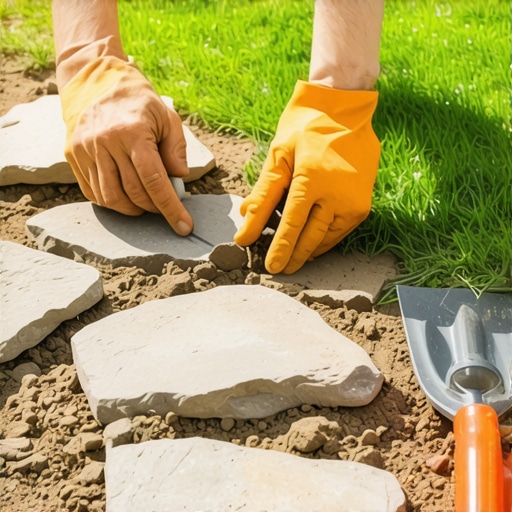
Building a Flagstone Path on a 2026 Budget
The 2026 Hardscape Reality: Why Your Path Fails Before the First Stone is Set
Building a flagstone path in 2026 requires a shift in perspective from aesthetic garden design to rigorous civil engineering. The cost of raw materials like Pennsylvania Bluestone and fuel surcharges for delivery have reached a point where you cannot afford a single mistake in your hardscaping project. I recently got called out to tear up a $30,000 patio that was sinking because the previous contractor used stone dust as a base instead of a properly graded modified gravel. The stone dust held water, the freeze-thaw cycle expanded it, and the entire surface heaved four inches in one winter. It was a complete structural failure. Don’t let this be your yard. Every hour spent on soil grading and base preparation saves you five hours of remediation in three years. We are going to build this path to last fifty years, not five.
“A retaining wall doesn’t fail because of the stone; it fails because of the water trapped behind it.” – Hardscape Engineering Axiom
The Physics of Path Excavation and Soil Stability
To ensure a flagstone path lasts, you must excavate to a depth that accounts for sub-base layers, bedding sand, and stone thickness. Proper soil compaction and grading prevent hydrostatic pressure from shifting your stones, ensuring a stable hardscape installation despite 2026 material price hikes. You are looking for 95% Standard Proctor Density on your subgrade. If the dirt is soft, your path will move. It is that simple. You need to dig deep enough for 4 to 6 inches of modified 2A gravel and 1 inch of concrete sand. Anything less is just a temporary walkway.
How much modified gravel do I need for a patio base?
Calculating gravel volume requires multiplying your total square footage by the planned depth in feet. For a 100-square-foot path with a 6-inch base, you need 50 cubic feet of modified gravel, which typically weighs about 3.75 tons. Always order 10% extra to account for compaction loss when using a plate compactor. 2026 fuel costs make multiple deliveries expensive. Get it all at once.
2026 Material Selection: Balancing Density and Cost
Controlling hardscaping costs in 2026 requires precise material volume calculations to avoid over-ordering natural stone. By measuring square footage and multiplying by stone density, you can secure bulk pricing for modified gravel and bedding sand, minimizing waste during your garden design project. Avoid big-box stores for stone. Go to a dedicated stone yard. Their inventory is higher quality, and you can often find ‘remnant piles’ of irregular flagstone that are 40% cheaper than palletized dimensional stone.
| Material Type | Density (lbs/cu ft) | 2026 Est. Cost/Ton | Structural Purpose |
|---|---|---|---|
| Modified 2A Gravel | 150 | $55 – $75 | Load-bearing foundation |
| Concrete Sand | 100 | $42 – $60 | Leveling/Bedding layer |
| Irregular Flagstone | 165 | $450 – $650 | Primary walking surface |
| Polymeric Sand | 95 | $35/bag | Joint stabilization |
Is wet-set or dry-set flagstone cheaper in 2026?
A dry-set flagstone installation is significantly more cost-effective in 2026 because it eliminates the need for concrete footings and mortar. By using a flexible base of gravel and sand, the path can move slightly with ground frost without cracking. Wet-set masonry requires a 36-inch deep footer in northern climates, which triples your labor costs and material expenses. Stick to dry-set for residential paths.
The Installation Protocol: Step-by-Step Precision
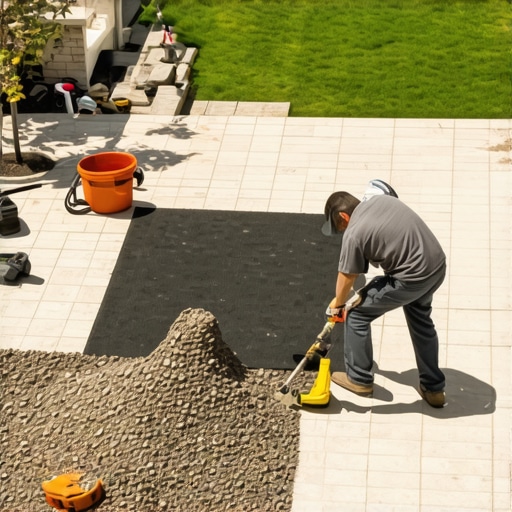
The installation process for a high-end path relies on screed pipes and a 2% slope away from any structures. If water sits on your stones, it will penetrate the joints and erode the base. Use a transit level to confirm your pitch. One inch of drop for every four feet of run is the industry standard. Don’t eyeball it. You will fail if you do. Once the base is compacted in 2-inch lifts, you lay your sand and screed it flat. This is the only way to ensure the flagstone doesn’t wobble.
- Call 811 to mark underground utilities before digging.
- Excavate to a total depth of 8 to 10 inches.
- Compact the native soil with a vibratory plate compactor.
- Install a non-woven geotextile fabric to separate soil from gravel.
- Add gravel in 2-inch ‘lifts,’ compacting each one until the machine bounces.
- Screed 1 inch of concrete sand (not play sand or stone dust).
- Place stones, maintaining a gap of 1 to 2 inches for joints.
“Surface drainage is the most neglected aspect of residential landscaping; water must be directed to a positive outlet to prevent sub-grade saturation.” – Penn State Agricultural Extension
Horticultural Impact: Protecting Your Lawn and Trees
A new hardscape feature changes the micro-climate of your yard. Flagstone is an impervious surface that redirects stormwater runoff. If you guide that water toward a tree, you risk root rot and phytophthora. You must account for soil pH changes if you use limestone-based gravel, which can leach alkalinity into the soil and affect acid-loving plants like Azaleas. Always maintain a drip-line clearance for major trees to avoid soil compaction over their root systems. This is where lawn care meets engineering. Your grass will die back where the path creates a heat sink in July. Plan for a clover or creeping thyme border to mitigate this heat.
Joint Stabilization: The Final Defenese
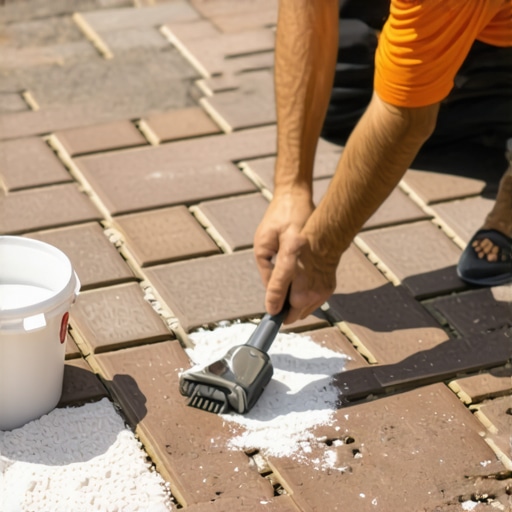
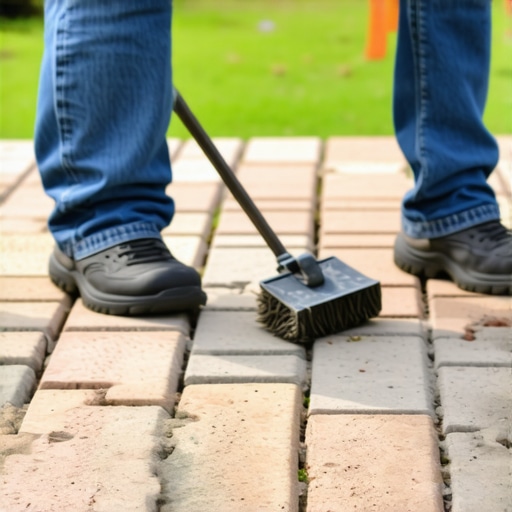
In 2026, we do not use plain sand for joints. It washes away. We use polymeric sand with high-performance binders. This material creates a semi-flexible ‘bridge’ between stones that prevents weed growth and ant hills. It must be applied to bone-dry stones. If the stone is damp, the polymers will activate and stain the surface with a white haze that is nearly impossible to remove. Sweep it in, vibrate it down with the plate compactor (using a protective mat), and mist it lightly. Do it right, or you’ll be weeding your path by August. Get it right. Don’t skip the compaction of the sand. It ensures the joints are packed tight. This is the difference between a pro job and a hack job. [image placeholder]