Stop Weeds Between 2026 Flagstone Pavers [Fast Fix]
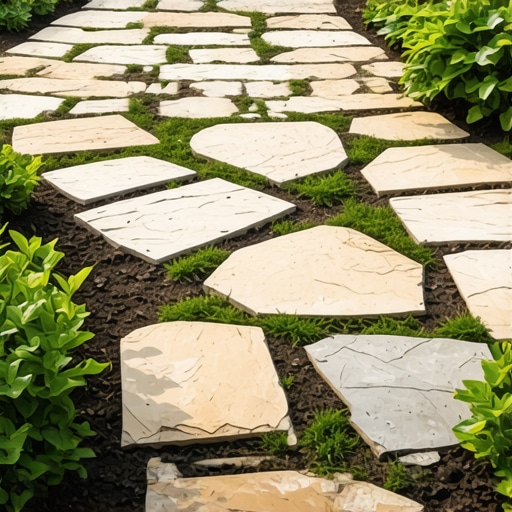
The Hardscape Autopsy: Why Your Flagstone Path Is A Weed Farm
Stopping weeds between 2026 flagstone pavers requires a professional-grade joint stabilization strategy involving the removal of organic debris and the application of high-performance polymeric sand or permeable jointing mortar. By eliminating the capillary moisture and seed-bed habitat within the joints, you create a hostile environment for germination while reinforcing the structural integrity of the entire hardscaping system.
I recently got called out to tear up a $30,000 patio that was sinking because the previous contractor thought he could save $400 by using play sand instead of a stabilized aggregate. The homeowner was literally pulling six-foot tall pigweed out from between expensive Pennsylvania Bluestone. When we peeled back the stones, the ‘base’ was a swamp of rotting organic matter and anaerobic muck. It was a forensic disaster. This happens when ‘mow-and-blow’ hacks try to do engineering work. They ignore the fact that a patio is not just a collection of rocks; it is a managed drainage system. If you don’t control the gaps, the biology of the local ecosystem will reclaim the space. Weeds are just nature’s way of telling you that your base layer is failing. Don’t skip the foundation. It will rot.
“A retaining wall doesn’t fail because of the stone; it fails because of the water trapped behind it.” – Hardscape Engineering Axiom
The Science of Weed Encroachment in Flagstone Joints
Weed growth in pavers occurs because interstitial spaces fill with windborne organic fines and decomposed plant matter, creating a nutrient-rich substrate. These micro-environments capture moisture through hydrostatic tension, allowing rhizomatous weeds to establish deep root systems that eventually displace the bedding layer. To fix this, you must reset the pH and the physical density of the joint.
Most people think weeds come from the bottom up. Wrong. 95% of the weeds you see in a patio are top-down invaders. Seeds fly in, land in the dirt that has settled in the cracks, and find a perfect little greenhouse. If you have ‘2A modified’ gravel base properly compacted to 98% Proctor density, nothing is growing through it from the earth. The problem is the ‘fines’ (the dust and dirt) that accumulate in the joints. When you use cheap stone dust, it holds water like a sponge. Water is the enemy. It facilitates life where you want dead silence. You need a jointing material that either sheds water or allows it to pass so quickly that the seed never has a chance to hydrate. Buy the good stuff.
How much modified gravel do I need for a patio base?
To calculate your base material requirements, multiply the total square footage by the desired depth (minimum 4 inches for walkways, 6 inches for patios) and divide by 27 to find cubic yardage. Always add a 20% compaction factor to your order to ensure you hit the required structural PSI. Precision matters here. Use a plate compactor. It should literally bounce off the ground when you are done. If it sinks, you aren’t ready for stone.
| Material Type | Expected Life | Weed Resistance | Installation Difficulty |
|---|---|---|---|
| Polymeric Sand | 5 to 8 Years | High | Moderate |
| Stone Dust | 1 to 2 Years | Low | Easy |
| Jointing Mortar | 10 to 15 Years | Maximum | High |
| Native Soil | 0 Years | Zero | Lazy |
The Fast Fix Protocol for 2026 Flagstone Maintenance
The fastest permanent fix for flagstone weeds involves a three-phase remediation: deep-joint cleaning with a turbo-nozzle pressure washer, applying a residual pre-emergent herbicide, and re-stabilizing the joint with ASTM C-144 graded polymeric sand. This process creates a flexible, water-resistant barrier that prevents sediment accumulation. Do not use bleach. It ruins the stone’s mineral profile.
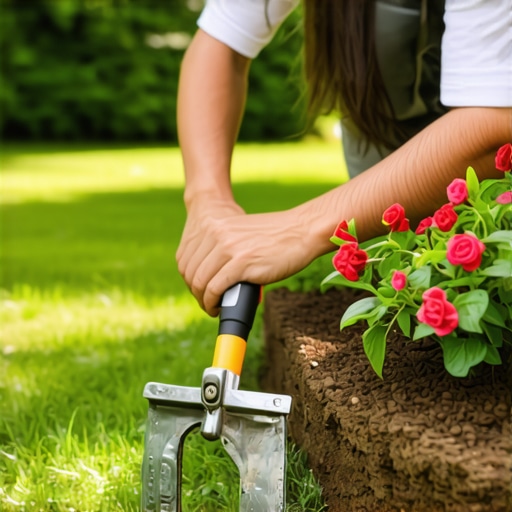
- Excavate joints to a minimum depth of 1.5 inches using a specialized joint knife or high-PSI water.
- Allow the flagstone and the base to dry for 48 consecutive hours of zero humidity.
- Sweep in high-polymer content sand, ensuring no haze is left on the stone surface.
- Compact the sand into the joints using a vibratory plate with a protective mat.
- Mist the joints three times, ten minutes apart, to activate the cross-linking polymers.
“Uniformity of compaction is the single most critical factor in the longevity of any horizontal masonry assembly.” – ICPI Technical Manual 101
Does vinegar kill weeds in pavers permanently?
While 30% industrial vinegar acts as a contact herbicide by desiccating the foliar tissue of weeds, it does not provide residual control or address the root architecture. Furthermore, the acetic acid can etch limestone and flagstone, leading to mineral spalling and surface degradation over time. It is a temporary band-aid, not an engineering solution. You need a structural barrier, not a kitchen condiment. Use a dedicated pre-emergent like Snapshot for long-term suppression.
Understanding Soil Mechanics and Hydrostatic Pressure
In landscape design and garden design, we have to respect the freeze-thaw cycle. In regions with heavy clay, the soil expands with incredible force. If your flagstone joints are filled with rigid, non-flexible mortar, they will snap. This is why we use polymeric sand in the 2026 season. It is ‘self-healing.’ It stays flexible enough to move with the earth but hard enough to keep the ants and seeds out. If you see a contractor using high-strength concrete between large flagstones without an expansion joint, fire them on the spot. They are building a ticking time bomb. The physics of the earth always wins. Always. Check your local 811 before you dig any deeper than the existing stones. Utility lines are often shallower than you think, especially in older neighborhoods. Safety is not optional. It is the job.