Why Your Pond Water Stays Murky Even with a Filter
Understanding Why Your Pond Filter is Failing to Clear Murky Water
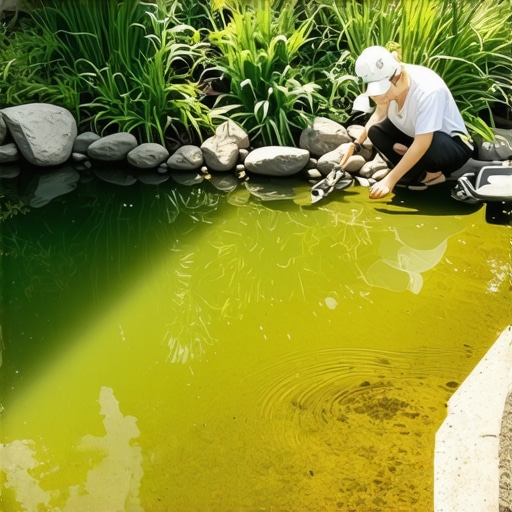
Pond water remains murky when the biological load exceeds the filtration capacity or when colloidal particles are too small for mechanical media to trap. To fix this, you must balance the nitrogen cycle, manage nutrient runoff from your landscaping, and ensure your pump GPH (gallons per hour) matches your pond volume. Most filters fail not because they are broken, but because they are biologically undersized for the fish population and sun exposure. It is a matter of civil engineering and biology. If you treat your pond like a bathtub, it will eventually look like a sewer.
I recently got called out to tear up a $30,000 patio that was sinking because the previous contractor failed to account for hydrostatic pressure and soil saturation around a custom pond build. The homeowner was furious, not just about the pavers, but because the pond water looked like chocolate milk. They had spent thousands on a high-end pressurized filter, yet the water stayed opaque. After excavating the site, I found that the ‘pro’ had used limestone screenings as a base right up against the pond edge. Every time it rained, high-pH runoff and fine particulates leached directly into the water, bypassing the mechanical filtration entirely. It did not matter how many times they cleaned the sponge; the chemistry was rigged against them from day one. I see this constantly. Contractors who know how to lay a brick but do not understand the hardscaping and hydrological relationship between the yard and the water. If the soil grading is wrong, your pond is just a catch basin for every pollutant on your property.
“A pond is a living, breathing nitrogen processing plant. If you do not provide enough surface area for beneficial bacteria to colonize, the water will never reach true clarity regardless of mechanical turnover.” – Agricultural Extension Pond Management Manual
The Forensic Diagnosis: Why Mechanical Filters Miss the Mark
Most homeowners assume a filter works like a coffee strainer. They think if they catch the big stuff, the water stays clear. That is wrong. In garden design, water clarity is a three-part problem: mechanical, biological, and chemical. Mechanical filtration removes the ‘chunky’ waste like fish feces and decaying leaves. However, the murkiness you see is often suspended solids (colloidal clay) or single-celled algae. These particles are measured in microns. Most off-the-shelf foam filters only trap particles down to 50 or 100 microns. A single-celled algae bloom can be as small as 5 microns. It goes right through the filter and back into the pond. This is why you need a UV-C clarifier. A UV bulb at the correct wattage (typically 10 watts per 1,000 gallons) will flocculate these tiny cells, causing them to clump together so the filter can finally catch them. If you do not have a UV light, you are just recirculating green soup.
How much modified gravel do I need for a patio base near a pond?
For any hardscape structure near water, you need a minimum of 6 to 8 inches of compacted 21A or 411 modified gravel to ensure stability and prevent sediment runoff. If the pond is nearby, ensure the grade slopes away at a 2 percent pitch. This prevents the ‘teasing’ of soil into the water column. Do not use sand as a final leveling layer near the water line; it will migrate. Use polymeric sand to lock the joints and prevent fine silica from clouding your aquatic environment. Poor lawn care habits also contribute. If you are throwing high-nitrogen fertilizer on the grass right up to the pond edge, you are feeding the algae. Stop it. Leave a 3-foot buffer zone of native plants to act as a bio-filter.
| Filter Type | Best For | Particle Size Removal | Maintenance Level |
|---|---|---|---|
| Pressurized Canister | Small ponds (< 2,000 gal) | 40-100 Microns | High (Weekly) |
| Gravity/Waterfall Box | Large bio-loads | 60-150 Microns | Medium (Monthly) |
| Bog/Phyto-filter | Natural ecosystems | < 10 Microns | Low (Yearly) |
| UV-C Clarifier | Algae (Green Water) | N/A (Clumps cells) | Low (Bulb replacement) |
The Role of Cationic Charge and Colloidal Clay
Sometimes the water is murky but not green. This is usually brown or grey turbidity caused by suspended clay. Clay particles are negatively charged and literally repel each other, keeping them suspended in the water column indefinitely. No filter will fix this. You have to change the water chemistry. You need a flocculant with a positive charge to neutralize the clay. Once the particles lose their charge, they settle to the bottom. At that point, you must vacuum the muck out. If you leave it there, the fish will stir it back up. It is a cycle of failure. You must also check your lawn care chemicals. Some herbicides contain surfactants that break the surface tension of the pond, making it easier for dust and particulates to stay suspended. Every chemical you put on your grass eventually finds its way into the water table.
“Hydrostatic pressure from poor drainage can force groundwater through micro-fissures in a pond liner, bringing mineral silt with it and causing permanent cloudiness.” – ICPI Hardscape Engineering Standards
Why is my pond water brown after it rains?
Brown water after rain is a definitive sign of structural drainage failure in your landscaping. This means ‘surface runoff’ is entering the pond over the top of the liner. This water carries tannins from mulch, soil from garden beds, and fertilizers from the lawn. To fix this, you must raise the pond edge or install a French drain to redirect the water path. A properly installed pond should be the highest point in that immediate area of the yard, not the lowest. If your pond is in a hole, it will always be dirty. Period. You need to excavate a swale or build a decorative retaining wall to divert the flow. Engineering the land is more important than the pump size.
The Master Checklist for Permanent Water Clarity
- Calculate actual pond volume: (Length x Width x Average Depth) x 7.48.
- Verify pump turnover: The pump should move the entire pond volume every 60 minutes.
- Test pH and Ammonia: High pH (above 8.5) often encourages mineral suspension.
- Check UV bulb life: These bulbs lose effective spectrum after 8,000 to 9,000 hours of use.
- Assess fish density: One inch of fish per 10 gallons is the limit for standard filtration.
- Inspect the ‘Mulch Volcanoes’: Never place mulch inside the pond’s rock collar.
- Measure Dissolved Oxygen: Low oxygen leads to anaerobic decay and stinking, dark water.
The Biological Remediation Process
If your hardware is correct but the water is still murky, your bio-film is dead. Beneficial bacteria (Nitrosomonas and Nitrobacter) live on the surface area of your filter media. If you wash your filter mats with chlorinated tap water, you are killing the very things that keep the water clear. Always rinse filter media in a bucket of pond water. You need to ‘seed’ the pond with concentrated bacteria every spring and when temperatures fluctuate. Also, consider the substrate. If you have 4 inches of muck on the bottom, that is an ammonia bomb waiting to go off. Use a pond vacuum. Get the sludge out. No filter can overcome a foot of rotting organic debris. It will rot. You cannot skip the manual labor part of landscaping maintenance. Clean the skimmer. Thin out the lilies. Maintain the balance. A clear pond is not a product you buy; it is an ecosystem you manage with precision and scientific discipline.
![Why Your 2026 Pond Pump Keeps Clogging [Fix]](https://lawnmajesty.com/wp-content/uploads/2026/06/Why-Your-2026-Pond-Pump-Keeps-Clogging-Fix.jpeg)