5 Low-Voltage LED Lighting Layouts for 2026 Backyard Security
The Engineering of Light: Why Your Current Security Lighting Fails
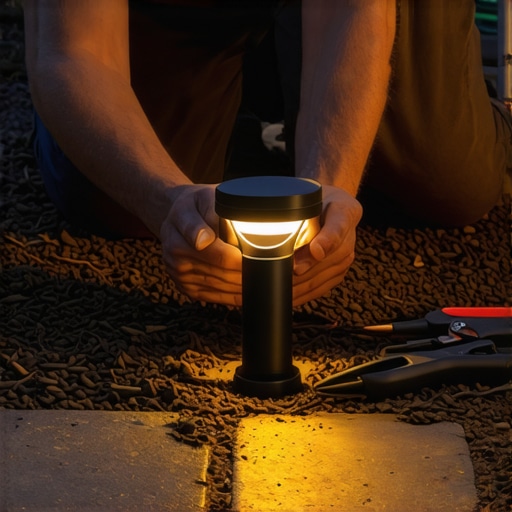
I recently got called out to tear up a $30,000 patio that was sinking because the previous contractor didn’t just mess up the modified gravel base, they also hacked the low-voltage lighting into a slurry of wet soil and unsealed wire nuts. Water is a relentless enemy of electricity. When you bury a 12/2 low-voltage wire without proper depth or moisture-sealed connectors, you aren’t just building a lighting system; you are building a timed fuse for a short circuit. For 2026, security lighting isn’t about blinding floodlights that make your backyard look like a prison yard. It is about strategic lumen placement, voltage drop management, and structural integration with your hardscaping. Most homeowners think more light equals more security. They are wrong. High-contrast shadows created by poorly aimed lights provide the perfect cover for intruders. Real security comes from a balanced, layered approach that eliminates those blind spots while maintaining the aesthetic integrity of your garden design.
“A retaining wall doesn’t fail because of the stone; it fails because of the water trapped behind it, and your electrical components fail for the exact same lack of drainage foresight.” – Hardscape Engineering Axiom
The Physics of Low-Voltage Security Layouts
To secure a modern property, low-voltage LED lighting layouts must prioritize peripheral visibility and overlapping beam spreads to ensure zero dark spots. By utilizing 12-volt or 15-volt transformers and SMD LED chips, you can achieve high-intensity output with minimal energy draw and heat signature. This technical precision is what separates a professional install from a DIY failure. We calculate every foot of wire to prevent voltage drop, ensuring the fixture at the end of the line is just as bright as the first. Don’t skip the math. If your voltage drops below 10.5V, your LEDs will flicker and the drivers will burn out. It is that simple.
| Feature | Purpose | Technical Specification |
|---|---|---|
| Wire Gauge | Conductivity | 12/2 Direct Burial Minimum |
| Color Temp | Clarity | 2700K – 3000K (Warm White) |
| Lumen Output | Intensity | 200 – 600 Lumens per Fixture |
| Beam Angle | Coverage | 15 to 60 Degrees (Adjustable) |
1. The Perimeter Hardscape Wash
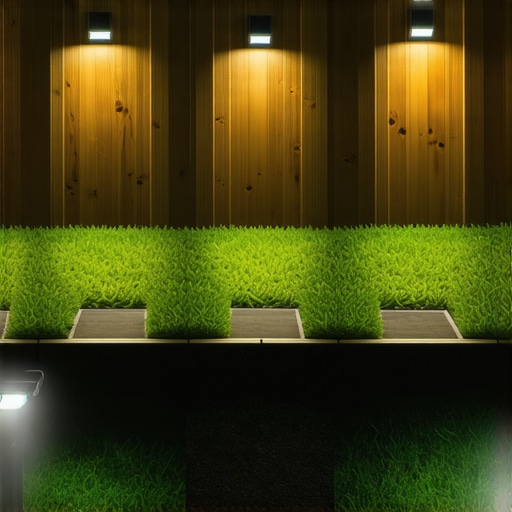
A perimeter wall wash involves placing fixtures at the base of your retaining walls or fences to cast a wide, even glow across the vertical surface. This eliminates shadows against the boundary of your property. For 2026 security, we are moving toward integrated hardscape lights that sit under the capstone of a wall. This protects the fixture from the elements and prevents tampering. If an intruder can’t reach the bulb, they can’t disable the light. We use a 35-degree beam spread here to ensure the light overlaps. Gaps are vulnerabilities. Every foot of stone must be accounted for in your layout.
2. Staggered Path Cross-Lighting
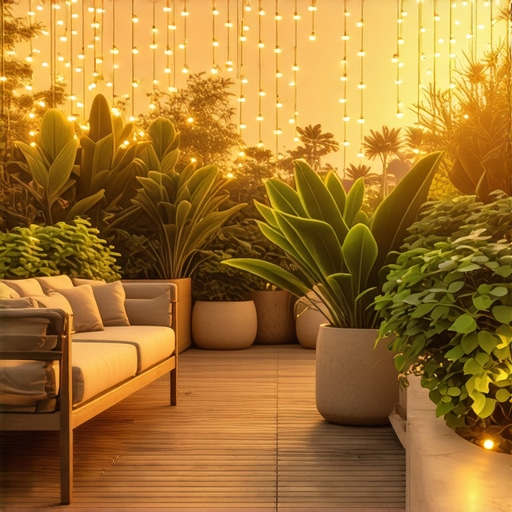
Stop putting path lights in a straight line like an airport runway. It looks cheap and it is tactically useless. Instead, use a staggered layout where lights on the left side of the path illuminate the right side, and vice versa. This creates a cross-pattern of light that fills the entire ground plane. In terms of lawn care, this prevents ‘hot spots’ on your turf that can actually stress the grass blades if the heat dissipation of the fixture is poor. Use 3000K LEDs to ensure that security cameras can accurately capture color and detail at night. Your camera’s sensor needs that specific Kelvin range to differentiate between a gray hoodie and a blue one.
3. The Architectural Graze for Blind Spots
Architectural grazing involves placing fixtures within 6 to 12 inches of a textured surface, such as a brick chimney or a stone pillar, and aiming the light straight up. This creates high-texture shadows that make it impossible for someone to hide against the house wall. It highlights the engineering of the home while serving as a detection grid. If a shadow moves that isn’t part of the stone’s natural texture, your security system picks it up immediately. I always tell my crew: if you can see the light source, we failed. You should only see the effect of the light. Hide the fixtures in the landscaping or behind low-profile shrubs to prevent them from being kicked or redirected.
How much modified gravel do I need for a patio base?
While often asked during lighting installs that require trenching under patios, the answer is a minimum of 4 to 6 inches of compacted 21A or 57 stone for pedestrian traffic. For lighting security, the conduit must be buried 6 inches below this compacted base to avoid being crushed by hydrostatic pressure or shifting stones. If you run your wires through the gravel layer itself, the sharp edges of the stone will eventually pierce the PVC jacket. The wire will rot. Use Schedule 40 PVC for all under-paver runs. No exceptions.
4. Specimen Silhouetting and Tree Moonlighting
Moonlighting is the process of mounting fixtures high up in the canopy of large trees (like Oak or Maple) and aiming them downward through the branches. This mimics natural moonlight and provides a broad, soft wash over large areas of the backyard. From a security standpoint, this is the ‘eye in the sky.’ It illuminates the entire lawn without the harshness of a floodlight. You must use stainless steel hangers that allow the tree to grow; never wrap wires around a trunk or you will girdle the tree and kill it. Use a 60-degree beam spread from at least 20 feet up. This covers the most ground with the least amount of hardware.
5. Motion-Integrated Zonal Lighting
The 2026 standard for high-end residential security is zonal integration. We no longer rely on a single motion sensor. We use smart transformers that link to your home’s security network. If a camera detects movement in the North Zone, the low-voltage system ramps the LEDs in that specific zone from 20% brightness to 100% brightness. This is a psychological deterrent. It tells the intruder they are being watched. We use 14-gauge wire for these shorter, high-intensity runs to ensure there is no lag in the power delivery. High-speed switching requires clean power and a robust ground.
“Low-voltage systems are not ‘set and forget.’ They require annual maintenance of the voltage taps and cleaning of the lenses to maintain the design intent.” – Nursery and Landscape Association Manual
How do I fix the soil grading for a lighting project?
Soil grading must always slope away from the home at a rate of at least 1/4 inch per foot. When installing lighting, your trenches can become mini-canals that funnel water toward your foundation or transformer. Always backfill your lighting trenches with native soil and compact it in 2-inch lifts to prevent settling. If you leave a depression over your wire run, water will pool there. This leads to soil saturation, which can destabilize the roots of nearby plants or cause frost heave in your hardscaping during winter months.
The Security Lighting Checklist
- Calculate total wattage and add a 20% cushion to your transformer capacity.
- Use heat-shrink waterproof connectors for all underground splices.
- Map your wire runs on a site plan before you dig.
- Check the beam spread of every fixture at night before final burial.
- Install a photocell or smart timer to ensure the system is active by dusk.
- Inspect all fixtures for ‘mulch volcanoes’ that can trap heat and shorten LED life.