
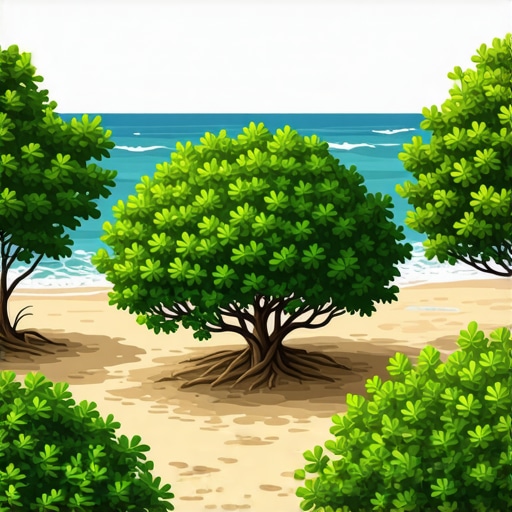
5 Salt-Resistant 2026 Shrubs for Coastal Yards
The Engineering of a Coastal Landscape
Successful coastal landscaping requires more than just picking plants that look good; it demands a deep understanding of halophytic biology and soil mechanics to combat sodium chloride toxicity and aerodynamic salt spray. Most residential installs fail because the contractor treats a beach-front lot like a suburban cul-de-sac, ignoring the hydrostatic pressure and osmotic stress inherent to the littoral zone.
The Apprentice Lesson: Soil Grading or Failure
I always drill into my new crew members: if you don’t fix the soil grading first, every plant you put in the ground is just expensive compost. I remember a job in Cape May where the homeowner spent forty thousand dollars on nursery stock, only to have it die in six months because the previous guy didn’t understand sub-surface drainage. He had the plants sitting in a literal bowl of saturated saline soil. We had to rip everything out, regrade the entire lot with a 2 percent slope away from the primary root zones, and install a French drain system with 4-inch perforated PVC before we even thought about digging a hole. If you don’t respect the physics of water movement, the salt will win every single time. It is non-negotiable.
How to Select Salt-Resistant Shrubs for 2026
To choose salt-resistant shrubs, you must evaluate the plant’s cuticular wax thickness and stomatal regulation to ensure it can survive high-salinity environments and desiccating winds. Professionals look for species that exhibit osmotic adjustment, allowing them to maintain turgor pressure even when soil salinity exceeds 4 dS/m (decisiemens per meter).
“Coastal plant selection must account for both aerosol salt spray and soil salinity, as many species tolerant of one cannot survive the other due to root-level ion toxicity.” – University of Florida IFAS Extension
1. Southern Wax Myrtle (Morella cerifera)
This is the workhorse of the Atlantic coast. It handles direct salt spray and poorly drained soils with a pH ranging from 5.5 to 7.0. The 2026 cultivars are being bred for tighter, more columnar growth, making them perfect for privacy screening without the need for constant hedging. We plant these with the root flare exactly 1 inch above the surrounding grade to prevent collar rot. The waxy coating on the leaves is a biological shield against foliar burn. It works. Period.
2. Pineapple Guava (Feijoa sellowiana)
If you want a shrub that acts like an engineered barrier, this is it. It thrives in USDA Hardiness Zones 8-11 and tolerates the alkaline soils often found in coastal developments where limestone-based fill was used. The silvery underside of the leaf isn’t for show; it reflects sunlight to reduce transpiration rates. We typically specify a slow-release 10-10-10 fertilizer for these in early spring to support the heavy wood production required to withstand gale-force winds.
3. Rugosa Rose (Rosa rugosa)
Do not confuse this with the finicky hybrid teas you see in magazines. The Rugosa is a biological tank. It grows in pure sand and laughs at salt spray. For 2026 garden design, we are seeing a shift toward the ‘Alba’ varieties for their higher resistance to black spot in humid coastal air. Its deep taproot system makes it excellent for dune stabilization and erosion control. We install these in staggered rows to create a physical windbreak that protects more sensitive interior plantings.
4. Saltbush (Baccharis halimifolia)
This is the ultimate low-maintenance landscaping option for the transition zone between the beach and the yard. It is a dioecious species that can handle periodic flooding with brackish water. Its root structure is incredibly aggressive, which is what you want when dealing with unstable sandy loams. We use it to solve drainage issues in low-lying areas of the property where salt accumulates after a storm surge.
5. Oleander (Nerium oleander) – Dwarf Cultivars
While the standard species is often overused, the 2026 dwarf cultivars offer a controlled 3-to-4-foot height that fits perfectly under window lines. These shrubs are drought-tolerant and can handle soil salinity levels that would kill 90 percent of other ornamental plants. They are the definition of hardy landscaping. Just keep them away from the dog run; they are toxic if ingested. We utilize polymeric sand in adjacent hardscape paths to ensure no weeds compete for the limited nutrients in these high-stress zones.
The Technical Specs of Coastal Planting
Installing shrubs in a coastal biome requires a specific excavation protocol to ensure long-term survival and structural integrity of the root ball. You cannot just dig a hole; you must create a micro-environment that buffers the plant against the harsh maritime climate and nutrient-leached sands.
| Shrub Species | Salt Tolerance Level | Max Wind Load (MPH) | Ideal Soil pH |
|---|---|---|---|
| Wax Myrtle | High | 85 | 5.5-6.5 |
| Pineapple Guava | Moderate-High | 70 | 6.0-7.5 |
| Rugosa Rose | Extreme | 95 | 5.0-7.0 |
| Saltbush | Extreme | 100 | 5.5-8.0 |
| Dwarf Oleander | High | 75 | 6.5-8.5 |
How much modified gravel do I need for a patio base?
For a stable hardscape install near the coast, you need a minimum of 6 inches of compacted 21A modified gravel topped with 1 inch of bedding sand. In coastal areas with high water tables, we often increase the base to 8 or 10 inches to prevent heaving and subsidence during seasonal saturation events. Proper mechanical compaction to 95 percent Proctor density is mandatory.
What is the best way to prevent salt burn on shrubs?
The best way to prevent salt burn is to install a automated irrigation system that provides overhead rinsing of the foliage following a high-wind salt event. This foliar washing removes accumulated sodium crystals from the leaves before they can cause necrosis or osmotic desiccation of the plant tissue.
“Retaining walls in coastal zones must include 12 inches of clean stone drainage aggregate behind the block to alleviate hydrostatic pressure from storm-driven rain.” – ICPI Technical Manual
The Coastal Planting Checklist
- Test soil pH and Electrical Conductivity (EC) before ordering plants.
- Ensure 811 Dig Safe has marked all underground utility lines.
- Apply 3 inches of double-shredded hardwood mulch, keeping it 2 inches away from the trunk flare.
- Install drip irrigation with emitters spaced 12 inches apart for deep root watering.
- Check wind-load requirements for any accompanying hardscape structures.
Forget the big-box store advice. If you want a landscape that survives 2026, you have to engineer it. Use native nursery stock. Use commercial-grade geotextiles. Don’t skip the soil amendments. Your yard isn’t just a garden; it’s a biological sea wall. Treat it like one.
![3 Reasons Your 2026 Hydrangeas Aren't Blooming [Fix]](https://lawnmajesty.com/wp-content/uploads/2026/05/3-Reasons-Your-2026-Hydrangeas-Arent-Blooming-Fix.jpeg)
![Stop Winter Salt Damage on 2026 Roadside Hedges [Fix]](https://lawnmajesty.com/wp-content/uploads/2026/05/Stop-Winter-Salt-Damage-on-2026-Roadside-Hedges-Fix.jpeg)
![4 Fragrant 2026 Night-Blooming Plants [Zone 7]](https://lawnmajesty.com/wp-content/uploads/2026/06/4-Fragrant-2026-Night-Blooming-Plants-Zone-7.jpeg)