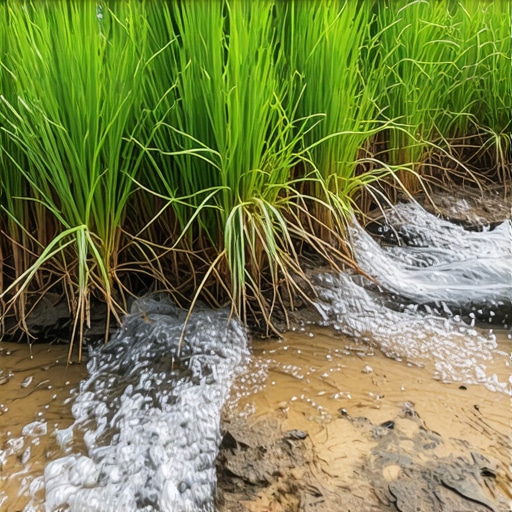
Why You Should Use Native Grasses for Erosion
Effective erosion control is a matter of civil engineering and biological synergy, not just throwing seed on a hill. I always drill into my new crew members: if you don’t fix the soil grading and select the right root architecture first, every plant you put in the ground is just expensive compost waiting to wash into the storm drain. I’ve seen 45-degree slopes where homeowners spent five figures on fancy ornamental shrubs only to have the entire hillside slump during a three-inch rain event because those plants had the structural integrity of wet cardboard. Real stabilization happens underground, where the root systems of native grasses create a subterranean lattice that literally stitches the soil together. If you aren’t thinking about the shear strength of the dirt, you aren’t doing landscaping; you’re just decorating a disaster.
The Foundation of Erosion Control: Why Native Roots Outperform Mechanical Stabilizers
Native grasses prevent soil loss by creating a deep, biological lattice that binds soil particles and increases the ground’s shear strength against hydraulic force. Unlike non-native turf, these species develop extensive root systems that can penetrate up to 15 feet deep, acting as living rebar for your property’s topography.
Erosion isn’t just about the dirt you see washing away; it is about the kinetic energy of water hitting bare soil and the hydrostatic pressure building up within the soil profile. When rain hits a slope, it wants to move soil particles downward. Most ‘mow-and-blow’ contractors suggest Kentucky Bluegrass or Bermuda for everything, but that’s a failure of logic. Those grasses are shallow. They are carpet, not anchors. Native species like Big Bluestem or Switchgrass are different animals entirely. They evolved to survive droughts and floods by investing heavily in their below-ground biomass. In a heavy rain event, the stiff upright stems of native grasses slow the velocity of sheet flow, forcing the water to drop its sediment load and soak into the ground rather than carving rills and gullies. This is why garden design must prioritize function over just aesthetics.
“The root systems of native prairie grasses can exceed depths of 10 to 15 feet, providing unparalleled soil stabilization compared to the 3 to 6-inch root depth of standard turf grasses.” – Agricultural Extension Agronomy Manual
The Physics of Soil Displacement and Hydrology
Soil stabilization requires managing hydrology and mechanical anchoring through root tensile strength and dense canopy coverage. By selecting native grasses, you are installing a high-performance stormwater management system that requires zero electricity and minimal maintenance once established in the correct USDA hardiness zone.
When we talk about erosion in lawn care, we are talking about two things: detachment and transport. Detachment is when raindrops hit the dirt like tiny hammers. Transport is when the water carries that dirt away. Native grasses provide a thick ‘thatch’ and leaf canopy that absorbs that kinetic energy. Under the surface, the ‘root-soil matrix’ increases the soil’s resistance to being pulled apart. I measure this in terms of the soil’s ability to withstand gravitational pull on steep grades. If your slope is greater than 3:1, you shouldn’t even be thinking about a standard lawn. You need deep-rooted perennials. Don’t skip the site prep. If the soil is compacted to more than 300 PSI, even a native grass will struggle to get its ‘toes’ down deep enough to do its job. You have to break that surface tension.
How much soil depth do I need for native grass establishment?
For effective erosion control, you need at least 6 to 8 inches of uncompacted topsoil to allow the initial root crowns to develop. While the grasses will eventually penetrate much deeper, the first 12 months require a friable soil structure that allows for rapid rhizome expansion and moisture retention.
Which native grasses are best for steep slopes?
The best species for steep slopes include Little Bluestem (Schizachyrium scoparium), Sideoats Grama (Bouteloua curtipendula), and Switchgrass (Panicum virgatum). These species are selected for their drought tolerance, clump-forming growth habits, and high root-to-shoot ratios, which are critical for hardscaping stability near retaining walls.
The Root Depth Disparity: A Technical Comparison
The difference between a stable hill and a landslide is often measured in inches of root depth. Most people look at the green stuff on top, but as a professional, I look at the brown stuff underneath. Turf grass is lazy. It stays near the surface because it expects to be watered every three days. Native grasses are workers. They chase moisture deep into the subsoil. This deep penetration creates macropores in the soil, which allows for better infiltration. More water in the ground means less water running off the surface. It is a simple equation that many people ignore until their hardscaping starts to heave.
| Grass Species | Root Depth (Approx.) | Primary Benefit | Soil Type Preference |
|---|---|---|---|
| Kentucky Bluegrass | 3-6 inches | Aesthetics/Traffic | Rich Loam |
| Big Bluestem | 8-12 feet | Structural Anchoring | Diverse/Clay |
| Switchgrass | 10+ feet | Water Filtration | Wet or Dry Sands |
| Little Bluestem | 5-8 feet | Drought Resistance | Rocky/Thin Soils |
| Buffalograss | 6-8 feet | Low Maintenance | Heavy Clay |
The Ground-Up Build: Installing Your Living Infrastructure
Successful erosion control installation begins with a 360-degree assessment of site drainage and soil pH before a single seed is dispersed. You must ensure the soil-to-seed contact is maximized through proper raking or hydroseeding, followed by the use of biodegradable erosion blankets on grades exceeding 25 percent.
You can’t just throw seeds on a hill and hope for the best. It will fail. You need a plan. First, you clear the invasive weeds that are currently providing ‘fake’ stability. Then, you rough up the surface. Smooth soil is the enemy; it acts like a slide for water. You want ‘micro-topography’—small ridges and valleys that catch the seed. I prefer a no-till approach if possible to keep the existing soil biology intact. If the slope is aggressive, I use coconut coir or straw wattles. These are temporary measures that hold the fort for 12 to 24 months while the grasses are building their root systems. Once those roots are locked in, the wattles can rot away. The grass is the permanent hardscaping of the natural world.
- Test soil pH and adjust to the 6.0-7.0 range for optimal nutrient uptake.
- Eliminate existing cool-season weeds that will compete with native seedlings.
- Broadcast seed at a rate of 10-15 lbs per acre, depending on the species mix.
- Install straw wattles every 10-15 feet on steep grades to break water velocity.
- Water deeply and infrequently—exactly 1 inch per week—to force roots downward.
- Do not apply high-nitrogen fertilizers; it encourages top growth at the expense of roots.
“A retaining wall doesn’t fail because of the stone; it fails because of the water trapped behind it.” – Hardscape Engineering Axiom
Maintaining the Biological Anchor
The first year is the ‘settling in’ period. You’ll see some green, but the real action is happening out of sight. In year one, they sleep. In year two, they creep. In year three, they leap. This is the biological timeline you have to respect. Don’t be tempted to over-mow. Native grasses should be left at a higher height to encourage deeper rooting. If you scalp them like a golf course, the roots will die back to compensate, and you’ve just weakened your hill. Every time you cut the top, the plant sheds roots. Keep the top tall, keep the roots deep. It’s that simple. If you follow this protocol, you won’t be calling me in three years to fix a collapsed slope. You’ll have a permanent, self-healing system that handles whatever the sky throws at it. Don’t skip the science. Fix the dirt, use the natives, and let biology do the heavy lifting.”,”image”:{“imagePrompt”:”A cross-section diagram showing the deep root systems of native prairie grasses like Big Bluestem compared to the shallow roots of Kentucky Bluegrass, with labels for root depth in feet and soil layers.”,”imageTitle”:”Native Grass Root Depth Comparison”,”imageAlt”:”Comparison of native grass deep roots versus shallow turf grass roots for erosion control.”},”categoryId”:0,”postTime”:””}
![Building a Hidden Trash Can Screen [DIY 2026]](https://lawnmajesty.com/wp-content/uploads/2026/09/Building-a-Hidden-Trash-Can-Screen-DIY-2026.jpeg)