
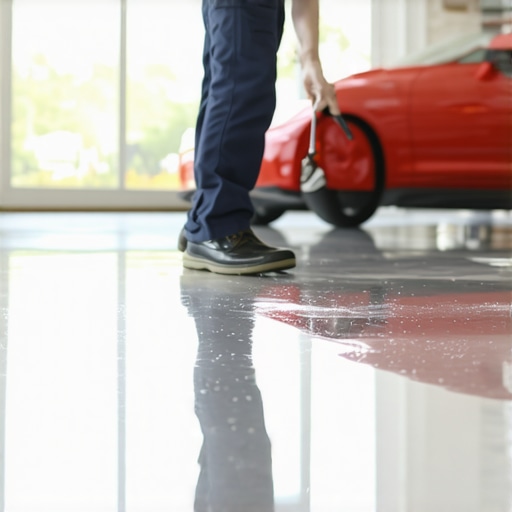
Why Delaware Homeowners Are Trading Traditional Epoxy for Polyaspartic Coatings
Why Delaware Homeowners Are Trading Traditional Epoxy for Polyaspartic Coatings
As a renovation specialist based right here in Newark, Delaware, I have seen the local housing market undergo a massive transformation over the last decade. From the historic charm of Wilmington to the rapid expansion of multi-generational households in New Castle County, homeowners are investing more than ever in their properties. One of the most significant shifts I’ve witnessed in my work at Lawn Majesty is the move toward high-performance flooring. Specifically, local residents are increasingly choosing a polyaspartic garage floor coating over the traditional epoxy systems that dominated the market for years. My name is Armin Kostic, and after years of working with both materials, I can tell you that the “standard” epoxy is no longer the gold standard for the Delaware climate.
The demand for premium finishes isn’t just about aesthetics; it’s about functionality and longevity. In Delaware, our garages are often the primary entry point for our homes. They serve as workshops, home gyms, and storage hubs. Because of this, the floor needs to withstand more than just a parked car. It needs to handle the humidity of a Mid-Atlantic summer, the road salt of a snowy winter, and the daily wear and tear of a busy family. This is why the conversation has shifted from “Can I paint my floor?” to “How can I protect my investment with the best technology available?”
The Evolution of Delaware Garage Flooring: From Bare Concrete to Polyaspartic
For decades, epoxy garage floor installers were the only professionals homeowners called when they wanted to upgrade their concrete. Epoxy was a revolutionary product when it first hit the residential market, offering a way to seal porous concrete and provide a shiny, easy-to-clean surface. It was a massive step up from bare concrete, which is prone to dusting, staining, and cracking. However, as the industry evolved, the limitations of traditional epoxy became more apparent, especially in high-traffic residential and commercial environments.
Traditional epoxy is a thermosetting polymer that creates a hard, durable surface. While it served its purpose well for a long time, it was originally designed for industrial coatings in controlled environments. When brought into the residential garage – an environment that is rarely climate-controlled and subject to extreme temperature fluctuations – epoxy began to show its weaknesses. Homeowners started noticing that their beautiful new floors were yellowing under the sun, peeling under hot tires, and cracking after just a few years.
In Newark and the surrounding Delaware areas, we’ve seen a surge in “high-end” garage renovations. People are no longer satisfied with a DIY kit from a big-box store that peels in six months. They want a professional-grade finish that mirrors the quality of the rest of their home. This demand for higher quality has paved the way for polyaspartic technology. Originally developed for bridge coatings and heavy-duty industrial use, polyaspartic resins have been refined for residential use, offering a level of durability and speed that epoxy simply cannot match. Today, epoxy garage floor installers are increasingly transitioning to these advanced systems to meet the expectations of modern homeowners.
Polyaspartic vs. Epoxy: The Technical Breakdown
To understand why a polyaspartic garage floor coating is superior, we have to look at the chemistry. Polyaspartic is actually a subset of polyurea. While people often use the terms interchangeably, polyaspartic is a “hindered” polyurea, which means the chemical reaction is slowed down just enough to allow professional installers to apply it smoothly while still maintaining incredible cure speeds.
The primary difference lies in the molecular structure. Epoxy is an “aromatic” polymer, which means it is sensitive to UV light. When exposed to sunlight – even the indirect light that hits your garage floor when the door is open – epoxy undergoes a chemical change that causes it to “amber” or yellow. Over time, it becomes brittle. In contrast, polyaspartic is “aliphatic.” It is completely UV stable. This means the crystal-clear finish or the vibrant color flakes you choose today will look exactly the same ten or twenty years from now.
Cure time is another massive differentiator. Traditional epoxy requires a long “cook” time. After an epoxy floor is installed, you typically can’t walk on it for 24 hours and can’t drive a vehicle on it for 5 to 7 days. In our fast-paced Delaware lifestyle, who has time to leave their cars on the street for a week? A polyaspartic garage floor coating cures incredibly fast. It is often dry to the touch in just 1-2 hours. Homeowners can usually walk on their new floor by the evening and park their cars back in the garage within 24 to 48 hours. This “return to service” time is a game-changer for busy families in Newark and Wilmington.
Furthermore, polyaspartic has a much higher elongation rate than epoxy. In layman’s terms, it’s more flexible. While epoxy is hard and brittle, polyaspartic can “move” slightly with the concrete. This flexibility is crucial for preventing the floor from delaminating or cracking when the temperature changes, which leads us to the specific challenges of our local climate.
Why Delaware’s Climate Demands More Than Standard Epoxy
Delaware homeowners deal with a unique set of environmental challenges. We experience high humidity in the summer, freezing temperatures in the winter, and everything in between. This constant cycling causes concrete to expand and contract. If you have a rigid coating like epoxy, that movement can cause the bond between the coating and the concrete to fail. This is often why you see Why Your Patio Pavers Are Shifting Every Winter; the same ground forces are acting on your garage slab.
The “heave” cycles in Delaware are notorious. As moisture in the soil freezes and thaws, it exerts pressure on your foundation and garage floor. Polyaspartic’s inherent flexibility allows it to withstand these minor shifts without cracking. Additionally, Delaware roads are heavily salted and treated with brine during the winter months. When you pull your car into the garage, that salt and chemical slurry drips onto the floor. Epoxy is susceptible to “hot tire pick-up,” where the heat from your tires softens the coating, allowing chemicals to penetrate and lift the finish. Polyaspartic is chemically resistant to road salts, oils, and even gasoline, making it the ideal shield for Mid-Atlantic homes.
Moisture vapor transmission is another local concern. Many homes in Newark are built on slabs that don’t have a proper vapor barrier underneath. This means moisture is constantly trying to push up through the concrete. Because polyaspartic forms a superior mechanical bond with the concrete (penetrating deep into the pores), it is much more resistant to moisture-induced peeling than standard epoxy systems used by less experienced epoxy floor coating companies.
The Installation Advantage: One-Day Transformations
One of the biggest reasons I see Delaware homeowners making the switch is the convenience of the installation process. A high-quality floor starts with meticulous preparation. We don’t just “paint” the floor; we use industrial diamond grinders to open up the pores of the concrete. This creates a profile that allows the coating to “root” itself into the slab. During this phase, we often find cracks that need immediate attention. We work closely with concrete crack repair companies to ensure the substrate is perfectly smooth and structurally sound before the first layer of polyaspartic is applied.
The “One-Day Transformation” is not a myth – it’s the standard for professional polyaspartic applications. Here is how a typical day looks for our Newark clients:
- 8:00 AM: Arrival and clearing of the garage.
- 9:00 AM: Diamond grinding the entire floor to remove old coatings and contaminants.
- 11:00 AM: Repairing cracks and pits using fast-setting polyurea fillers.
- 12:30 PM: Application of the polyaspartic base coat and full broadcast of decorative flakes.
- 2:30 PM: Scraping the excess flakes and vacuuming the surface.
- 3:30 PM: Application of the high-solids polyaspartic topcoat.
- 5:00 PM: Project completion. The homeowner can walk on the floor by bedtime.
Compare this to epoxy, which often requires multiple days of application and a week of curing. For homeowners who value their time and the security of having their belongings and vehicles locked inside, the choice is clear. By hiring the best epoxy garage floor installers who specialize in polyaspartic, you are choosing a process that minimizes disruption to your life.
Durability and Maintenance: Why It’s the Last Floor You’ll Ever Need
When considering the cost of a polyaspartic garage floor coating, it is important to look at the Return on Investment (ROI). While the upfront cost of polyaspartic is generally higher than epoxy, its lifespan is significantly longer. A well-installed polyaspartic floor can last 20 years or more without fading, peeling, or wearing thin. This longevity is why it is the preferred choice for industrial coatings in hospitals and showrooms where downtime is not an option.
Maintenance is incredibly simple. Because the surface is non-porous and seamless, dirt and fluids stay on the top. A simple sweep and an occasional mop with a pH-neutral cleaner are all it takes to keep the floor looking brand new. You don’t have to worry about battery acid from your lawnmower or motor oil from your car staining the surface. The impact resistance is also vastly superior; if you drop a heavy wrench, a polyaspartic floor is much less likely to chip than a brittle epoxy floor.
This durability makes it a major selling point for Delaware real estate. As Newark continues to grow and property values rise, a professionally coated garage floor adds tangible value. It transforms a “utility space” into a finished part of the home, often serving as a catalyst for further organization and renovation projects. When you work with the best epoxy garage floor installers, you are essentially buying a permanent solution rather than a temporary fix.
Beyond the Garage: Versatile Applications for Delaware Homes
While garages are the most common application, the benefits of polyaspartic extend to many other areas of the home. Because it is UV stable and highly durable, we are seeing more homeowners use it for outdoor living spaces. Imagine a patio or a screened-in porch that has the same beautiful, easy-to-clean finish as your garage. It’s a great way to tie your indoor and outdoor aesthetics together.
If you are working on your backyard, you might be considering how to enhance your outdoor entertainment areas. You could Build a $400 2026 Stone Fire Pit Area for Small Backyard Patio and then use a polyaspartic coating on the adjacent concrete walkway to create a cohesive, high-end look. Similarly, if you want to Build a $200 2026 Gravel Path for Modern Yard Entryway, a polyaspartic-coated front porch can provide a stunning, durable transition into your home.
Basements are another perfect candidate. In Delaware, basements are prone to dampness. A polyaspartic coating provides a waterproof barrier that is much more attractive and durable than traditional basement paint. Whether you are creating a man-cave, a playroom, or a home gym, the slip-resistance and antimicrobial properties of polyaspartic make it a superior choice for below-grade living spaces.
Frequently Asked Questions About Polyaspartic Coatings
Is it slippery?
This is a common concern. While a smooth high-gloss floor can be slick when wet, we always incorporate anti-slip additives (like aluminum oxide or clear polymer grit) into the final topcoat. This provides plenty of traction even if you walk in with wet boots after a Delaware rainstorm.
Can I do it myself?
While DIY kits for polyurea garage floor coating exist, they are not the same grade as professional materials. Polyaspartic has a very short “pot life,” meaning it hardens quickly once mixed. Without professional equipment and a trained crew, it is very easy to end up with a mess. Professional installers also have access to industrial-grade grinders that are essential for the mechanical bond required for a lifetime warranty.
What about the smell?
Traditional epoxies and older polyureas often had high VOCs (Volatile Organic Compounds) that produced a strong chemical odor for days. Modern, high-solids polyaspartic coatings are very low-VOC. While there is a slight scent during the application, it dissipates rapidly, usually within a few hours of the project being completed.
How does it compare to a “polyurea” floor?
Many companies market “polyurea” floors. As mentioned, polyaspartic is a type of polyurea. The main thing to look for is whether the company is using a “base coat” of polyurea and a “top coat” of polyaspartic. This combination is often considered the gold standard for residential epoxy floor coating companies because it offers the best bond and the best UV protection.
Conclusion: Making the Switch for Your Delaware Home
The trend is clear: Delaware homeowners are moving away from the limitations of the past and embracing the technology of the future. Whether you are in Newark, Wilmington, or Middletown, a polyaspartic garage floor coating offers a level of protection, beauty, and convenience that traditional epoxy simply cannot match. It’s an investment in your home’s value and your family’s lifestyle.
If you’re ready to stop worrying about peeling paint and stained concrete, it’s time to talk to a local expert. At Lawn Majesty, we pride ourselves on delivering world-class results for our neighbors. For more information on how we can transform your space, or to see examples of our work with epoxy flooring delaware, contact Armin Kostic today. Let’s build a floor that lasts as long as your home does.
![Repairing Cracking Concrete Walkways [Fast Fix]](https://lawnmajesty.com/wp-content/uploads/2026/09/Repairing-Cracking-Concrete-Walkways-Fast-Fix.jpeg)
![Why Your 2026 Concrete Driveway is Cracking [Fix]](https://lawnmajesty.com/wp-content/uploads/2026/06/Why-Your-2026-Concrete-Driveway-is-Cracking-Fix.jpeg)