
How to Build a Simple French Drain to Fix Your Soggy Yard
Why Most Backyard Drainage Solutions Fail Before the First Rain
I recently got called out to tear up a $30,000 patio that was sinking because the previous contractor ignored the basic laws of physics and drainage engineering. The homeowner was devastated as the expensive pavers shifted and cracked because the base layer became a slurry of mud and water. The root cause was simple: hydrostatic pressure. Water had nowhere to go, so it sat underneath the hardscape, liquefying the soil and undermining the structural integrity of the entire build. If you don’t manage water, water will manage you. This is why a French drain isn’t just a trench with some rocks; it is a critical piece of civil engineering for your property. When we talk about garden design or landscaping, we aren’t just discussing aesthetics; we are discussing the movement of fluid through porous media. Most ‘mow-and-blow’ outfits will tell you to just throw some pipe in a hole. They are wrong. You need to understand the science of soil saturation and the hydraulic gradient to fix a soggy yard permanently. Don’t skip the planning phase. It will fail.
What is a French Drain and How Does It Work?
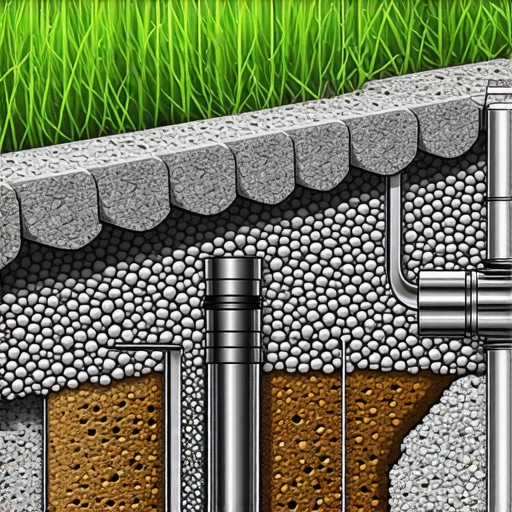
A French drain is a subsurface drainage system consisting of a perforated pipe surrounded by clean aggregate and wrapped in non-woven geotextile fabric to redirect groundwater away from foundations and low spots. It functions by creating a path of least resistance, allowing gravity to pull water into the trench and away from the property. This setup is essential for lawn care and protecting hardscaping from soil movement. Without a proper exit point, water remains trapped in the soil pores, leading to anaerobic conditions that kill turf and cause structural settling. It is a gravity-fed engine. It must have a slope.
“A retaining wall doesn’t fail because of the stone; it fails because of the water trapped behind it.” – Hardscape Engineering Axiom
The Science of Soil and Water Movement
To understand why your yard stays soggy, we have to look at the soil structure at a microscopic level. Soil is composed of minerals, organic matter, water, and air. In a healthy lawn, these components are balanced. However, in heavy clay soils common in many residential developments, the pore spaces are tiny. Water moves through these spaces via capillary action, but when the soil becomes saturated, the oxygen is pushed out. This creates a ‘perched water table.’ In landscaping, we call this the saturation zone. If your soil has high clay content, the percolation rate might be less than 0.05 inches per hour. This means even a moderate rainstorm can leave your yard underwater for days. A French drain bypasses this slow percolation by providing a high-capacity channel. We use hardscaping principles to solve biological problems. Your grass roots need to breathe. If they are submerged for more than 48 hours, root rot sets in. It is that simple.
How Deep Should a French Drain Be for Residential Use?
For most residential landscaping applications, a French drain should be excavated to a depth of 18 to 24 inches to intercept groundwater before it reaches the root zone of your turf or the base of your foundation. If you are protecting a basement or a deep retaining wall, you may need to go deeper, potentially reaching the footing level. The width of the trench should be approximately 12 inches to allow for sufficient gravel around the pipe. Depth is dictated by your discharge point. You must maintain a 1% slope, which equals a 1-inch drop for every 10 feet of horizontal run. Use a laser level. Don’t eyeball it.
Selecting the Right Materials for Longevity
If you buy your materials from a big-box store without checking the specs, you are building a temporary fix. Most homeowners buy thin-walled corrugated pipe because it is cheap. Professional installers use Schedule 40 PVC or Heavy Duty Dual Wall Corrugated pipe. The thin stuff crushes under the weight of the backfill or a lawnmower. You also need the right stone. Do not use ‘pea gravel.’ It is too small and will pack together, clogging the system. You need #57 washed stone or 3/4-inch clean crushed granite. This provides the necessary void space for water to flow freely.
| Material Component | Recommended Specification | Why It Matters |
|---|---|---|
| Pipe Type | Schedule 40 Perforated PVC | Prevents crushing and allows for easy clean-out with a snake. |
| Aggregate | #57 Washed Stone | Provides maximum void space for water flow; won’t settle into a solid mass. |
| Fabric | 4oz Non-Woven Geotextile | Filters out fine silt while allowing water to pass through freely. |
| Slope | 1% Minimum (1/8 inch per foot) | Ensures gravity pulls water to the exit point without stagnation. |
The Step-by-Step Engineering Process
Before you dig, call 811. Hitting a gas line will ruin your day faster than a soggy yard. Once cleared, start by identifying the lowest point of your property where the water can safely exit. This is your ‘daylight’ point.
- Excavation: Dig your trench 12 inches wide and at least 18 inches deep. Maintain your 1% pitch throughout the run.
- Fabric Lining: Line the trench with non-woven geotextile fabric. Leave enough excess on the sides to wrap over the top of the gravel later. This ‘burrito wrap’ is the only thing keeping silt from clogging your pipe.
- Bedding: Add 2 to 3 inches of washed stone to the bottom of the trench to create a level base for the pipe.
- Pipe Installation: Lay your perforated pipe with the holes facing DOWN. This sounds counterintuitive, but water enters from the bottom as the water table rises.
- Backfill: Fill the trench with stone to within 3 inches of the surface.
- The Wrap: Fold the excess fabric over the top of the stone. This is your primary filter.
- Final Cover: Top with decorative stone or a thin layer of topsoil and sod.
“Effective drainage is the foundation of all sustainable agronomy and civil construction.” – USDA Soil Conservation Manual
Can I Discharge a French Drain into the Street?
Municipal codes vary wildly regarding where you can send your water. Some cities allow you to cut the curb and dump into the storm gutter, while others require you to install a dry well or bubbler system on your own property. Never discharge water onto a neighbor’s property; that is a fast track to a lawsuit. In professional garden design, we often integrate the discharge into a rain garden or a bioswale to filter the water before it hits the aquifer. Check your local building department’s drainage codes before you start. Codes exist for a reason. Follow them.
Maintenance and the Critical Clean-Out
A French drain is not a ‘set it and forget it’ system. Over time, even with the best fabric, fine silts can enter the pipe. This is why I always install a ‘clean-out’ at the highest point of the run. A clean-out is simply a T-junction with a solid pipe that extends to the surface with a threaded cap. Every two years, you should stick a garden hose down there and flush the system. If you see clear water at the exit point, you are golden. If the water is muddy or slow, you have a blockage. Proper lawn care includes monitoring your drainage outlets. If you see roots entering the discharge pipe, clear them immediately. Nature always tries to reclaim the space. Stay vigilant.
![Build a $200 Modern Trellis for 2026 Privacy [DIY]](https://lawnmajesty.com/wp-content/uploads/2026/06/Build-a-200-Modern-Trellis-for-2026-Privacy-DIY.jpeg)
![Fix Your 2026 Sinking Deck Post for Under $100 [DIY]](https://lawnmajesty.com/wp-content/uploads/2026/05/Fix-Your-2026-Sinking-Deck-Post-for-Under-100-DIY.jpeg)