Fixing 2026 Mower Deck Height for Greener Grass
Most homeowners treat their lawn mower like a vacuum cleaner, but it is actually a precision surgical instrument designed to manage a living ecosystem. If you are still setting your mower height based on what looks clean to your eye, you are likely killing your grass at a cellular level. In 2026, the standard for a healthy lawn has shifted away from the golf-green aesthetic toward a resilient, high-cut canopy that supports deep root structures and soil microbiology. Understanding the mechanical and biological relationship between your mower deck and the turf canopy is the difference between a resilient lawn and a patch of scorched earth.
The Forensic Autopsy of a Scalped Lawn
A scalped lawn is characterized by brown, straw-like patches where the mower blade has removed the photosynthetic leaf tissue and exposed the apical meristem or crown of the plant. This exposure leads to immediate dehydration, soil temperature spikes, and opportunistic weed germination due to the loss of canopy shade. I saw a nightmare scenario last July that perfectly illustrates this. A homeowner called me in a panic after they completely torched their front lawn by applying a heavy dose of high-nitrogen synthetic fertilizer and then dropping their mower deck to 1.5 inches during a heatwave. The grass did not just turn yellow; it essentially cooked from the inside out. The nitrogen salts in the fertilizer drew moisture out of the roots via osmotic pressure, while the short cut removed the plant’s only cooling mechanism. The soil surface reached 110 degrees Fahrenheit, effectively sterilizing the beneficial microbes in the top inch of the rhizosphere. It was a $15,000 mistake that required a full renovation, including core aeration and heavy compost top-dressing to restore the soil biology. This is the price of ignoring the physiological limits of your turf.
The Biological Impact of Height of Cut
The height of your mower deck directly dictates the depth of your lawn’s root system through a biological principle known as the root-to-shoot ratio. For every inch of leaf tissue above the ground, the plant has the energy to maintain a corresponding mass of roots below. When you scalp the lawn, the plant must divert all its stored carbohydrates to rapidly regrow its leaves to survive, causing the root system to wither or go dormant. This leaves your yard defenseless against drought and grubs. You must follow the one-third rule: never remove more than 33 percent of the grass blade in a single mowing session. If you miss a week and the grass gets long, do not try to fix it all at once. Take it down in stages over several days to avoid hormonal shock to the plant.
“Turfgrasses mowed too short have a reduced root system, making them more susceptible to drought and nutrient deficiencies.” – Pennsylvania State University Extension
How do I measure my mower deck height?
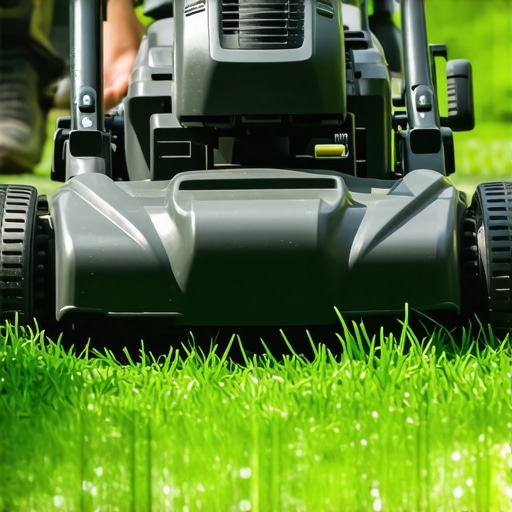
Measuring mower deck height involves placing the mower on a flat concrete surface and using a ruler to measure the distance from the ground to the actual cutting edge of the blade, not the edge of the metal deck itself. You must ensure all four tires are inflated to the manufacturer recommended PSI, as a soft tire can cause the deck to dip by half an inch, leading to uneven cuts and structural scalping on turns. Check the height at both the front and back of the blade to ensure a slight rake of about 1/4 inch lower in the front, which optimizes the aerodynamics and lift of the grass before the cut.
Technical Specifications for 2026 Turf Management
Different grass species have specific physiological requirements for height. In 2026, we are seeing a move toward higher cuts even for warm-season grasses to improve carbon sequestration and reduce water consumption. Below is a breakdown of the required heights for common turf varieties.
| Grass Species | Ideal Spring Height (inches) | Ideal Summer Height (inches) | Mowing Frequency (days) |
|---|---|---|---|
| Tall Fescue | 3.5 | 4.5 | 5 to 7 |
| Kentucky Bluegrass | 3.0 | 3.5 | 4 to 6 |
| Perennial Ryegrass | 2.5 | 3.0 | 5 to 7 |
| Bermuda (Hybrid) | 1.0 | 1.5 | 3 to 5 |
| Zoysia | 2.0 | 2.5 | 5 to 7 |
Notice the summer heights are consistently higher. This is to shade the soil. A higher canopy acts like an insulating blanket for the root zone. If you keep your Tall Fescue at 4.5 inches in August, the soil temperature will stay 10 to 15 degrees cooler than a lawn cut at 2 inches. This prevents the grass from entering summer dormancy and keeps the mycorrhizal fungi active, which are essential for nutrient uptake. [IMAGE_PLACEHOLDER]
The Mechanics of a Clean Cut
The mower blade itself is a critical factor. A dull blade does not cut; it tears. At a microscopic level, a torn leaf blade has a jagged, white edge that increases the surface area for moisture to escape. This leads to tip burn and creates an entry point for fungal pathogens like Brown Patch or Dollar Spot. You need to sharpen your blades every 20 to 25 hours of use. When you look at the tip of the grass after a cut, it should be a clean, straight line. If it looks frayed or hairy, your blades are dull. Don’t be a hack; keep your tools sharp. I tell my crew every morning: if the blade isn’t sharp enough to shave with, it isn’t sharp enough for our clients’ lawns. We use a 30-degree grind angle to balance edge retention with cutting sharpness.
“Maintaining a higher height of cut (HOC) increases the leaf area for photosynthesis and shades the soil surface, reducing weed seed germination.” – Texas A&M Agrilife Research
Why does my lawn look brown after mowing?
Your lawn looks brown after mowing because you have likely cut into the sheath or the stem of the grass plant, removing the green leaf blades that contain the chlorophyll. This is often caused by an uneven mower deck or by mowing when the grass is too tall, which forces the plant to elongate its stems in a process called etiolation. To fix this, you must gradually lower your cutting height over several weeks or raise your deck to match the current growth pattern of the turf.
The Checklist for 2026 Mower Calibration
- Park the mower on a dead-level concrete pad to avoid false readings.
- Confirm tire pressure is equal in all tires to prevent deck lean.
- Use a deck leveling gauge to measure from the ground to the blade tip at the front, rear, and both sides.
- Inspect the mower blades for nicks, bends, or thinning of the metal wing.
- Verify that the engine RPM is set to the manufacturer’s spec, usually 3600 RPM, to ensure proper blade tip speed and lift.
- Clear any dried grass clumps from the underside of the deck to maintain optimal airflow.
Remediation: Recovering from a Scalped Season
If you have already damaged your lawn by cutting it too short, the road back starts with hydration and biology. Stop fertilizing with synthetic salts immediately. Switch to a humic acid or seaweed-based liquid soil conditioner to stimulate the roots without forcing excessive top growth. Water deeply and infrequently, aiming for 1 inch of water per week applied in a single early morning session. This forces the roots to grow downward into the cooler, moister soil layers. In the fall, plan for a heavy overseeding with improved cultivars that are bred for higher mowing heights and drought resistance. Do not skip the core aeration; you need to break up the surface compaction caused by the lack of canopy protection. The goal is to rebuild the organic matter in the soil, which should ideally be between 5 and 8 percent for a healthy lawn. It will take time. It will require patience. But once you get the deck height dialed in, the biology will do most of the work for you.
![Why Your 2026 Fescue is Still Yellow After Fertilizing [Soil Fix]](https://lawnmajesty.com/wp-content/uploads/2026/05/Why-Your-2026-Fescue-is-Still-Yellow-After-Fertilizing-Soil-Fix.jpeg)