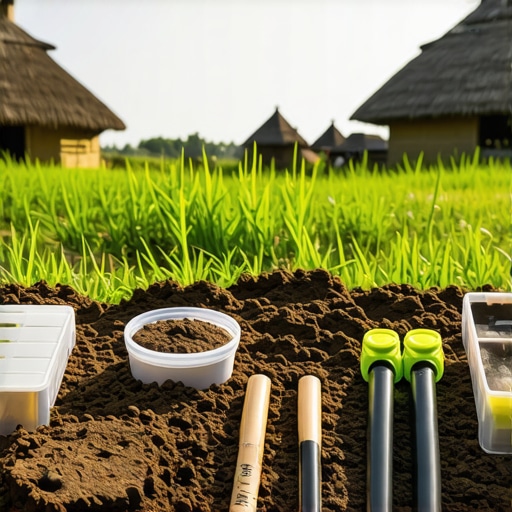
Where the metal meets the mud
The sharp scent of WD-40 and the metallic tang of a cold wrench are my morning rituals. Most folks look at a lawn and see a green carpet, but I see a biological engine that is either humming or about to throw a rod. In Culpeper, especially as we head into 2026, the obsession with thatching has reached a fever pitch. People are renting power rakes and tearing into their turf like they are trying to find buried treasure. But here is the cold truth from the shop floor: if you do not run a comprehensive soil test before you drop those blades, you are likely just killing your grass with high-torque efficiency. Editor’s Take: Thatching without a diagnostic soil test in Culpeper is a guaranteed way to waste time and money. The test reveals if your grass can actually survive the mechanical stress of debris removal. To answer the immediate question, thatching in Virginia clay is dangerous because the soil pH and compaction levels dictate whether the grass recovers or simply dies off after being disturbed. You need to know your phosphorus and acidity levels before you touch the throttle.
The diagnostic report your grass deserves
When a tractor comes into my shed with a knock, I don’t just start replacing pistons. I run a diagnostic. Thatch is that layer of organic debris, essentially the gunk in your lawn’s fuel line, that prevents water and air from reaching the roots. It is not just old grass; it is a barrier. But thatching is a violent process. It involves metal tines ripping through the surface at high speeds. If your soil is depleted, you are performing surgery on a patient who hasn’t eaten in a month. Most landscaping culpeper projects fail because they ignore the nutrient lockout happening beneath the surface. A soil test tells us if the nutrients are actually available or if they are locked behind a wall of high acidity. If you pull the thatch and the soil is sitting at a 5.2 pH, you’ve just exposed a weak root system to a harsh environment it cannot survive. We look at the relationships between organic matter and cation exchange capacity. This isn’t just dirt; it is the foundation of your landscaping success.
The Piedmont clay trap
We live in the heart of Virginia, and that means we deal with the infamous Piedmont red clay. It is heavy, it holds water like a bucket, and it compacts under the slightest pressure. This regional reality changes the rules for landscaping culpeper va. In 2026, we are seeing weather patterns that swing from swamp-like humidity to bone-dry droughts in a matter of days. When that clay gets dry, it turns into a brick. If you try to perform thatching on dry Culpeper clay, you aren’t removing thatch; you are just pulverizing the grass crowns. Local data from the Virginia Cooperative Extension suggests that over 60 percent of residential lawns in our area are suffering from extreme compaction. This makes mowing difficult and renders grass seeding nearly impossible without a heavy-duty intervention. Before you worry about the debris on top, you have to worry about the density underneath. Testing for compaction and nutrient density is the only way to ensure your hardscapes and green spaces actually look like they belong together rather than a construction site.
Why the Rapidan River isn’t a fertilizer source
I’ve seen guys think they can just throw lime down and call it a day. That is like putting premium gas in a mower with no spark plugs. The messy reality of Culpeper turf is that we have a high concentration of iron and aluminum in our soil which can actually be toxic to grass if the pH drops too low. When you perform a thatching job, you are opening up the soil’s ‘pores.’ If you haven’t balanced the chemistry first, you are just letting those toxic elements get a better grip on your grass roots. Common industry advice says to thatch every spring. That is garbage advice for our region. You thatch when the diagnostic says the lawn is healthy enough to handle the trauma and the thatch layer exceeds half an inch. Anything less, and you’re just scratching the paint. Most people forget the grass pickup phase, leaving rotting debris that actually makes the acidity worse. You have to be surgical about it. You have to be precise.
The 2026 shift in Culpeper turf management
The old guard used to just mow high and hope for the best. The 2026 reality is much more technical. We are seeing a shift toward Integrated Turf Management where data drives every decision. Why guess when you can know? A soil test is the cheapest insurance policy you will ever buy for your property. It prevents the ‘yellowing’ that happens after a rough grass pickup and ensures that your next round of grass seeding actually takes hold. Frequently Asked Questions: Does thatching hurt the grass? Yes, temporarily, but with proper nutrients, it rebounds stronger. How often should I test my soil? Every two years in Culpeper’s shifting climate. Can I thatch in the summer? Never, unless you want to kill your lawn by heatstroke. What if my test shows high phosphorus? You avoid standard fertilizers that could runoff into our local waterways. Is professional equipment necessary? Yes, because residential electric dethatchers often lack the weight to penetrate our local clay. Does thatching help with drainage? Only if combined with aeration to break the clay’s surface tension. What happens if I skip the test? You risk applying the wrong amendments, which can lead to chemical burns or stunted growth.
Stop treating your property like a guessing game. If you want a lawn that runs like a finely tuned machine, you start with the data. We have the tools and the local expertise to handle the heavy lifting while you focus on the results. Don’t let your grass suffocate under a layer of neglect and bad timing. Take the first step toward a resilient, high-performance yard today. Contact us for a professional evaluation and let’s get your soil working for you instead of against you.
This article highlights a crucial aspect of turf care that many homeowners overlook—soil testing before aggressive practices like thatching. In my own experience here in Culpeper, I once attempted to dethatch without testing, and the results were less than stellar; I ended up damaging the grass instead of helping it. The regional challenges of our Virginia clay make it even more important to understand the soil chemistry beforehand. I appreciate the emphasis on data-driven decisions, especially in the context of an evolving climate. I wonder, though, how often do regional soil conditions shift enough to warrant more frequent testing? Would you recommend annual tests for active lawn care enthusiasts, or is a biennial schedule sufficient for most? Also, does anyone have success stories with specific amendments that have helped improve soil health prior to dethatching? Your insights could help others avoid common pitfalls.