The Science of Soil Pores: Why Your Lawn is Suffocating
Liquid aeration is the application of soil surfactants and organic acids that chemically break down the surface tension of water and flocculate clay particles. This process creates microscopic channels for oxygen and moisture to reach the root zone without the destructive physical tearing of traditional mechanical core aerators. I’ve spent two decades staring at dirt, and let me tell you, most of you are suffocating your grass before it even has a chance to sprout. I recently got called out to a property where the homeowner had completely torched their front lawn by applying a heavy dose of high-nitrogen fertilizer on soil that was essentially baked into a brick. They thought they were feeding the grass; in reality, they were just salting the earth. Because the soil was so compacted, the chemicals couldn’t move through the profile. The heat rose, the moisture vanished, and the roots literally cooked in their own bed. It was a chemical nightmare that required a full-scale excavation and soil remediation. This is what happens when you ignore soil structure. Compaction is the silent killer of landscaping and garden design. When your soil reaches a bulk density of 1.6 g/cm³ or higher, root growth stops. Period. It doesn’t matter how much expensive seed or water you throw at it. If the soil is too tight, the plant dies.
“Soil compaction is the single most neglected factor in residential turf failure, leading to reduced pore space and inhibited gas exchange.” – Penn State Center for Turfgrass Science
How do I know if my soil is compacted?
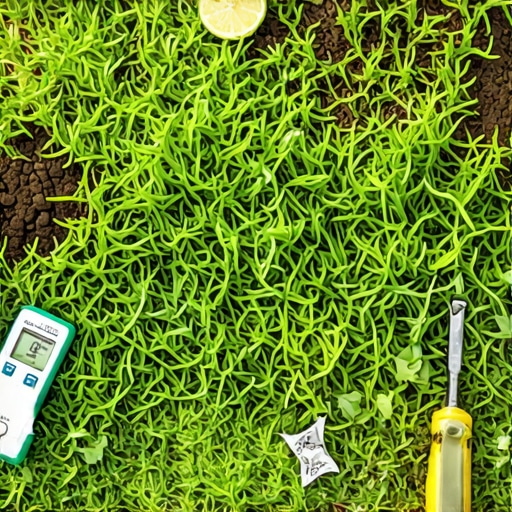
If you can’t push a standard screwdriver at least six inches into the ground with one hand, your soil is a tomb. You’ll also see water pooling on the surface or thinning blades that look yellowish regardless of how much iron you add. Lawn care starts under the surface. If you’re planning a hardscaping project, like a patio, you’re intentionally compacting the base to 95% Proctor density, but for your grass, that same density is a death sentence. You need to manage the two zones differently. Here is how we get ahead of the 2026 growing season using liquid chemistry rather than heavy machinery.
Hack 1: High-Concentration Alkyl Polyglycoside (APG) Surfactants
APG surfactants are non-ionic wetting agents that reduce the surface tension of water, allowing it to penetrate the hydrophobic soil layers that develop during summer heat cycles. Most box-store products are 90% water. You need the professional-grade stuff that actually changes the physics of the water molecule. In my firm, we don’t look for ‘vibrant’ results; we look for hydraulic conductivity. When you apply an APG, you aren’t just watering; you are lubricated the soil particles. This allows water to move laterally and vertically, reaching the macropores where roots actually live. Don’t use dish soap. Dish soap is a degreaser that strips the protective waxy cuticle off your grass blades and kills the beneficial bacteria in the rhizosphere. Use a horticultural-grade surfactant designed for lawn care.
Hack 2: Humic and Fulvic Acid Flocculation
Humic acids work at a molecular level to aggregate soil particles, creating larger pore spaces through a process called flocculation. Think of it as turning a stack of flat papers (compacted clay) into a pile of crumpled-up balls. The crumpled balls have space between them for air and water. This is critical for landscaping in regions with heavy red clay or silty loam.
“Flocculation of clay particles via organic acids is the primary driver of soil structure improvement in non-mechanical systems.” – Journal of Agronomy
By injecting humic and fulvic acids into your liquid aeration program, you are increasing the Cation Exchange Capacity (CEC) of your soil. This means your soil can actually hold onto nutrients instead of letting them wash away into the storm drains. It’s the difference between a sponge and a marble.
Hack 3: The Cold-Water Microbial Inoculation
The best time to apply liquid aerator is when the soil is moist and the temperatures are between 50 and 70 degrees Fahrenheit. This hack involves adding a beneficial microbe package—specifically Bacillus subtilis and mycorrhizal fungi—to your liquid aeration mix. While the surfactant opens the door, the microbes move in and start building the biological ‘glue’ (glomalin) that keeps the soil from re-compacting. If you do this in the early spring or late fall, you’re setting up a 2026 lawn that is self-aerating. Garden design often overlooks the biological health of the soil, focusing only on the aesthetics. But a healthy landscaping plan requires a living soil matrix. Without microbes, your soil will just collapse back into a dense mass after the next heavy rain.
When is the best time to apply liquid aerator?
Apply liquid aeration treatments in the spring as the soil wakes up and again in the fall during the peak root-growth window. Avoid applications during the 100-degree dog days of summer when the grass is in dormancy. The goal is to hit the soil when the biology is active. This ensures the chemical changes are ‘locked in’ by the root expansion. One application won’t fix years of neglect. You need a consistent schedule.
| Aeration Method | Depth of Impact | Recovery Time | Biological Impact |
|---|---|---|---|
| Mechanical Core | 2-3 Inches | 10-14 Days | Disrupts fungal networks |
| Liquid Surfactant | Up to 12 Inches | 0 Days | Enhances rhizosphere health |
| DIY Dish Soap | 0 Inches | Varies | Toxic to soil biology |
Compaction-Free 2026 Checklist
- The Screwdriver Test: Perform monthly to identify ‘hot spots’ of compaction.
- Calibrated Application: Apply 4-6 oz of professional surfactant per 1,000 sq. ft.
- Irrigation Sync: Water the product in with exactly 1/2 inch of water immediately after application.
- Avoid Heavy Traffic: Keep mowers and equipment off wet, newly treated soil to prevent ‘smearing.’
- Overseeding Window: Apply liquid aeration 24 hours before seeding to maximize seed-to-soil contact.
Stop wasting money on mechanical rentals that only punch holes in the top two inches. If you want a professional-grade result for your landscaping, you have to treat the chemistry of the dirt. Soil is a living organ. Treat it like one. Don’t skip the humic acid. It’s the backbone of soil structure. If you follow this regimen, by 2026, your lawn will be the only one in the neighborhood that doesn’t look like a desert the moment the rain stops. It will be deep-rooted, drought-resistant, and chemically balanced. It’s not magic; it’s agronomy.