The Forensic Autopsy of a 2026 Dead Lawn
Reviving 2026 dead grass requires addressing soil compaction through core aeration and biological amendments to restore pore space and oxygen flow. When you look at a lawn that has turned into a brittle, tan-colored wasteland, you aren’t just looking at thirsty plants; you are looking at a structural failure of the upper four inches of the earth’s crust. In my twenty years of managing high-end turf, I’ve seen this ‘corpse lawn’ syndrome a thousand times. It is rarely the heat that kills the grass; it is the anaerobic environment created by foot traffic and heavy clay. A homeowner called me in a panic last summer after they completely torched their front lawn by applying a high-nitrogen ‘quick-green’ fertilizer during a 95-degree heatwave without checking the soil moisture levels first. They hadn’t just burned the blades; they had chemically salted the earth, creating a hydrophobic layer that repelled every drop of water from the sprinkler. The soil was so dense I couldn’t even hammer a screwdriver two inches into it. To fix a lawn this far gone, you have to stop thinking like a gardener and start thinking like a civil engineer. You need to break the surface tension and re-establish the capillary action of the soil. Don’t waste your money on more seed until you fix the medium it lives in.
Hack 1: Precision Core Extraction (The 4-Inch Rule)
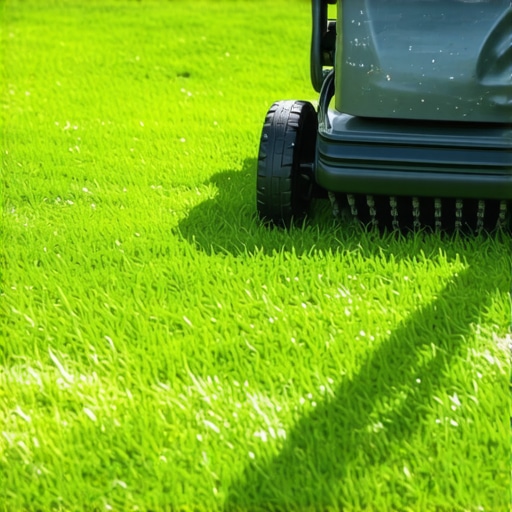
To revive dead grass, mechanical core aeration must reach a minimum depth of 3 to 4 inches using hollow tines to remove soil plugs. Most rental aerators are lightweight toys that barely scratch the surface. If you aren’t pulling out 4-inch-long plugs that look like goose droppings, you are wasting your Saturday. The goal is to reduce the bulk density of the soil. In technical terms, we are looking to lower the grams per cubic centimeter (g/cm³) to allow for gas exchange. When the soil is compacted, carbon dioxide is trapped, and oxygen cannot reach the rhizosphere. This suffocation leads to root atrophy.
“Compaction is the single greatest barrier to turfgrass health in urban environments, effectively sealing the soil from oxygen and moisture.” – Penn State Center for Turfgrass Science
You need a walk-behind unit with at least 200 pounds of ballast weight. Every square foot of your lawn should have at least 20 to 40 holes. Anything less is just a cosmetic exercise. It will fail. Don’t skip the weight.
Hack 2: Sub-Surface Surfactants and Hydro-Infiltration
The use of professional-grade soil surfactants after aeration allows water to penetrate hydrophobic ‘hot spots’ where organic waxes have coated soil particles. Have you ever noticed water pooling on top of dry dirt? That is the ‘lotus effect’ happening on a microscopic level. Decomposing organic matter can coat sand and clay particles in a waxy substance that actually repels water. Once you have your aeration holes open, you must apply a non-ionic surfactant. This isn’t your local hardware store’s ‘wetting agent.’ Look for products containing alkyl polyglycoside. This chemical breaks the surface tension of the water, allowing it to ‘grip’ the soil particles and slide down into the root zone rather than evaporating on the surface. We call this ‘forcing the column.’ By applying this immediately after pulling cores, you ensure the moisture reaches the bottom of the root system, forcing the grass to chase the water downward. This creates drought resistance for the following season. Shallow roots are the hallmark of a lazy, failing lawn.
How deep should aeration cores be?
For effective revitalization, aeration cores should be between 3 and 4 inches deep to bypass the primary compaction layer. If you only pull 1-inch plugs, you are merely aerating the thatch layer, which does nothing for the actual soil structure. The 4-inch depth ensures you are breaking into the native subsoil and creating a true channel for nutrient delivery.
Hack 3: Biological Inoculation via Top-Dressing
Reviving dead turf requires the immediate introduction of mycorrhizal fungi and humic acid into the aeration channels to rebuild soil biology. Once those holes are open, you have a 48-hour window of opportunity before they begin to collapse. This is when you apply your biologicals. I use a 70/30 mix of high-quality screened compost and masonry sand. This isn’t just ‘dirt.’ The sand provides structural stability to the hole, preventing it from re-compacting, while the compost introduces beneficial microbes. I always add a concentrated humic acid. Think of humic acid as a battery charger for your soil. It increases the Cation Exchange Capacity (CEC), which is the soil’s ability to hold onto nutrients. Without a high CEC, your expensive fertilizers just leach out into the groundwater during the first rain. You are literally flushing money down the drain. [IMAGE_PLACEHOLDER]
| Aeration Method | Depth Achieved | Impact on Bulk Density | Recovery Speed |
|---|---|---|---|
| Spike Aerator | 1.0″ – 1.5″ | Negative (Increases Compaction) | None |
| Standard Core Aerator | 2.0″ – 2.5″ | Moderate Improvement | 14-21 Days |
| Deep-Tine Aerator | 4.0″ – 6.0″ | Maximum Reduction | 7-10 Days |
| Liquid ‘Aeration’ | Surface Only | Negligible | Unpredictable |
Hack 4: The Modified USGA Sand-Cap Method
The modified sand-cap method involves filling aeration voids with kiln-dried sand to create permanent drainage and oxygen veins in heavy clay. If you live in an area with heavy red clay, your lawn is basically a brick waiting to happen. The hack here is to borrow a page from professional golf course greens. After a heavy core aeration, instead of just letting the plugs melt back into the lawn, you sweep them up and replace that volume with sand. This creates a permanent ‘wick’ that allows water and air to bypass the clay surface. It is labor-intensive, but it is the only way to permanently change the soil texture without a total excavation. I’ve seen this method save lawns that hadn’t seen a green blade in three years. It works because it changes the physics of the yard, not just the chemistry.
When is the best time for deep-root aeration?
Deep-root aeration should be performed during the active growth phase of your specific grass type, typically late spring for warm-season grasses or early fall for cool-season varieties. Never aerate a lawn that is under extreme heat stress or in total dormancy, as the plant lacks the carbohydrate reserves to heal the root damage caused by the tines.
“A retaining wall doesn’t fail because of the stone; it fails because of the water trapped behind it, much like a lawn fails because of the air trapped out of it.” – Hardscape Engineering Axiom
The 2026 Restoration Checklist
- Rent a commercial-grade cam-driven core aerator; skip the drum models.
- Flag all irrigation heads and utility lines (Call 811) before you start.
- Irrigate the lawn 24 hours prior to ensure the tines can penetrate the soil.
- Apply a 50% rate of a slow-release organic fertilizer (4-4-4) post-aeration.
- Top-dress with no more than 1/4 inch of organic material to avoid smothering.
- Water for 20 minutes every morning for 14 days to keep the ‘holes’ moist.
Landscaping isn’t about the plants; it’s about the subterranean environment. If you focus on the three inches of earth beneath your boots, the grass will take care of itself. Stop buying ‘miracle’ products and start moving some dirt. It is the only way to get real results.
![4 Culpeper VA Grass Seeding Fixes for Clay Soil [2026 Update]](https://lawnmajesty.com/wp-content/uploads/2026/03/4-Culpeper-VA-Grass-Seeding-Fixes-for-Clay-Soil-2026-Update.jpeg)
![4 Culpeper VA Thatching Fixes for a Firmer 2026 Lawn [Tested]](https://lawnmajesty.com/wp-content/uploads/2026/03/4-Culpeper-VA-Thatching-Fixes-for-a-Firmer-2026-Lawn-Tested.jpeg)