![Stop Drowning Your Clay Soil Shrubs [2026 Root Fix]](https://lawnmajesty.com/wp-content/uploads/2026/04/Stop-Drowning-Your-Clay-Soil-Shrubs-2026-Root-Fix.jpeg)
Why Your Shrubs Are Dying in Heavy Clay Soil
Heavy clay soil kills shrubs because its microscopic particle size creates high surface tension and minimal macropore space, leading to anaerobic conditions where roots literally suffocate from a lack of oxygen rather than just drinking too much water. When these tiny mineral platelets pack together, they leave no room for air. If the air is gone, the biology dies. It is that simple.
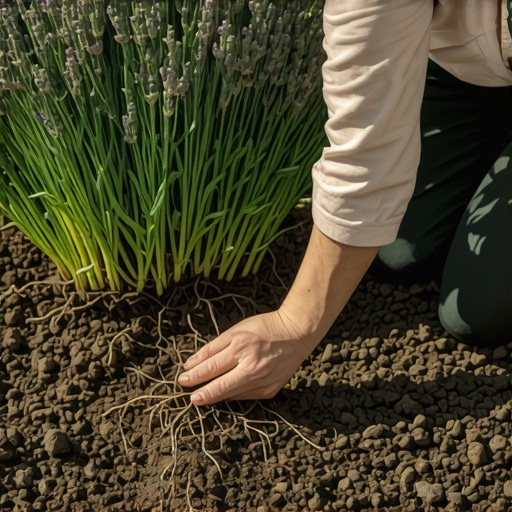
I always drill into my new crew members: if you don’t fix the soil grading first, every plant you put in the ground is just expensive compost. I remember a job in North Georgia where a homeowner had spent four thousand dollars on mature Boxwoods. They hired a guy with a truck who just dug holes in the red clay, dropped the balls in, and backfilled. Two months later, I was there to dig them up. The root balls smelled like rotten eggs: a classic sign of sulfur-reducing bacteria thriving in an oxygen-deprived environment. We call it the bathtub effect. The hole you dig in clay acts like a ceramic pot with no drainage hole. The plant sits in a stagnant pool until the roots slough off like wet paper.
[image_placeholder_1]
The Forensic Autopsy of a Failed Planting Site
To fix a drainage issue, you have to understand the physics of the soil. Clay particles are less than 0.002 millimeters in diameter. For comparison, sand particles are up to 2.0 millimeters. Because clay is so small, it has a massive surface area that holds onto water through capillary action. This is why it stays wet for weeks after a rainstorm.
“A retaining wall doesn’t fail because of the stone; it fails because of the water trapped behind it.” – Hardscape Engineering Axiom
The same logic applies to your garden beds. If you have a slope that directs surface runoff toward your foundation or into a low-lying planting bed, you are fighting a losing battle with hydrostatic pressure. The water has nowhere to go but down, and if the clay is compacted to 95 percent proctor density from construction equipment, it isn’t going anywhere.
How do I test my soil’s drainage?
A professional percolation test involves digging a hole 12 inches deep, filling it with water, and timing how long it takes to drain. If the water is still there after 24 hours, you have a drainage failure that requires mechanical intervention like a French drain or soil amendment. Don’t guess. Measure the drop in water level with a ruler every hour. You want to see at least one inch of drainage per hour for most woody ornamentals.
What are the best shrubs for heavy clay soil?
While remediation is best, selecting species like Buttonbush (Cephalanthus occidentalis), Red Osier Dogwood, or Inkberry Holly can mitigate failure because these plants have evolved to handle saturated anaerobic conditions. However, even these will struggle if the soil is essentially concrete. The goal is to improve the site, not just find a plant that can survive a swamp.
The 2026 Root Fix: Mechanical and Biological Solutions
Stop buying bags of sand to ‘loosen’ your clay. You are just making low-grade concrete. To actually change the structure of clay, you need flocculation. This is a chemical process where small clay particles are clumped together into larger ‘peds’ to create pore space. Gypsum (calcium sulfate) is often touted as the cure, but it only works on sodic soils. For most of us, the answer is massive amounts of organic matter and mechanical aeration.
| Soil Type | Pore Space % | Drainage Rate (In/Hr) | Remediation Priority |
|---|---|---|---|
| Heavy Clay | 35-40% | 0.01 – 0.05 | Mechanical Grading / Berming |
| Silty Loam | 45-50% | 0.5 – 2.0 | Organic Mulching |
| Sandy Loam | 40-45% | 2.0 – 6.0 | Moisture Retention |
If you are dealing with a flat yard with zero exit point for water, you must build up. We call this mound planting or berming. Instead of digging a hole into the clay, you place the root ball half-way into a shallow divot and build a wide mound of well-draining soil around it. This ensures the root flare—the point where the roots meet the trunk—is always above the saturation line.
The Clay Soil Planting Checklist
- Locate the Root Flare: Never bury the trunk. If you don’t see the flare, the plant will develop girdling roots.
- Dig Wide, Not Deep: The hole should be three times the width of the root ball but no deeper than the root ball itself.
- Scarify the Walls: Use a pickaxe to break up the smooth, glazed sides of the hole. This allows roots to penetrate the surrounding soil.
- Install a Chimney: In extreme cases, we dig a deep ‘chimney’ at the bottom of the hole and fill it with 57 stone to bypass the top clay layer.
- Mulch Correctly: Two inches of arborist wood chips. Keep it three inches away from the bark. No mulch volcanoes.
“Soil structure is the arrangement of primary soil particles into compound particles or clusters that are separated by adjoining surfaces.” – USDA Natural Resources Conservation Service
Remediating the Entire Landscape
For large scale garden design, you have to look at the macro-drainage. We often install French drains using 4-inch perforated PVC (not the cheap corrugated stuff that clogs) wrapped in a silt sock and buried in clean 3/4 inch crushed stone. This pipe must be pitched at a minimum of 1 percent grade to a daylight exit or a dry well. If you don’t have a slope, you need a sump pump. There is no magic powder that makes water disappear. It is physics. It is gravity.
Irrigation timing is the final piece of the puzzle. Most homeowners with clay soil over-water. They see a wilting leaf and think the plant is thirsty. In clay, a wilting leaf often means the roots are rotting. Dig down three inches. If the soil is cool and moist, don’t touch the hose. Force those roots to search for moisture deeper in the profile. Deep, infrequent watering is the only way to build a resilient landscape. Do not skip the 811 call before you start digging these trenches. It is free. Use it.
![Stop Killing Your 2026 Boxwoods with 3 Root Rot Fixes [Zone 7]](https://lawnmajesty.com/wp-content/uploads/2026/04/Stop-Killing-Your-2026-Boxwoods-with-3-Root-Rot-Fixes-Zone-7.jpeg)

![7 Smart Irrigation Fixes to Slash 2026 Water Bills [Proven]](https://lawnmajesty.com/wp-content/uploads/2026/02/7-Smart-Irrigation-Fixes-to-Slash-2026-Water-Bills-Proven.jpeg)