The Forensic Autopsy of a Scorched Lawn
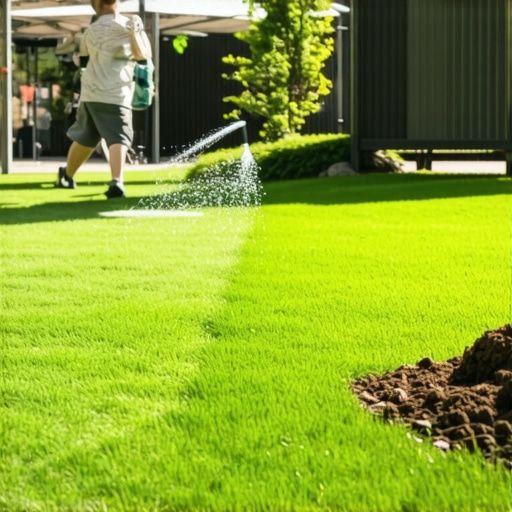
Your lawn is not dying because of the sun. It is dying because of your ignorance of soil physics and hydro-kinetics. When I see a yard turning into a brittle, tan graveyard, I do not see a weather problem; I see a data failure. Last July, a homeowner called me in a panic after they completely torched their front lawn by applying a high-nitrogen synthetic fertilizer during a 95-degree heatwave. They thought ‘feeding’ the grass would help it fight the heat. Instead, the salts in that fertilizer combined with a shallow, 15-minute daily watering cycle to create an osmotic nightmare. The soil became hyper-saline, pulling moisture out of the root cells rather than into them. The turf did not just wilt; it underwent cellular collapse. We had to strip three inches of topsoil and start over. It was a $12,000 mistake that a $150 sensor could have prevented. Stop guessing. Start measuring.
Why Traditional Irrigation Schedules Are Killing Your Turf
Traditional timer-based irrigation systems are obsolete because they ignore evapotranspiration rates, soil moisture tension, and micrometeorology, leading to anaerobic soil conditions or hydro-phobic thatch layers. Most ‘smart’ controllers are just glorified timers that check a weather app. If the app says it is raining three miles away at the airport, your controller shuts off, even if your micro-climate is bone dry. True 2026-grade lawn care requires in-situ volumetric water content (VWC) monitoring. Without it, you are either drowning the roots—leading to Pythium blight—or allowing them to reach the permanent wilting point (PWP), from which there is no recovery. Don’t skip the data.
“Turfgrass quality is often inversely proportional to irrigation frequency when drainage is poor, as excessive moisture depletes soil oxygen levels necessary for root respiration.” – University of California Division of Agriculture and Natural Resources
How deep should a soil moisture sensor be buried?
For standard Kentucky Bluegrass or Tall Fescue, you must install sensors at two depths: one at 2 inches to monitor the immediate evaporative zone, and another at 6 inches to track the deep root reservoir. This dual-zone monitoring prevents the common mistake of ‘surface wetting,’ where the top inch of soil is saturated but the actual root zone remains in a state of terminal drought.
The 3 Smart Sensor Fixes for 2026
1. Time-Domain Transmissometry (TDT) Probes
TDT sensors represent the gold standard in 2026 residential landscaping. Unlike cheap capacitance sensors that are fooled by soil salinity or temperature fluctuations, TDT probes measure the time it takes for an electromagnetic pulse to travel a known path. This gives you a precise dielectric constant reading of the soil. If your VWC drops below 20% in loamy soil, the system triggers a deep-soak cycle. It is binary. It is precise. It works. The probe must be in direct contact with undisturbed soil. Air pockets will ruin the reading. It will fail.
2. Hyper-Local ET Weather Stations
Stop relying on the local news for your weather data. A 2026 lawn setup requires an on-site Evapotranspiration (ET) station. This measures solar radiation, wind speed, and relative humidity at the blade level. It calculates exactly how much water the plant is ‘breathing’ out. If the ET rate exceeds the soil’s replenishment rate, the system adjusts the schedule before the grass shows visual signs of stress. Information Gain: While the internet tells you to water every day, turf grass actually needs deep, infrequent watering—exactly 1 inch per week—to force roots to chase the water down into the subgrade. Deep roots are the only defense against scorching.
3. Ultrasonic Flow Meters with AI Leak Detection
A scorched lawn is often the result of a hidden pressure drop in your hardscaped irrigation lines. If a lateral line under your driveway has a hairline fracture, your zone 4 heads will lack the PSI required for proper ‘head-to-head’ coverage. You get brown spots. You think it’s a dry spot. You increase the run time. You waste 5,000 gallons. An ultrasonic flow meter detects these micro-leaks by monitoring vibration frequencies in the pipe. It shuts the system down and pings your phone before the soil becomes a swamp.
| Technology | Accuracy Level | Primary Benefit | Best For |
|---|---|---|---|
| Capacitance Sensors | Medium | Low Cost | Small DIY Gardens |
| TDT/TDR Probes | High | Salinity Independent | High-End Turf/Estate Care |
| ET Stations | Extreme | Predictive Logic | Large Properties/Water Conservation |
Do smart sprinkler controllers really save money?
Yes, but only if paired with physical soil probes. A smart controller without a probe is like a car with a GPS but no fuel gauge. It knows where to go, but not if it can get there. In 2026, the ROI on sensor-integrated systems is roughly 14 months for a standard 5,000 sq. ft. lawn, primarily through water bill reduction and the prevention of turf replacement costs.
“A retaining wall doesn’t fail because of the stone; it fails because of the water trapped behind it, and a lawn is no different—it’s all about the management of hydrostatic pressure and drainage.” – Hardscape Engineering Axiom
The 2026 Lawn Technology Audit Checklist
- Verify Soil Texture: Use a jar test to determine if you have sandy loam or heavy clay. Your sensor threshold must be calibrated to this.
- Calibrate VWC Thresholds: Set your ‘Auto-On’ trigger to 25% VWC and your ‘Field Capacity’ shut-off to 45%.
- Check Head-to-Head Coverage: Place catch cups around the lawn to ensure the sensors are receiving the same volume as the turf.
- Inspect Root Flares: Ensure your sensors aren’t being interfered with by large tree roots that will out-compete the grass for moisture.
- Clear Thatch Layers: If your thatch is over 0.5 inches, your sensors will read ‘wet’ while the soil is bone dry. Vertical mow if necessary.
Remediation and Maintenance Logic
If you have already scorched your lawn, the fix isn’t just more water. You need to break the hydrophobic seal. When soil gets too dry, it develops a waxy coating that repels water. You can run the sprinklers for six hours and the water will just sheet off into the gutter. You must apply a professional-grade non-ionic wetting agent (surfactant) to lower the surface tension of the water. Only then can your new sensors accurately track the moisture penetration. Once the sensors show the moisture has reached the 6-inch mark, you back off. Let the soil dry out. Force the roots to work. Landscaping is not about pampering plants; it is about engineering resilience. Don’t be a hack. Install the probes. Watch the data. Grow a lawn that survives the decade. It won’t be easy, but it will be right.
![3 Signs Your 2026 Culpeper VA Lawn Needs Thatching [Test]](https://lawnmajesty.com/wp-content/uploads/2026/04/3-Signs-Your-2026-Culpeper-VA-Lawn-Needs-Thatching-Test.jpeg)