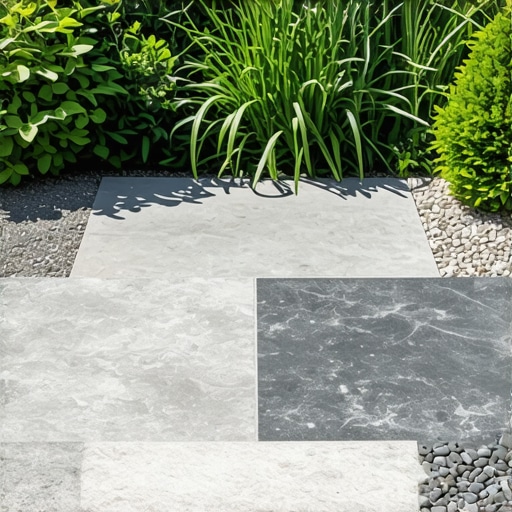
The Hardscape Autopsy: Why Traditional Patios Fail and the Sustainable Path Forward
Carbon-negative pavers are high-performance hardscaping units designed to sequester more CO2 than they emit during manufacturing. When integrated into modern garden design, these materials—ranging from bio-cement to recycled geopolymer—provide structural compressive strength (PSI) exceeding 8,000 while drastically reducing the environmental footprint of landscaping projects. I recently got called out to tear up a $30,000 patio that was sinking because the previous contractor ignored the fundamental physics of hydrostatic pressure and used a substandard base. The homeowner wanted ‘eco-friendly,’ but the contractor delivered a disaster. After excavating 14 inches of improperly compacted clay soil, I found the geotextile fabric was non-existent. The stones were literally suffocating the soil microbiology. If you don’t fix the soil grading and base-layer compaction first, every plant or paver you put in the ground is just expensive waste. You can buy the most sustainable material on the planet, but if you don’t respect 98% Standard Proctor Density, it will fail. It is that simple.
“A retaining wall doesn’t fail because of the stone; it fails because of the water trapped behind it.” – Hardscape Engineering Axiom
1. Bio-Cement: Growing Stone Through Microbial Calcification
Bio-cement pavers utilize Microbial-Induced Calcite Precipitation (MICP), where bacteria like Sporosarcina pasteurii bond aggregate particles at room temperature. This sustainable hardscaping method avoids the massive carbon emissions of traditional Portland cement kilns while producing units with 4,000+ PSI durability. This is not science fiction; it is applied biology. Instead of burning limestone at 2,700 degrees Fahrenheit, we are using microbes to fuse calcium carbonate. In my 22 years of hardscaping, I have never seen a material that handles freeze-thaw cycles as well as these biological units. They are resilient. They are dense. They don’t require the same chemical sealants that traditional pavers do, which keeps your lawn care routine cleaner by preventing toxic runoff into your turf grass.
2. Recycled Glass & Fly Ash Geopolymers
Geopolymer pavers leverage industrial waste products like Class F fly ash and crushed glass to create a binder that replaces cement entirely. These carbon-negative choices utilize chemical activation to achieve a tensile strength that rivals high-traffic infrastructure materials. Fly ash is a byproduct of coal combustion that usually sits in a landfill. When we react it with an alkaline activator, we get a material that is actually more resistant to salt-scaling and sulfate attack than standard concrete. This makes it ideal for garden design near salt-water pools or in climates where road salt is a factor. You are essentially turning waste into a 100-year asset.
“Standard Portland cement production accounts for roughly 8% of global CO2 emissions; geopolymer alternatives can reduce this impact by up to 90%.” – Environmental Agronomy Review
3. Carbon-Sequestering Hempcrete Units
Hempcrete pavers are lightweight, breathable masonry units made from hemp shiv and lime that actively pull carbon dioxide from the atmosphere throughout their lifecycle. These units are highly permeable, allowing stormwater to infiltrate the subgrade, which prevents soil erosion and supports lawn care health. Hemp grows faster than almost any other crop, capturing massive amounts of CO2. When mixed with a lime binder, it petrifies. I use these specifically in areas where drainage is a nightmare. They act as a carbon sink for your backyard. However, you must ensure the bedding layer is #57 stone to allow for maximum percolation. Don’t use stone dust here; it will clog the system and cause heaving during the first frost.
4. Reclaimed Timber-Grain Ceramic Units
Reclaimed ceramic pavers are manufactured using closed-loop systems that recycle 100% of water and use renewable energy, creating a net-zero or carbon-negative product by the time it reaches your landscaping site. These units mimic the look of wood without the rot or maintenance. For a 2026 patio, these are the gold standard for sustainable garden design. They don’t warp, they don’t fade, and they don’t leach VOCs into your soil. They are fired at such high temperatures that they are virtually non-porous. This means algae and moss—the enemies of a clean patio—can’t find a foothold.
How much modified gravel do I need for a patio base?
To calculate base material, multiply the square footage by the compaction depth (typically 6 inches for walkways, 10-12 inches for patios) and divide by 27 to get cubic yards. Always account for a 20% compaction factor when ordering modified gravel or crushed stone. If you skimp on the sub-base, your hardscaping will settle within two seasons. Period.
Can I install carbon-negative pavers over existing concrete?
You can overlay pavers on concrete only if the slab is structurally sound, has a minimum 2% slope for drainage, and you use a thin-set or sand-set method with proper perimeter restraints. If the concrete is cracked or spalling, the movement will telegraph through to your new paving stones. It is usually better to demolish the old slab, crush it, and use it as recycled base material.
Material Comparison Table
| Material Type | Carbon Impact | PSI Strength | Permeability |
|---|---|---|---|
| Standard Concrete | High Positive | 4,000 | Low |
| Bio-Cement (MICP) | Negative | 5,500+ | Medium |
| Fly Ash Geopolymer | Neutral/Negative | 8,000+ | Low |
| Hempcrete Units | Deep Negative | 1,500-2,000 | High |
The Professional Installation Checklist
- Excavation: Minimum 8-12 inches depending on soil type (clay vs. loam).
- Geotextile: Use a non-woven fabric to separate subgrade from the aggregate base.
- Base Layers: Apply 2-inch lifts of 3/4-inch modified stone, compacting each lift with a vibratory plate compactor.
- Screeding: Use 1-inch outside diameter (OD) pipes to create a perfectly level bedding sand layer.
- Edge Restraint: Install heavy-duty plastic or concrete curbing to prevent lateral movement.
- Jointing: Use polymeric sand or fine-grit chips depending on the permeability requirements.
Landscape architecture is changing. We aren’t just moving dirt anymore; we are managing carbon cycles. If you want a patio that lasts until 2050, you have to stop thinking about the surface and start thinking about the engineering beneath it. Use the right base, choose carbon-negative units, and for the love of your lawn, don’t hire a guy who doesn’t own a transit level.
![Build a $600 Paver Walkway in 48 Hours [2026 DIY]](https://lawnmajesty.com/wp-content/uploads/2026/04/Build-a-600-Paver-Walkway-in-48-Hours-2026-DIY-1.jpeg)
![4 Hidden Reasons Your 2026 Paver Path is Shifting [Fixes]](https://lawnmajesty.com/wp-content/uploads/2026/02/4-Hidden-Reasons-Your-2026-Paver-Path-is-Shifting-Fixes.jpeg)