Stop Soil Hardening: 4 Warrenton VA Lawn Care Fixes for 2026
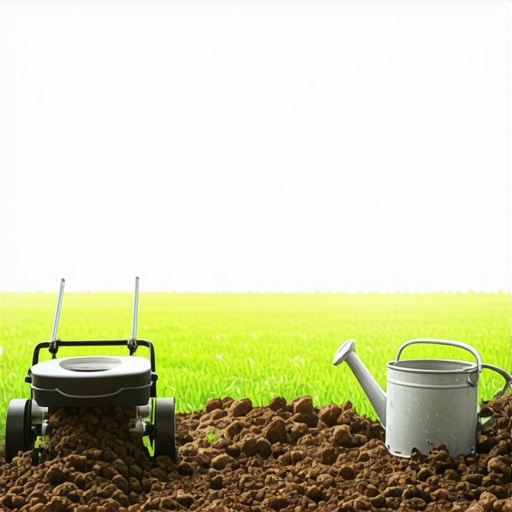
You step off the porch and feel it. That jarring shock through your heels. The ground in Fauquier County shouldn’t feel like a sidewalk, but here we are. It is the end of a long, dry July, and your fescue looks more like straw than a living thing. Dirt dies. It’s that simple. When the sun beats down on Northern Virginia for three weeks straight, the ground stops acting like a sponge and starts acting like a brick. Editor’s Take: The red clay of Warrenton is notorious for compaction; if you don’t break the surface tension by mid-autumn, your 2026 spring growth will likely fail before the first thaw.
The Concrete Under the Fescue
Compaction is a silent thief. It robs the roots of oxygen. It turns a gentle rain into a flash flood that washes away your expensive seed. In our corner of the world, lawncare warrenton va is less about aesthetics and more about survival of the soil biology. Think about the pressure. Every footstep, every heavy mower pass, and even the weight of snow presses the life out of the earth. We want, and the grass definitely needs, better drainage. Without it, the microbes suffocate. This isn’t just about green grass; it’s about the very foundation of your property. Mowing warrenton va during a drought only makes it worse, as the heavy equipment serves as a rolling steamroller on your fragile yard. You can see the struggle in the thin patches and the way water pools in the low spots instead of sinking deep where it belongs.
Why the Neighborhood Mower Won’t Cut It
Traditional methods often miss the mark because they treat the symptom, not the cause. You see neighbors throwing down bags of high-nitrogen fertilizer, hoping for a miracle. They are just feeding a ghost. If the soil is hard, those nutrients sit on top. They wash into the storm drains. They do nothing for the plant. We have seen lawns where the thatch layer is so thick it acts like a raincoat, shielding the dirt from the very water it craves. Real landscaping warrenton va requires a shift in perspective. You have to look beneath the blades. A healthy lawn in 2026 requires a focus on soil structure over leaf color. The grit of the Piedmont region demands a specific approach to aeration—one that doesn’t just poke holes but actually removes cores to allow for gas exchange. It is a messy process. It looks like your yard has been visited by a flock of confused geese, but those little plugs of dirt are the keys to a resilient root system.
The Biology of a Better Blade
There is a massive difference between the old-school mentality of ‘kill the weeds’ and the modern ‘feed the soil’ philosophy. Old habits die hard. For decades, the go-to move was heavy chemical intervention. Today, we know better. High-impact landscaping involves introducing organic matter that breaks down the clay bonds. Imagine the soil as a series of tiny rooms. In compacted dirt, the walls have collapsed. By adding humic acid or compost top-dressing, you are essentially rebuilding those rooms. The worms come back. The fungi thrive. Suddenly, your lawn isn’t just a decoration; it’s a living, breathing ecosystem that can handle a Virginia heatwave without turning into a dust bowl. A study by the Soil Science Society of America once noted that even a 1% increase in organic matter can help soil hold thousands of gallons more water per acre. That is the difference between a lawn that survives and a lawn that thrives.
Your Yard Is Not a Parking Lot
How do we fix the damage? First, stop the traffic. If the ground is saturated or bone-dry, keep the heavy machinery off it. Second, embrace the core. Aeration should be a non-negotiable part of your yearly rhythm. Third, diversify your seed. A monoculture is a recipe for disaster in the changing climate of the Mid-Atlantic. Fourth, hydrate deeply but infrequently. You want those roots to dive deep, searching for moisture, which strengthens the plant against the next dry spell. Will aerating my lawn in Warrenton really make a difference in one season? Yes, though the full benefits of microbial recovery usually take two cycles to show. Can I just use liquid aerators? They help, but in the heavy clay of our area, mechanical core removal is still the gold standard. When is the best time to start? Late August to early October is the sweet spot for our zone. The battle for a better lawn isn’t won with a spreader; it’s won with a strategy. It’s time to stop fighting the clay and start fixing it. Your 2026 self will thank you when the first heatwave hits and your yard stays stubbornly, beautifully green.
![3 Grass Pickup Fixes for Greener 2026 Culpeper VA Lawns [Tested]](https://lawnmajesty.com/wp-content/uploads/2026/04/3-Grass-Pickup-Fixes-for-Greener-2026-Culpeper-VA-Lawns-Tested.jpeg)
![3 Signs Your 2026 Culpeper VA Lawn Needs Thatching [Test]](https://lawnmajesty.com/wp-content/uploads/2026/04/3-Signs-Your-2026-Culpeper-VA-Lawn-Needs-Thatching-Test.jpeg)
![4 Culpeper VA Thatching Fixes for a Firmer 2026 Lawn [Tested]](https://lawnmajesty.com/wp-content/uploads/2026/03/4-Culpeper-VA-Thatching-Fixes-for-a-Firmer-2026-Lawn-Tested.jpeg)
I really appreciate how this post emphasizes soil health over quick fixes like fertilizer. In my own yard in Warrenton, I’ve started to see better results by focusing on aeration and adding compost to improve organic matter. It’s a slow process, but I believe it’s the key to creating a resilient lawn that can handle our hot, dry summers. The part about using core aeration rather than liquid is especially relevant for heavy clay, which is a challenge here. I’ve wondered, though, about the best times of year to do these treatments—has anyone found that late August works best for aeration and top-dressing, or do you prefer early fall? I’d love to hear others’ experiences on timing and techniques, as I want to make sure I do this right before the next season kicks in.
This post hits the nail on the head when it comes to tackling soil compaction, which can be such a sneaky problem. I’ve been working on my Warrenton lawn for a couple of years now, focusing on core aeration and adding organic matter like compost and humic acid in early fall. The difference in soil softness and plant resilience has been noticeable, even during these dry summers. I especially agree with the importance of microbial activity—without healthy microbes, turf really struggles. Interestingly, I’ve found that combining aeration with overseeding in September gives the best spring results. Has anyone experimented with using cover crops or specific organic additives to further boost soil health over winter? I’d love to hear what has worked for others in our area—what timing and methods have helped you get your yard through our tough climate?