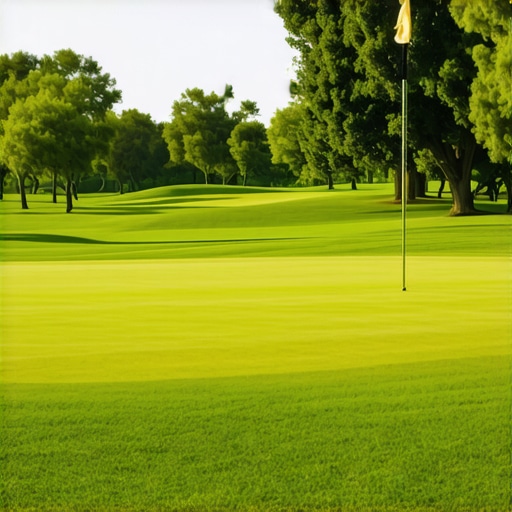
The Foundation of Elite Turf Management
A precision mowing height for a 2026 golf-course lawn is defined by the specific physiological requirements of the turf species and the mechanical capabilities of the mower. For elite home lawns, this involves maintaining heights between 0.5 and 1.5 inches using reel mowers to maximize tillering and density. If you think you can achieve this with a dull rotary blade and a bumpy yard, you are mistaken. Density is a byproduct of stress and recovery, balanced on a razor’s edge of biological limit.
I always drill into my new crew members: if you don’t fix the soil grading first, every plant you put in the ground is just expensive compost. I remember a job in ’18 where a client wanted a ‘putting green’ finish on a backyard that had a 4-degree undulation across the primary line of sight. They’d spent five grand on TifTuf Bermuda sod but refused the laser-leveling sub-base. Three weeks in, the high spots were scalped to the dirt, and the low spots were anaerobic bogs. We had to rip it all out, bring in 40 tons of USGA-spec sand, and start over. If the floor isn’t flat, the ceiling—your grass height—will never be level. Precision mowing is 80% civil engineering and 20% biology.
“A lawn’s ability to withstand low mowing heights is directly proportional to its root biomass and the availability of non-structural carbohydrates stored in the crown.” – Penn State Center for Turfgrass Science
The Biology of the Short Cut
When you lower the height of cut (HOC), you are reducing the surface area available for photosynthesis. To survive, the grass plant must adapt by increasing its shoot density—this is called tillering. You are essentially forcing the plant to grow sideways because it cannot grow up. This creates that ‘carpet’ feel. However, this comes at a cost. Shorter grass has shorter roots. If you cut at 0.5 inches, you better have a fertigation system and a moisture sensor because that plant has zero margin for error. It will wilt in two hours without water in July. Don’t skip the irrigation audit.
1. The Championship Green: 0.100″ to 0.125″ (Creeping Bentgrass/Ultradwarf Bermuda)
Maintaining a height of 0.100 to 0.125 inches requires daily mowing with a precision reel mower and a sand-based rootzone to prevent crown suffocation. This height is the extreme limit of turf biology, reserved for high-traffic putting surfaces where ball roll speed (Stimpmeter) is the primary performance metric. At this level, you aren’t just ‘mowing’; you are managing a living organism under constant physiological stress. The mower blades must be back-lapped weekly. The bedknife must be set to a paper-thin clearance. If you miss a single day of growth, you risk ‘scalping the crown,’ which is a death sentence for the plant. We use Plant Growth Regulators (PGRs) like Trinexapac-ethyl to slow vertical elongation and force energy into the roots. Without PGRs, the grass grows too fast for the mower to keep up.
2. The Tee Box and Collar: 0.250″ to 0.500″ (Hybrid Bermuda/Zoysia Matrella)
The 0.250 to 0.500-inch height range is the ‘sweet spot’ for high-end residential hardscaping surrounds and tee boxes, offering a firm, walkable surface. This height provides an architectural look that complements clean stone lines and modern garden design. It requires a reel mower with at least 7 to 10 blades on the cylinder to avoid ‘rifling’ or ‘washboarding’—that ugly ribbed pattern left by insufficient clips per inch. At half an inch, Zoysia Matrella feels like walking on a dense wool rug. It is highly resistant to wear but incredibly slow to recover if you damage the rhizomes. Soil compaction is your enemy here. You must core aerate at least twice a year to keep the gas exchange active in the rootzone.
How much sand do I need for a level lawn?
For a standard 1,000 square foot area, a topdressing of 1 to 2 cubic yards of kiln-dried masonry sand is typically required to fill minor depressions and maintain a level plane for low-height mowing. This process, known as ‘sand leveling,’ should only be done during the peak growing season when the grass can quickly grow through the layer. Never bury the green tissue completely. It will rot.
3. The Fairway Standard: 0.500″ to 0.750″ (Kentucky Bluegrass/Perennial Ryegrass Blends)
Fairway heights of 0.500 to 0.750 inches represent the gold standard for luxury estates, requiring specialized cool-season cultivars that can tolerate low HOC. Traditionally, Kentucky Bluegrass was kept at 2.5 inches, but 2026 genetics allow for ‘low-mow’ varieties that thrive at sub-inch levels. This height requires a sophisticated nutrient program. You cannot just throw 10-10-10 fertilizer on this. You need spoon-feeding—small amounts of nitrogen and potassium every 14 days to maintain color without triggering a massive growth surge that would require twice-daily mowing. We look for ‘High-Density’ cultivars on the NTEP (National Turfgrass Evaluation Program) trials. If it’s not on the list, don’t plant it.
| Grass Species | Ideal HOC (Inches) | Mower Type | Mowing Frequency |
|---|---|---|---|
| Creeping Bentgrass | 0.100 – 0.125 | 11-Blade Reel | Daily |
| TifTuf Bermuda | 0.375 – 0.750 | Greens Mower | 3x Weekly |
| Zeon Zoysia | 0.500 – 1.500 | Reel or High-End Rotary | 2x Weekly |
| Elite KBG | 0.750 – 1.500 | Reel Preferred | 2x Weekly |
| Turf-Type Tall Fescue | 2.000 – 3.500 | Rotary | Weekly |
4. The ‘Home Pro’ Cut: 1.00″ to 1.50″ (St. Augustine/Improved Fescues)
A 1.00 to 1.50-inch height is the maximum threshold for achieving a ‘golf-like’ aesthetic with standard professional-grade rotary mowers and consumer-level maintenance. This is where most high-end garden design projects land. It’s short enough to look intentional and ‘engineered,’ but tall enough to provide some drought resistance. At an inch and a half, the grass can still shade its own soil, reducing evaporation rates. However, the ‘One-Third Rule’ is non-negotiable here: never remove more than 33% of the leaf blade in a single cutting. If your target is 1 inch, and the grass grows to 1.75 inches, you’ve waited too long. You’ll chop into the stems, turning the lawn brown for a week. Accuracy matters.
5. The Strategic Rough: 2.0″ to 3.0″ (For Stress Recovery and Shady Zones)
Elevating the mowing height to 2.0 or 3.0 inches is a critical management tactic for turf under environmental stress or in areas with less than 6 hours of sunlight. Even on a golf course, the rough serves a biological purpose. Taller grass means deeper roots. If you are battling a heatwave or a fungal outbreak like Brown Patch, raising the deck is the first line of defense. In shaded areas near large hardwoods, the grass needs every millimeter of leaf surface it can get to catch filtered sunlight. If you try to mow at 0.5 inches under an oak canopy, the grass will thin out and die within one season. Adapt or fail.
“Compaction from heavy equipment is the primary cause of drainage failure in residential landscapes, leading to localized dry spots and anaerobic soil conditions.” – ICPI Tech Spec 2
The 2026 Lawn Readiness Checklist
- Sharpness Test: If your mower blade cannot slice a piece of paper cleanly, it is tearing the grass, not cutting it. Torn edges lead to disease.
- Soil pH Check: Target 6.5. If you are below 5.5, your fertilizer is basically neutralized by the soil chemistry.
- Irrigation Calibration: Use tuna cans to ensure you are getting exactly 1 inch of water per week, delivered in two deep sessions.
- Thatch Management: If your thatch layer exceeds 0.5 inches, your water and nutrients aren’t even reaching the soil. Vertical mowing is required.
- Blade Leveling: Use a height-of-cut gauge to ensure the left and right sides of your mower deck are within 1/16th of an inch.
How do I transition my lawn to a lower height?
Lowering the height of cut must be done incrementally over several weeks to avoid ‘scalping.’ Drop the mower one notch, wait for the grass to recover and thicken, then drop it again. This encourages the ‘crown’ of the plant to migrate lower toward the soil surface. Doing this too fast will expose the brown, woody stems, leaving the lawn looking like a dead hay field. Consistency is the only way to win. It takes a full season to ‘train’ a lawn to stay at 0.5 inches. Don’t rush the process. It will rot if you do.
![Mowing Culpeper VA: 3 'Fat Packing' Hacks for 2026 Lawns [Tested]](https://lawnmajesty.com/wp-content/uploads/2026/03/Mowing-Culpeper-VA-3-Fat-Packing-Hacks-for-2026-Lawns-Tested.jpeg)
![4 Culpeper VA Grass Seeding Fixes for Clay Soil [2026 Update]](https://lawnmajesty.com/wp-content/uploads/2026/03/4-Culpeper-VA-Grass-Seeding-Fixes-for-Clay-Soil-2026-Update.jpeg)