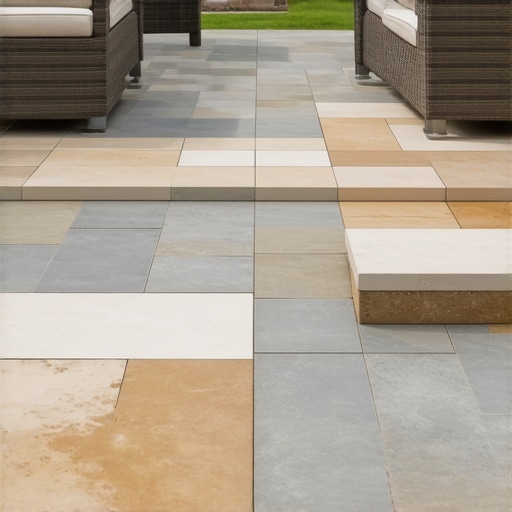
The sharp scent of linseed oil and the sticky residue of fresh varnish cling to my hands while I watch the rain slide off the old oak workbench. A patio should be like a fine 18th-century cabinet. It requires structural honesty. In Warrenton, homeowners often mistake a flat surface for a finished job, forgetting that the red Piedmont clay underneath is a living, shifting beast. By 2026, the shortcuts taken today will manifest as cracked flagstone and pooling water near your foundation. To fix these errors, you must prioritize sub-base compaction and proper drainage slopes specifically designed for Fauquier County weather patterns. Editor’s Take: True hardscaping isn’t about the stone you see, but the invisible engineering beneath it. Do not trade long-term stability for immediate aesthetic gratification.
The red clay trap beneath your feet
Most hardscaping contractors Warrenton VA hire simply do not dig deep enough. This isn’t just a grievance; it is a mechanical failure. Our local soil expands and contracts with a violence that would shock a city dweller. If you haven’t accounted for the high moisture retention of Virginia clay, your stones will dance by the second winter. It is about the grain of the earth. You need a sacrificial layer of crushed aggregate, compacted in three-inch lifts, not a single thin pour of gravel. This creates a skeleton. Without it, the patio is just a veneer waiting to peel. When considering Landscaping services in Warrenton VA, demand to see the compaction logs. It is the only way to ensure the joinery of your outdoor space remains tight as a dovetail joint. A loose base is a lie told in stone.
Why your drainage plan fails in heavy storms
I often hear the soft drip of water hitting a poorly angled sill. It is the sound of future rot. In the foothills of the Blue Ridge, we get those sudden, heavy downpours that turn a backyard into a bowl. Many residents assume a one-percent pitch is sufficient. It isn’t. Not when the runoff from your roof is channeled directly toward the new pavers. You need integrated French drains or carefully hidden swales that guide the water toward the outskirts of the property. Retaining wall builders Warrenton VA often forget to include weep holes that actually function. Water weight is the primary cause of wall failure. If the pressure builds, the wall bows. If the wall bows, the patio follows. It is a domino effect of poor physics. Proper Warrenton VA landscape design requires a topographical map, not a sketch on a napkin.
The seasonal neglect of local mulch and sod
Mulching services Warrenton VA are frequently treated as a cosmetic afterthought. They are actually a hydration management system. Too much mulch against a stone edge creates a sponge that holds water against the paver base, inviting moss and rot. It is like putting a wet cloth on a polished table. Similarly, the transition between your lawn and your patio matters. Sod installation Warrenton VA must be flush or slightly lower than the stone edge to allow for sheet flow. If the grass is too high, it acts as a dam. I see it every day near Alexandria Pike. Lawns that look like emeralds but function like flood zones. Your lawn care services Warrenton VA should coordinate with your hardscaper. If they don’t talk, your patio dies. Tree and shrub planting Warrenton VA also plays a role; root systems from aggressive species can heave even the heaviest flagstone if planted too close to the perimeter.
Old world methods against modern shortcuts
The industry likes to push polymeric sand as a miracle. It isn’t. It is a chemical fix for a physical problem. I prefer the old way. Hand-set stone with a permeable joint that allows the earth to breathe. By 2026, the heat islands in Northern Virginia will only get worse. Dark pavers hold heat like an oven. Natural stone with a light patina reflects it. Observations from the field reveal that patios using native stone age with more dignity than their concrete-cast counterparts. Think about the long-term maintenance. Landscape maintenance Warrenton VA becomes an uphill battle when you have to power-wash synthetic materials every six months. Natural stone just needs a broom and the occasional rain.
What if my patio is already sinking?
Lift the affected stones, excavate the failed base, and replace it with clean, angular stone. Do not use dirt.
How do I stop weeds between stones?
Use a high-quality filter fabric beneath the base, not just between the stones.
Is Fauquier County soil really that bad?
Yes, the shrink-swell capacity of our clay is among the highest in the state.
Can I install a patio in winter?
Not if the ground is frozen; the expansion will ruin your levels the moment it thaws.
Why is my stone changing color?
It is likely iron oxidation or efflorescence. Both can be treated with a mild acidic wash, but be careful of the surrounding plants.
What is the best stone for Virginia heat?
Travertine or light-colored limestone are the coolest underfoot.
Do I need a permit in Warrenton?
Generally, if the patio is at grade and doesn’t affect drainage to neighbors, no, but always check with the town planning office first.
A patio is a legacy. It is where you sit to watch the seasons turn in the Piedmont. Do not let a lack of foresight turn your sanctuary into a repair project. Fix the base. Respect the water. Trust the old ways of building. The results will outlast us both. Get your project evaluated before the 2026 season begins. “
![5 Cool-Touch Paver Fixes for a Safer 2026 Patio [Tested]](https://lawnmajesty.com/wp-content/uploads/2026/04/5-Cool-Touch-Paver-Fixes-for-a-Safer-2026-Patio-Tested.jpeg)
![5 Non-Slip Stone Finishes for Safe 2026 Pool Decks [Tested]](https://lawnmajesty.com/wp-content/uploads/2026/02/5-Non-Slip-Stone-Finishes-for-Safe-2026-Pool-Decks-Tested.jpeg)
![Build a 2026 Stone Path for $200 [No-Dig Weekend Project]](https://lawnmajesty.com/wp-content/uploads/2026/04/Build-a-2026-Stone-Path-for-200-No-Dig-Weekend-Project.jpeg)
![Build a $450 Dry-Lay Flagstone Patio [2026 Weekend Project]](https://lawnmajesty.com/wp-content/uploads/2026/04/Build-a-450-Dry-Lay-Flagstone-Patio-2026-Weekend-Project.jpeg)