How to Clean Algae Off a Paver Patio Without a Pressure Washer
The Hardscape Autopsy: Why Your Green Patio is Actually a Drainage Failure
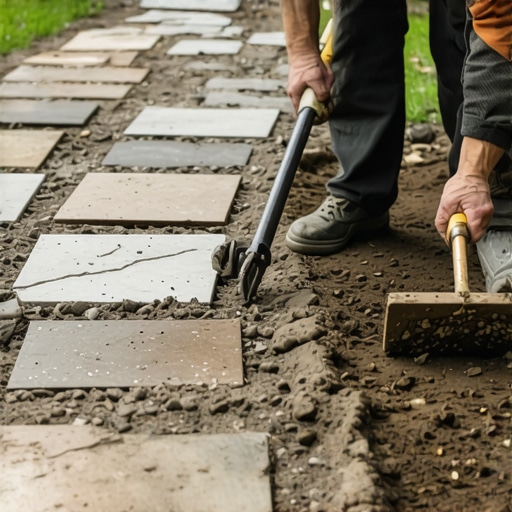
I recently got called out to tear up a $30,000 patio that was sinking because the previous contractor ignored the basic laws of physics. The homeowner was obsessed with the green slime coating their pavers, complaining that they had to pressure wash it every three weeks just to keep from slipping. When we pulled the first three courses of stone, the smell of anaerobic bacteria hit us like a wall. The base was a saturated mess of stone dust and mud. Algae is not a surface problem. It is a biological response to excessive moisture retention and poor hydrostatic management. If you are cleaning algae every month, your patio is likely failing from the bottom up.
“A retaining wall or paver system doesn’t fail because of the stone; it fails because of the water trapped behind or beneath it.” – Hardscape Engineering Axiom (ICPI)
Why Pressure Washers Are the Enemy of Hardscaping
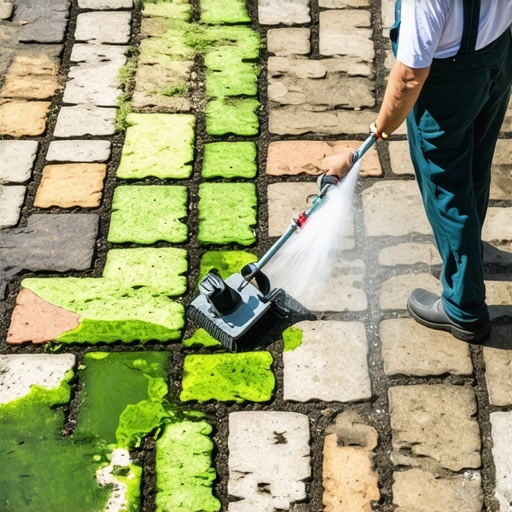
Cleaning algae off a paver patio without a pressure washer requires a chemical approach called soft-washing, which uses sodium percarbonate or diluted sodium hypochlorite to kill the organic biofilm at the root without eroding the stone’s surface. Pressure washing is a hack move that destroys the protective cream layer of concrete pavers and blasts out the polymeric sand needed for interlock. Don’t do it. You will regret it in three years when your pavers look like pitted pumice stone.
The Biology of the Slime: Understanding Biofilm and Spores
Algae on a patio is typically a mix of Chlorophyta and various cyanobacteria. These organisms thrive in the microscopic pores of your masonry. When you use high pressure, you are only removing the top layer of the colony. You leave the microscopic anchors behind. Furthermore, the high-pressure water forces moisture deeper into the bedding sand, creating a perpetual incubator for the next bloom. You must change the pH of the surface or use an oxidative agent to ensure a total kill. This is about cellular disruption, not physical force. We are looking for a chemical reaction that breaks the bond between the algae and the substrate.
How do I know if it’s algae or moss?
Algae is typically a flat, slimy film that is slick when wet, while moss has a root-like structure called rhizoids and a velvety, three-dimensional growth habit. Both thrive in the same conditions: low light, high moisture, and a lack of airflow. If you have moss, you have a structural drainage issue or a soil acidity problem. If you have algae, you likely have standing water or a high water table beneath the stone.
| Chemical Agent | Action Mechanism | Pros | Cons |
|---|---|---|---|
| Sodium Percarbonate | Oxygen Oxidation | Eco-friendly, safe for grass | Slower reaction time |
| Sodium Hypochlorite | Chlorine Bleach | Fast acting, 100% kill rate | Can burn lawn, toxic to fish |
| Acetic Acid (Vinegar) | Acidic Desiccation | Cheap, readily available | Can etch limestone/travertine |
| Proprietary Quats | Residual Inhibition | Prevents regrowth for 1 year | Expensive, chemical heavy |
The Step-by-Step Soft Wash Remediation Process
Before you start, you need to understand the moisture content of your stone. If the pavers are saturated from a recent rain, the chemicals won’t penetrate. Wait for a dry window. This is the professional way to handle a hardscape cleaning project without damaging the structural integrity of the installation. Follow this checklist exactly.
- Pre-wet the surrounding vegetation: Saturate your lawn and garden beds with fresh water. This prevents the cleaning chemicals from being absorbed by your plants.
- Apply the Oxidizer: Use a garden pump sprayer to apply a 1:1 mixture of water and oxygen bleach (sodium percarbonate) or a 1:5 mixture of 12% sodium hypochlorite.
- Dwell Time: Let the solution sit for 15 to 20 minutes. Do not let it dry. If it starts to dry, mist it with more solution.
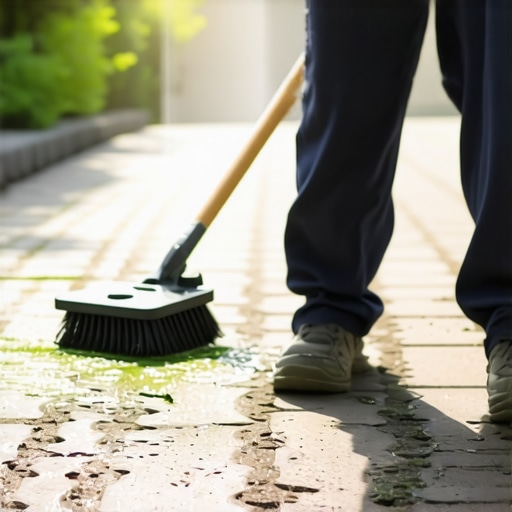
- Agitation: Use a stiff-bristle deck brush. This is the manual labor part. You are breaking the surface tension of the biofilm.
- Low-Pressure Rinse: Use a standard garden hose with a high-flow nozzle to rinse the debris away.
- Neutralize: If using bleach, rinse again with a neutralizing agent or massive amounts of water to protect the soil pH.
How much modified gravel do I need for a patio base?
To prevent the water retention that causes algae, a standard patio needs a 6-inch minimum base of compacted 2A modified gravel for pedestrian traffic. You calculate this by multiplying the square footage of the area by the depth in feet (0.5) and dividing by 27 to get cubic yards. Proper compaction of this base ensures that water moves vertically into the subgrade rather than sitting in the bedding sand layer where algae can feed on it.
“Managing moisture in the landscape requires a multi-layered approach, starting with the chemical properties of the soil and ending with the physical drainage of the hardscape surface.” – Penn State Agricultural Extension
The Engineering Fix: Why Your Patio Stays Wet
If you clean your patio and the algae returns in two weeks, you have a slope or sub-base failure. A professional patio must have a 1 percent to 2 percent slope. That is a 1/4 inch drop for every foot of distance. If your patio is dead level, it is a petri dish. Water stays trapped in the joints. The capillary action of the sand pulls that water to the surface where the sun hits it, and boom, you have an algae bloom. I have seen guys try to fix this by sealing the pavers. That is a mistake. If you seal a damp paver, you trap the moisture inside, leading to efflorescence and spalling. The moisture will eventually blow the sealer off in white, ugly flakes.
The Maintenance Cycle: Keeping the Slime at Bay
Once you have achieved a clean surface, you must manage the environment. Trim back overhanging tree limbs to allow UV light to reach the pavers. UV light is the best natural algicide on the planet. Ensure your gutters aren’t dumping directly onto the hardscape. If you have a low spot where water pools, you may need to install a French drain or a trench drain at the edge of the patio to intercept the runoff. Maintenance is a game of inches and percentages. Adjust your irrigation heads so they aren’t spraying the stone. Most homeowners over-water their lawns, which in turn keeps the adjacent hardscaping perpetually damp. Stop it. Your grass needs deep, infrequent watering, not a daily misting that feeds the algae on your walkway.
![Fix Sinking 2026 Paver Steps with Poly-Sand [DIY]](https://lawnmajesty.com/wp-content/uploads/2026/05/Fix-Sinking-2026-Paver-Steps-with-Poly-Sand-DIY.jpeg)