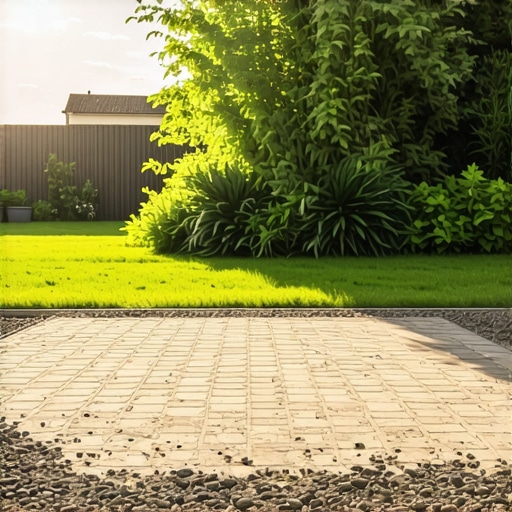
Stop 2026 Patio Erosion with These 4 Gravel Sub-Bases
I recently got called out to tear up a $30,000 patio that was sinking because the previous contractor thought two inches of pea gravel was a sufficient base. It was not. The homeowner was looking at a massive, expensive stone puzzle that had collapsed into the heavy clay subsoil. When we excavated, we found water trapped in pockets, turning the ground into a slurry that could no longer support the weight of the pavers. This is the reality of hardscape failure: it is rarely the stone on top that fails, but the material underneath. If you are planning a build for 2026, you need to understand the civil engineering behind your backyard. We are talking about soil mechanics, hydrostatic pressure, and compaction rates. Anything less is just expensive compost.
The Critical Physics of Patio Sub-Bases
To prevent patio erosion in 2026, you must utilize high-quality sub-bases like #57 stone or Dense Graded Aggregate (DGA) that offer maximum structural integrity and drainage. These materials create a stable platform that resists the freeze-thaw cycle and prevents the vertical migration of fines from the soil into your base layer. Your patio is only as good as the bottom six inches of rock.
“A retaining wall doesn’t fail because of the stone; it fails because of the water trapped behind it.” – Hardscape Engineering Axiom
1. #57 Crushed Limestone (The Open-Graded King)
#57 stone is an open-graded aggregate, meaning it consists of clean, crushed rock approximately 0.5 to 1 inch in size with no fine particles. This is the gold standard for areas with poor drainage or heavy rainfall. Because there are no ‘fines’ or dust to clog the gaps, water moves through this layer at an incredible rate. We typically use this in permeable paver installations or where we expect high hydrostatic pressure. In 2026, with changing weather patterns, the ability to move 10 inches of rain per hour through your base is a massive insurance policy. It does not compact as tightly as a dense-graded base, but its structural stability comes from the angular locking of the rocks. Do not use rounded river stone. It will roll like ball bearings. You need crushed, angular limestone or granite.
2. Dense Graded Aggregate (DGA) or 21A
DGA, often called ‘Crusher Run’ or ‘Modified Gravel,’ contains a mix of stone sizes from 1 inch down to microscopic dust. When you run a 5,000-pound vibratory plate compactor over this, the smaller particles fill the voids between the larger stones. This creates a base that is almost as hard as concrete. For 2026 patio projects, DGA is the preferred choice for standard pedestrian patios where the subsoil is well-drained. It provides a level of stiffness that prevents individual pavers from dipping over time. However, if it stays wet, it will fail. You must ensure the subgrade is pitched at a 2 percent slope to move water away from the house. If water sits in DGA, it turns into a sponge.
3. Recycled Concrete Aggregate (RCA)
RCA is a sustainable and cost-effective alternative to virgin stone. It is made by crushing old concrete sidewalks and roads. It often has a higher CBR (California Bearing Ratio) than natural stone because of the unhydrated cement still attached to the aggregate. It essentially ‘re-sets’ slightly when compacted and wetted. However, be careful with the pH level. RCA can be highly alkaline. If you are planting acid-loving species like Azaleas or Blueberries right next to the patio, the runoff from an RCA base could kill them. Check your soil chemistry before choosing this. For a 2026 build, RCA is a great way to keep costs down without sacrificing the 98 percent Proctor density you need for a stable surface.
4. ASTM No. 8 Bedding Stone
While technically a bedding layer rather than a deep sub-base, No. 8 stone is replacing traditional sand in modern high-end builds. Sand is a nightmare for erosion. Ants mine it out, water washes it away, and it holds moisture against the bottom of the paver, leading to efflorescence (that white salty film). Using a 1 inch layer of No. 8 washed stone over your #57 base creates a ‘screedable’ surface that won’t move. It is stable, free-draining, and immune to the erosive forces that destroy sand-based patios. Don’t let a contractor tell you sand is ‘fine.’ Sand is the old way. No. 8 stone is the professional way.
| Material | Drainage Rating | Compaction Density | Primary Use Case |
|---|---|---|---|
| #57 Limestone | Excellent | High (Interlocking) | Permeable Patios / Wet Sites |
| DGA / 21A | Moderate | Extreme | Standard Walkways / Patios |
| RCA | Moderate | Very High | Eco-Friendly / High Strength |
| No. 8 Stone | Excellent | Medium | Bedding Layer (Sand Substitute) |
How much modified gravel do I need for a patio base?
To calculate your gravel needs, multiply your patio square footage by the depth of the base (minimum 6 inches for patios, 12 inches for driveways) and divide by 27 to get cubic yards. Most residential patios require approximately 1 ton of gravel for every 40 to 50 square feet at a 6-inch depth. Always order 10 percent extra for compaction loss. When you compact DGA, the volume decreases as the particles interlock. If you don’t account for this, you will come up short on your lift thickness.
What is the best gravel for preventing patio sinking?
The best gravel for preventing patio sinking is an angular, crushed limestone like 21A or #57 stone combined with a non-woven geotextile fabric. The fabric prevents the heavy stone from being pushed down into the soft soil (subgrade) while the angularity of the stone ensures the base doesn’t shift under load. Sinking is almost always caused by soil contamination or lack of compaction. Use a plate compactor in 2-inch lifts. If you throw down 6 inches of stone and run the machine once, only the top 2 inches get compacted. The bottom 4 inches will settle over the next two years, and your patio will follow it.
“Soil compaction is the most overlooked aspect of residential construction, yet it is the primary cause of structural failure in pavements.” – Penn State Agricultural Extension
The 2026 Patio Installation Checklist
- Call 811: Never break ground without a utility mark. One hit on a gas line ends the project.
- Excavate Deep: Go 10 to 12 inches down. You need 6 inches of base, 1 inch of bedding, and the thickness of the paver.
- Non-Woven Geotextile: Lay this over the raw dirt. It is the ‘floor’ of your project. Don’t skip it.
- Moisture Control: If the gravel is bone dry, it won’t compact. Mist it with a hose until it reaches ‘optimum moisture content.’
- The Bounce Test: When you run the compactor, the machine should eventually start to ‘jump’ or ‘chatter’ off the surface. That means you’ve hit maximum density.
- Edge Restraints: Install professional-grade poly or aluminum edging. Without it, the outer pavers will migrate into the grass.
Water always wins. Your entire goal in 2026 is to give water a path that does not involve sitting under your pavers. If you use the right sub-base, you aren’t just building a patio; you are building a drainage system that happens to have stones on top of it. Get the base right, or don’t bother starting.
![Build a $600 Paver Walkway in 48 Hours [2026 DIY]](https://lawnmajesty.com/wp-content/uploads/2026/04/Build-a-600-Paver-Walkway-in-48-Hours-2026-DIY-1.jpeg)
![4 Hidden Reasons Your 2026 Paver Path is Shifting [Fixes]](https://lawnmajesty.com/wp-content/uploads/2026/02/4-Hidden-Reasons-Your-2026-Paver-Path-is-Shifting-Fixes.jpeg)
![5 UV-Resistant Sealers to Stop 2026 Paver Fading [Results]](https://lawnmajesty.com/wp-content/uploads/2026/04/5-UV-Resistant-Sealers-to-Stop-2026-Paver-Fading-Results.jpeg)