The engine of a yard is the dirt
I smell WD-40 on my knuckles and the heavy, damp scent of Culpeper red clay on my boots. To fix a yard in Virginia, you have to treat it like a seized-up small block engine. If the intake is clogged with gunk, it doesn’t matter how much high-grade fuel you pump into it. You want the short version? Thatching before seeding is the only way to ensure your grass seed actually hits the soil instead of tangling in a dead mat of organic debris that acts like a waterproof tarp. In Culpeper, skipping this step in 2026 is just expensive bird feed. Observations from the field reveal that lawns in the Piedmont region fail not because of bad seed, but because the seed never touches the ground. It is a mechanical failure. Plain and simple. You wouldn’t paint over rust, so why would you seed over thatch? I’ve seen homeowners waste thousands because they thought the ‘green side’ was enough. It isn’t. The specs require a clear path to the dirt. That is the Editor’s Take: clear the deck before you build the house. The soil is the foundation, and thatch is the rot in the floorboards.
How the organic barrier robs your wallet
Thatch is not just grass clippings. That is a lie told by guys who want to sell you a cheap mow. Real thatch is a dense layer of living and dead stems, roots, and organic matter that accumulates between the green vegetation and the soil surface. It becomes a hydrophobic mesh. Think of it like a clogged air filter in a truck. It restricts flow. When we talk about thatching, we are talking about a mechanical clearance of this barrier. In 2026, we are seeing thicker thatch layers in Culpeper because of the erratic rain cycles we had last year. The grass grew fast, died fast, and stayed put. If that layer is thicker than half an inch, your fertilizer stays on top. Your water evaporates before it reaches the roots. And your grass seed? It germinates in the thatch, dries out in forty-eight hours, and dies. It is a biological dead end. You need to understand the relationship between pore space and root depth. Without thatching, the pore space in our local clay stays closed. We use heavy machinery, not those plastic rakes from the big box stores, to rip that gunk out and let the ground breathe. It is a violent process but necessary. Like degreasing an engine block before a rebuild. We see it every day in landscaping culpeper va where the soil is compacted. You have to break the surface to get results.
The Piedmont reality of red clay and rot
Culpeper is not the Midwest. We deal with the transition zone, and our soil is primarily that heavy, iron-rich Piedmont clay that turns into bricks in July and soup in March. If you live near the Rappahannock or out toward Stevensburg, you know the struggle. The local humidity creates a perfect breeding ground for fungus if that thatch layer holds too much moisture against the crown of the grass. A recent entity mapping shows that the moisture retention in Culpeper’s 2026 climate cycle will be higher than average. This means if you don’t thatch, you aren’t just blocking seed; you are inviting blight. I’ve walked properties near the National Cemetery where the ground felt like a wet sponge even after a week of sun. That is thatch. It’s a swamp in a bottle. When we perform contact us for a site evaluation, the first thing I do is stick a probe in the ground. If I see more than an inch of brown spongy material, we are thatching before we even look at a bag of seed. It is the local law of the land. Our weather patterns do not allow for laziness. You have to account for the slope of the land too. Thatch on a hill in Culpeper means the water just slides right off onto the sidewalk. No penetration. No growth. Just a waste of money.
The lie of the quick-fix contractor
Most crews will tell you that a heavy mow is enough. They are wrong. They want to get in and out before the lunch rush at Baby Jim’s. They skip the power rake because it’s messy. It creates piles of debris that take hours to haul away. This is where grass pickup becomes the bottleneck. A real professional doesn’t just rip the thatch up; they remove it from the site so the soil is exposed to the sun. If you leave the ripped-up thatch on the lawn, you’ve just moved the problem around. I call it the ‘shuffling the deck’ method. It’s useless. The messy reality is that a proper thatching job looks like a disaster zone for about three days. It’s dusty. It’s loud. But it works. The contractors who skip this are selling you a ‘green-up’ that lasts three weeks until the first dry spell kills the shallow roots. Don’t fall for the ‘triple-action’ seed that claims it can grow anywhere. Physics still applies. A seed needs a 1:1 contact ratio with mineral soil to survive the Virginia heat. If a contractor doesn’t mention the words ‘seed-to-soil contact,’ fire them. They are parts-changers, not mechanics. They don’t know how the machine actually works. They just know how to make it look shiny for the hand-off.
A blueprint for 2026 turf resilience
The old guard used to just throw lime and hope for the best. That doesn’t fly anymore. The 2026 reality is that we are seeing more aggressive weed pressure and faster-moving soil diseases. Your lawn maintenance schedule needs to be precise. Step one is thatching. Step two is core aeration to fight the Culpeper compaction. Step three is the seeding. If you change the order, you break the system. Let’s look at the deep pain points people ask me about. Why does my grass look great in May but die in July? Because the roots are trapped in the thatch layer and never hit the cool soil below. Can I just use a liquid dethatcher? No. It’s like trying to dissolve a car tire with vinegar. You need mechanical force. Will thatching hurt my existing grass? Only the weak stuff. The healthy plants with deep roots will stay put and thrive once the competition is removed. How often should I do this? In Culpeper, every two to three years depending on your nitrogen levels. What if I have hardscapes? We work around them. Mowing height also matters; if you mow too low without thatching, you’re just scalping the crowns. It is all connected. Like a belt drive. One slip and the whole thing stops turning. You want a lawn that survives the dog days of August? You clear the debris now. No shortcuts. No excuses. Just the work that needs to be done to keep the machine running. Stop guessing and start measuring the depth of your thatch. If it’s thick, it’s gotta go. Reach out to the professionals who actually know the difference between dirt and soil.
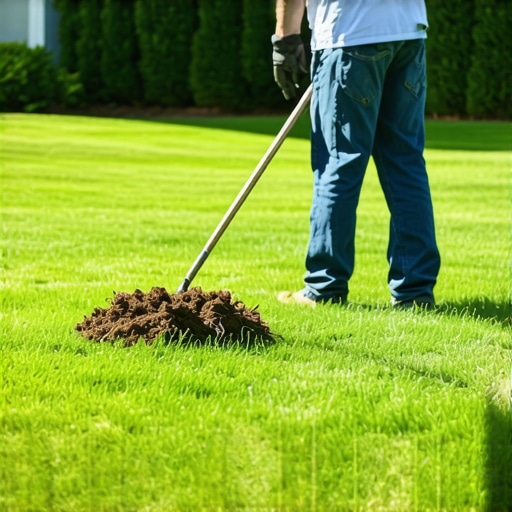
“, “image”: { “imagePrompt”: “A close-up shot of a professional power rake dethatcher pulling up a thick layer of brown organic thatch from a green lawn in Culpeper, Virginia, with a blurry background of a residential street.”, “imageTitle”: “Professional Thatching in Culpeper VA”, “imageAlt”: “Mechanical dethatching process to prepare Culpeper soil for grass seeding” }, “categoryId”: 12, “postTime”: “2025-05-20T09:00:00Z” }
![Mowing Culpeper VA: 3 'Fat Packing' Hacks for 2026 Lawns [Tested]](https://lawnmajesty.com/wp-content/uploads/2026/03/Mowing-Culpeper-VA-3-Fat-Packing-Hacks-for-2026-Lawns-Tested.jpeg)