![Why Your 2026 Sprinklers Waste Water [Pressure Fix]](https://lawnmajesty.com/wp-content/uploads/2026/07/Why-Your-2026-Sprinklers-Waste-Water-Pressure-Fix.jpeg)
Why Your 2026 Sprinklers Waste Water [Pressure Fix]
The Forensic Autopsy of a Failing Irrigation System
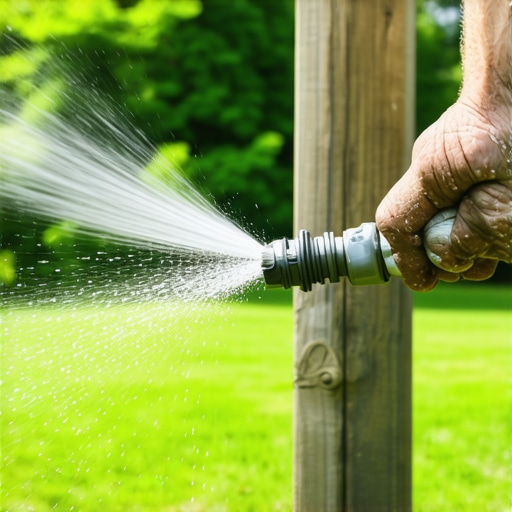
I recently walked onto a property where the homeowner was frantic. They had spent $12,000 on a high-end fescue install, only to watch it turn a sickly straw-brown within three weeks. They claimed they were watering 45 minutes per zone. When I turned the system on, I didn’t see watering; I saw a localized fog bank. The previous contractor had tied the system directly into the main line without a regulator, pushing 90 PSI through heads rated for 30. The water was atomizing—turning into a fine mist that drifted into the neighbor’s yard or evaporated before it ever touched a blade of grass. The soil was bone dry two inches down. This wasn’t a watering problem; it was a physics problem. Most 2026 irrigation failures aren’t caused by a lack of water, but by a lack of pressure control.
The Critical Link Between PSI and Water Waste
Excessive water pressure causes sprinkler misting and atomization, which forces water to evaporate or drift away rather than soaking into the root zone. By installing pressure-regulated heads (PRS) or a master pressure regulator, you maintain the optimal 30-45 PSI required for heavy droplet formation and uniform distribution. This simple mechanical fix can reduce water consumption by 30% while improving turf health.
When you push water through a nozzle faster than its design specs, the laminar flow breaks down. You get ‘fogging.’ If you see a white cloud hanging over your lawn while the sprinklers are running, you are throwing money into the atmosphere. Those tiny droplets lack the mass to overcome even a 3-mph breeze. They stick to the grass blades and evaporate (foliar evaporation) rather than infiltrating the soil profile to reach the rhizomes and roots. You want heavy, fat droplets. You want them hitting the ground with enough force to penetrate the thatch but not so much that they compact the soil surface.
“Irrigation efficiency is not just about the amount of water applied, but how uniformly it reaches the root zone. High pressure is the primary enemy of uniformity.” – Texas A&M AgriLife Extension Service
How do I test my sprinkler system’s water pressure?
To test your system’s pressure, you need a pitot tube with a pressure gauge or a thread-on gauge that attaches to a standard sprinkler riser. Turn on the zone and measure the pressure at the head furthest from the valve; if the reading exceeds 45 PSI for spray heads, your system is wasting water. Don’t guess. A 10 PSI jump can ruin your efficiency.
| System Component | Optimal PSI Range | Impact of Over-Pressure |
|---|---|---|
| Fixed Spray Heads | 30 PSI | Misting, fogging, rapid wear |
| Rotary Nozzles (MP Rotators) | 40 – 45 PSI | Blow-by, uneven rotation speed |
| Drip Irrigation | 15 – 25 PSI | Emitter blowout, line rupture |
| Impact Rotors | 50 – 60 PSI | Incomplete throw distance |
The Engineering Logic of Soil Saturation
We need to talk about hydrostatic pressure and soil infiltration rates. Most homeowners think ‘more is better.’ If the lawn looks dry, they bump the timer from 20 to 40 minutes. If your soil is heavy clay, its infiltration rate might only be 0.2 inches per hour. If your high-pressure misting system is dumping 1.5 inches per hour (most of which is running off into the gutter), you are creating a swamp on top and a desert underneath. This leads to anaerobic soil conditions where pathogens like Pythium and Rhizoctonia thrive. It will rot. Your grass is literally suffocating because the pore spaces in the soil are filled with stagnant water while the roots remain thirsty.
What is the ideal PSI for a residential lawn?
The ideal operating pressure for a residential lawn is 30 PSI for spray heads and 45 PSI for rotors. Maintaining these specific thresholds ensures that nozzle trajectories remain consistent and that head-to-head coverage is achieved without significant water loss to wind drift or evaporation. Check your manufacturer specs; they aren’t suggestions.
“A 10 PSI increase over the manufacturer’s recommendation can lead to a 20% loss in water through wind drift and evaporation.” – Irrigation Association Standards
The 2026 Audit: A Step-by-Step Fix
If you want to stop the waste, you have to stop thinking like a gardener and start thinking like a hydraulic engineer. The days of ‘set it and forget it’ are over. With rising utility costs and stricter municipal water restrictions, your 2026 system needs to be a precision instrument. Here is your mandatory checklist for a system overhaul.
- Install Pressure Regulated Stems (PRS): Look for heads with the EPA WaterSense label. These have internal regulators that maintain a constant 30 or 45 PSI even if your house pressure spikes to 80.
- Check for ‘Donut’ Patterns: If the grass is green at the head and green 15 feet away but brown in the middle, your pressure is too low or your heads are spaced too far apart.
- Swap Sprays for Rotary Nozzles: High-efficiency rotary nozzles (like Hunter MP Rotators) apply water much slower, allowing the soil to actually absorb it. They are also far more wind-resistant.
- Inspect the Check Valves: If water leaks out of the lowest head in a zone after the system turns off, your check valves are shot. That’s gallons of water wasted every cycle.
- Verify Root Depth: Take a soil probe. If your roots are only 2 inches deep, your watering schedule is too frequent and too shallow. Force those roots down by watering deeper and less often.
Don’t skip the regulator. It’s the most boring $80 you’ll ever spend, but it’s the only thing standing between a healthy lawn and a massive water bill. The physics don’t lie. High pressure kills systems. It wears out the seals, it blows out the gears in your rotors, and it creates a micro-climate of humidity that invites every fungus known to man. Correct the pressure first. Then, and only then, worry about your fertilizer NPK ratios or your seed selection. If the hydration delivery system is broken, the rest of your landscaping investment is just expensive compost. Use your head, check your gauges, and stop misting your money away.