The Forensic Autopsy of a Dying Lawn
The first sign isn’t the brown color; it is the lack of turgor pressure. When you walk across a scorched 2026 lawn, the grass blades don’t spring back—they stay flat, crushed under your boot like dry parchment. In my twenty years in landscaping and lawn care, I have seen thousands of homeowners panic when the mercury hits 95 degrees for a week straight. They see yellowing and think ‘more water,’ but by then, the soil is often hydrophobic, and the water just beads off the surface, running into the storm drain while the roots bake in a self-made oven. It is a biological collapse. The crown of the plant, the vital engine where growth happens, is literally being cooked by hydrostatic heat trapped in the upper half-inch of the soil profile.
The Chemical Nightmare: A Cautionary Tale
I recently got called out to a property where a homeowner had completely torched their front lawn by applying a high-nitrogen ‘summer boost’ fertilizer during a record-breaking heatwave. They thought they were helping. Instead, they created a chemical nightmare. High nitrogen forces the plant to produce top growth it cannot support, depleting its carbohydrate reserves when it should be in survival mode. The lawn didn’t just turn brown; it turned a sickly, translucent straw color. When I pulled a soil sample, it smelled like ammonia. We had to flush the soil with three inches of water just to lower the salt index before we could even think about garden design or remediation. They didn’t just burn the grass; they chemically cauterized the soil microbiology. It took six months of intensive carbon loading to bring that dirt back to life.
“Turfgrass physiological stress during summer is primarily driven by soil temperature, not air temperature.” – Penn State Center for Turfgrass Science
1. Tactical Core Aeration for Thermal Relief
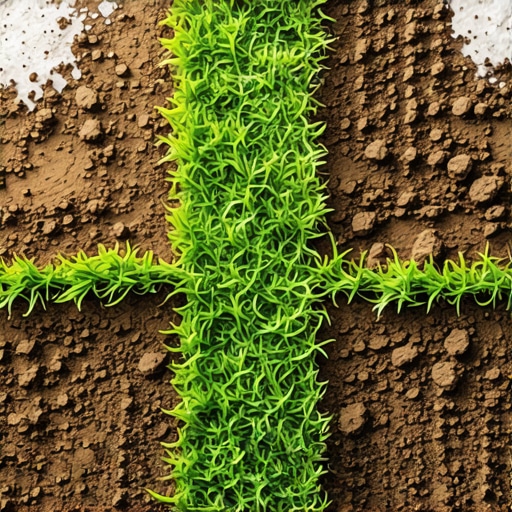
To save a scorched 2026 lawn, you must perform core aeration to a depth of at least 3.5 inches to break the thermal barrier and allow gas exchange. This process physically removes plugs of soil, creating direct pathways for oxygen to reach the root zone and for heat to escape the subsurface layers. Stop thinking of aeration as a ‘fall-only’ chore. When the ground is baked hard, it becomes an airtight seal. Without O2, the roots undergo anaerobic respiration, producing toxic byproducts that kill the plant from the inside out. I use a commercial-grade cam-driven aerator that pulls at least 40 holes per square foot. Anything less is just poking holes in the dirt. You need to see the soil breathing. [image_placeholder_1]
How deep should aeration cores be for heat recovery?
For effective thermal relief, cores must be between 3 and 4 inches deep. Shallow spikes do nothing but increase soil compaction around the hole. You need to penetrate the thatch layer and reach the rhizosphere to facilitate true subsurface cooling.
2. Liquid Carbon and Humate Sequestration
Applying liquid carbon and humic acid immediately after aeration creates a biological heat sink that stabilizes the rhizosphere and improves water retention. These organic compounds act as a molecular sponge, holding water molecules in the soil pores much longer than untreated soil can. Most ‘mow-and-blow’ hacks ignore soil chemistry. They just want to spray green dye. But a veteran knows that soil microbiology is your only defense against a 2026-style drought. Humates increase the Cation Exchange Capacity (CEC) of your soil, meaning your grass can actually use the nutrients already present instead of letting them leach away. We use a 12% humic concentrate. It looks like liquid coal, and it works like a miracle.
3. The 4-Inch Height Mandate
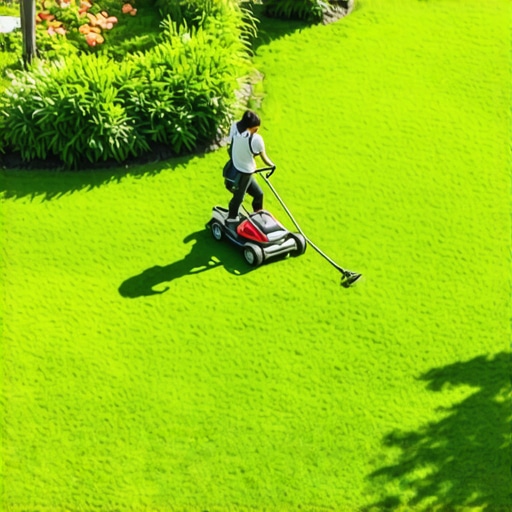
To protect the grass crown from direct UV radiation, you must maintain a mowing height of at least 4 inches during peak summer heat to provide canopy shading. This is where most homeowners fail. They want a golf course look, so they scalp the lawn at 2 inches. In 100-degree weather, that is a death sentence. That extra two inches of blade length isn’t just for show; it acts as a cooling tower for the plant and shades the soil, keeping ground temperatures up to 10 degrees cooler than a short-cut lawn. Sharp blades are non-negotiable. A dull blade tears the grass, creating a jagged wound that loses water 30% faster than a clean cut. If your mower blades haven’t been sharpened this month, you are killing your grass.
| Grass Type | Summer Cut Height (Inches) | Root Depth Potential | Drought Tolerance |
|---|---|---|---|
| Tall Fescue | 4.0 – 4.5 | Deep (up to 3ft) | High |
| Kentucky Bluegrass | 3.5 – 4.0 | Shallow | Medium |
| Bermuda (Hybrid) | 1.5 – 2.0 | Deep | Very High |
| Zoysia | 2.0 – 2.5 | Medium | High |
4. Syringing vs. Deep Soaking Protocols
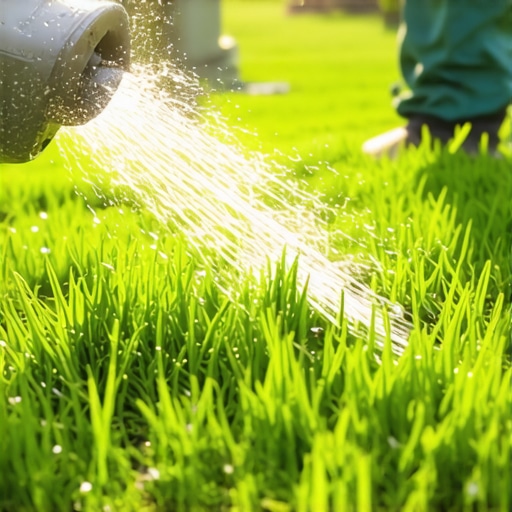
Implementing a syringing protocol—short 2-minute bursts of water at 2:00 PM—lowers the canopy temperature without saturating the soil and risking fungal pathogens like Pythium. This is a hardscaping approach applied to biology. You aren’t ‘watering’ the lawn for hydration here; you are using the latent heat of evaporation to pull thermal energy away from the grass blades. Do not confuse this with deep watering. Deep watering should happen at 4:00 AM, providing exactly 1 inch of water per week in a single application. This forces the roots to chase the moisture deep into the soil. Frequent, shallow watering in the evening is the fastest way to grow a bumper crop of mushrooms and root rot. It’s lazy. Don’t be lazy.
“High-nitrogen fertilizers applied during drought conditions increase the osmotic potential of the soil solution, essentially pulling water out of the plant roots.” – Texas A&M Agrilife Extension
5. Potassium-Heavy Recovery (The K-Shock)
Switching to a high-potassium (K) fertilizer ratio, such as 0-0-15, strengthens the plant cell walls and regulates stomatal opening, preventing excessive transpiration. Nitrogen (N) is for the ego; Potassium (K) is for the engine. Potassium regulates the internal ‘plumbing’ of the grass. It helps the plant manage its water reserves and build internal resistance to thermal stress. If you see a contractor showing up with a bag of 30-0-0 in July, fire them on the spot. They are looking for a quick green-up that will lead to a total brown-out in three weeks. You want a ‘slow and steady’ approach. We call this ‘hardening’ the turf. It’s the difference between a lawn that survives and one that thrives.
Will scorched grass grow back after a heatwave?
If the crown remains white and firm, the grass is merely dormant and will recover with proper hydration and aeration. However, if the crown is brown, brittle, or mushy, the plant is dead. In the 2026 climate, dormancy can look like death, but the cold-shock tactics listed above can often trigger a regeneration cycle within 14 days of temperature stabilization.
The 48-Hour Recovery Checklist
- Audit irrigation coverage using the ‘tuna can test’ to ensure even distribution.
- Sharpen mower blades to a razor edge to prevent tissue tearing.
- Call 811 to mark utility lines before any deep core aeration.
- Apply a non-ionic surfactant (wetting agent) to break soil surface tension.
- Check soil pH; target a 6.5 level for optimal nutrient uptake.
Landscaping isn’t about making things ‘pretty’ for a weekend. It is about engineering an ecosystem that can withstand the brutal realities of our changing climate. If you don’t fix the soil grading and the drainage issues, you are just throwing money into a hole in the dirt. Every plant you put in the ground without proper soil preparation is just expensive compost. It will rot. Or it will burn. Follow the physics, respect the biology, and keep the blades high. That is how you win the war against the sun.


![4 Culpeper VA Grass Seeding Fixes for Clay Soil [2026 Update]](https://lawnmajesty.com/wp-content/uploads/2026/03/4-Culpeper-VA-Grass-Seeding-Fixes-for-Clay-Soil-2026-Update.jpeg)