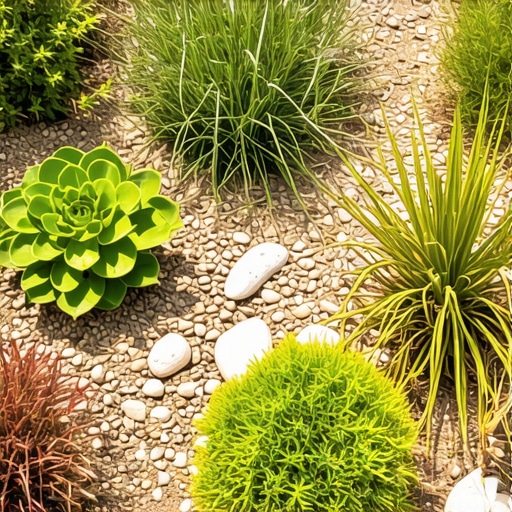
The Foundation of the No-Mow Transition
No-mow grass alternatives serve as a functional replacement for traditional turf by utilizing drought-tolerant groundcovers, nitrogen-fixing legumes, and native sedges that thrive in 2026’s increasingly volatile climate zones. These systems prioritize deep root architecture and soil microbiology over the repetitive mechanical stress of weekly mowing. I always drill into my new crew members: if you don’t fix the soil grading first, every plant you put in the ground is just expensive compost. You can buy the most expensive plugs on the market, but if they sit in a low spot where the soil is compacted to 300 PSI, they will drown or starve. I’ve seen it a thousand times. A homeowner spends five figures on a ‘sustainable’ meadow, but they ignore the bulk density of their clay. By mid-July, the roots have nowhere to go, and the whole project turns into a high-priced brown patch. We start with the dirt, or we don’t start at all.
1. Microclover (Trifolium repens ‘Pipolina’)
Microclover is a specialized cultivar of white clover that maintains a low growth habit while providing natural nitrogen fertilization to the soil through a symbiotic relationship with Rhizobium bacteria. Unlike standard Dutch White Clover, the ‘Pipolina’ variety doesn’t clump or flower aggressively, making it a viable lawn replacement. Microclover is a legume. This means it has ‘nodules’ on its roots that pull nitrogen gas from the air and convert it into a form the plant can eat. It’s a self-feeding machine. In a heat-stressed yard, this is gold. While Kentucky Bluegrass goes dormant and turns into straw at 85 degrees, microclover stays green because its taproot is deeper and it isn’t sucking the soil dry of nutrients. You need to sow this at a rate of about 1 to 2 pounds per 1,000 square feet. Do not over-fertilize it. If you hit it with high-nitrogen synthetic fertilizer, the clover gets lazy and stops fixing its own nitrogen. You’re literally paying to make the plant weaker.
Does microclover need fertilizer?
Microclover requires zero nitrogen fertilizer once established because it fixes its own nitrogen from the atmosphere through root-zone bacteria. Adding synthetic nitrogen will actually inhibit this process and encourage weed competition while making the clover less drought-resistant. Focus on phosphorus and potassium if your soil test shows a deficiency.
2. Kurapia (Lippia nodiflora)
Kurapia is a sterile, highly engineered groundcover developed to survive extreme drought conditions while providing a dense, walkably soft surface that requires 90% less water than traditional turf. This isn’t your grandma’s groundcover. Kurapia was bred for utility. It can handle a pH range from 5.0 to 9.0. That’s insane. Whether you’re dealing with acidic pine needle runoff or alkaline limestone soils, it holds its ground. The root system is the real hero here; it can reach depths of 10 to 15 feet. While your neighbor’s fescue is gasping for air, Kurapia is drinking from the water table deep underground. It spreads via runners, but because it’s sterile, it won’t invade your neighbor’s yard via seeds. You install it via plugs, usually on 12-inch centers. By the end of the first season, it’s a carpet.
“Turfgrass irrigation accounts for up to 30% of total daily water use in some municipal areas; shifting to low-water alternatives is no longer an aesthetic choice but a resource necessity.” – Texas A&M AgriLife Extension
3. Creeping Thyme (Thymus praecox)
Creeping Thyme is a woody perennial groundcover that excels in sandy, well-draining soils and provides a high-scent, pollinator-friendly alternative to grass in areas with moderate foot traffic. Stop trying to grow grass on a slope. If you have a south-facing hill with 10% grade, grass is a death sentence. Creeping thyme, specifically the ‘Red Creeping’ or ‘Woolly’ varieties, loves that heat. It needs 1 inch of water a week to start, but once those woody stems establish, you can practically ignore it. The enemy of thyme is ‘wet feet.’ If your soil is heavy clay, you must amend it with 1/4-inch crushed gravel or coarse sand to increase the macropores in the soil. If that water doesn’t move through the root zone within 30 minutes of a rain event, the plant will rot from the bottom up. It’s that simple.
Will no-mow grass survive dogs?
No-mow alternatives like Kurapia and Microclover can withstand moderate dog traffic, but they are not indestructible. High-traffic ‘burn zones’ from pet urine are less frequent with clover because it is more salt-tolerant than fescue, but for heavy runners, you should integrate hardscape paths or decomposed granite dog runs.
4. Ruschia Lineata ‘Nana’ (Dwarf Carpet of Stars)
Dwarf Carpet of Stars is a succulent groundcover that creates a tight, moss-like appearance without the high water requirements of moss, making it ideal for full-sun, heat-blasted environments. This is the closest you will get to a putting green look without the mower. It grows about 1 inch tall. It’s basically a carpet of tiny succulents. Because it’s a succulent, it stores water in its leaves. It doesn’t ‘transpire’ water at the rate a blade of grass does. In 2026, when municipal water restrictions hit Stage 3, this is the plant that will still be green. However, do not walk on it with high heels. It can handle a dog, but it can’t handle high-pressure point loads. It’s an engineering trade-off: high heat tolerance for lower mechanical durability.
| Alternative Name | Water Needs | Foot Traffic | Best Soil Type |
|---|---|---|---|
| Microclover | Low-Moderate | High | Loam/Clay |
| Kurapia | Very Low | Moderate | Any/Adaptable |
| Creeping Thyme | Low | Moderate | Sandy/Well-Drained |
| Dwarf Carpet of Stars | Very Low | Low | Sandy Loam |
| Buffalograss (Sod) | Low | High | Heavy Clay |
[image_placeholder_1]
5. UC Verde Buffalograss (Bouteloua dactyloides)
UC Verde Buffalograss is a warm-season native grass that grows to a maximum height of 4-6 inches, requiring only bi-annual trimming and significantly less water than Cool-season grasses like Fescue or Bluegrass. This is a North American native. It belongs here. Most people fail with Buffalograss because they treat it like Bermuda. They over-water it. You water Buffalograss deeply once every two weeks in the heat of summer. That’s it. If you water it every day, you will invite weed competition that will choke it out. It goes dormant (tan) in the winter, which some people don’t like. I tell my clients: ‘Do you want a green lawn in January that costs $400 a month in water, or do you want a sustainable landscape that works with the planet?’ Buffalograss is for the pragmatic homeowner. It likes heavy soil. It thrives in the stuff that kills other plants.
“Soil compaction is the primary cause of urban plant failure; roots cannot penetrate soil with a bulk density exceeding 1.6 g/cm3.” – Penn State Extension: Center for Turfgrass Science
The Installation Checklist for 2026 Success
Don’t just throw seeds on the ground and pray. Follow the engineering. The following steps are non-negotiable for a 20-year landscape:
- Core Aeration: Pull 3-inch plugs to relieve compaction before seeding or plugging.
- Soil Testing: Check your pH. If you’re below 6.0, your clover won’t fix nitrogen.
- Kill the Competition: Use a high-heat solarization (plastic sheeting) or a non-residual organic herbicide to clear existing turf.
- Irrigation Calibration: Set your zones for ‘Deep and Infrequent’—aim for 1 inch of water in a single weekly session to force root depth.
- Mulching: Use a light layer of peat moss or compost to keep seeds moist during the first 14 days.
Landscape management is moving toward biology, not chemistry. The ‘mow-and-blow’ era is dying because the climate is making it too expensive to maintain a monoculture of thirsty grass. By selecting a no-mow alternative, you’re not just saving time; you’re building a resilient ecosystem that can handle 100-degree streaks without breaking the bank or the water table. Get the soil right, pick the right species for your light exposure, and stop scalping your yard. It’s time to let the plants do the work for you.


I really appreciate the detailed explanation of fixing soil grading before planting these no-mow alternatives. It’s a step that’s often overlooked but makes all the difference in long-term success. I tried planting Kurapia in my yard last year without proper soil aeration, and it struggled to establish, especially in some compacted patches. Since then, I’ve learned that soil health is the foundation of any sustainable landscape, especially with drought-resistant plants. It’s fascinating how these alternatives like microclover and creeping thyme can thrive with minimal water and maintenance once established properly. I wonder, for homeowners with clay-heavy soils, what’s the best way to initially improve soil structure before planting? Would you recommend mixing in compost or installing some deep soil amendments first, or is aeration enough in most cases? I’d love to hear other experienced gardeners’ insights on preparing challenging soils for these kinds of drought-tolerant lawns.