The Engineering of a Self-Sustaining Turf Canopy
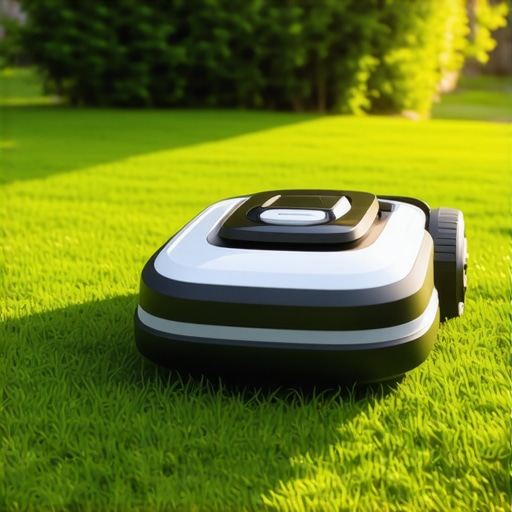
To achieve a thicker 2026 lawn using robotic mowers, you must manipulate the grass plant’s hormonal response by incrementally adjusting the cutting height to maximize leaf surface area while maintaining apical dominance suppression. This process, which we call ‘canopy engineering,’ moves beyond the simple act of cutting grass and enters the realm of plant physiology. By precisely timing height adjustments of your robotic unit, you stimulate tillering—the production of lateral shoots—which fills in bare spots and creates a carpet-like density that traditional weekly mowing can never replicate.
The Apprentice Lesson: Why Your Foundation Dictates Your Finish
I always drill into my new crew members: if you don’t fix the soil grading and understand the plant’s crown height first, every piece of technology you put on that lawn is just expensive scrap metal. I remember a kid named Marcus who thought he could hide a bumpy, poorly graded backyard by setting a new Husqvarna Automower to its lowest setting. Within three weeks, the high spots were scalped down to the dirt, the crown of the Kentucky Bluegrass was obliterated, and the lawn looked like a mangy dog. He didn’t realize that a robotic mower doesn’t see the ground; it only knows its internal plate height. We had to spend $4,000 on top-dressing and aeration to fix a mistake that a simple 0.5-inch height adjustment could have prevented. In this business, the soil always wins. If you don’t respect the relationship between the mower blade and the grass crown, you’re just accelerating the death of your turf.
“The crown of the grass plant is the vital junction of the root and shoot system; if the mowing height is consistently below the physiological threshold of the species, the plant’s ability to recover from heat stress is permanently compromised.” – Agronomy Manual of Turfgrass Physiology
1. The ‘Step-Down’ Spring Descent for Rhizome Stimulation
For a thicker 2026 lawn, start your robotic mower at its maximum height in early spring and decrease it by 0.25 inches every four days until you reach your target height. This strategy prevents the ‘shading out’ of the lower nodes and forces the plant to distribute its stored carbohydrates into lateral growth rather than vertical elongation. When you scalp a lawn early in the year, you shock the system. By stepping down the height, you allow the grass to adapt its cell wall thickness to the increasing solar radiation.
How does height affect grass root depth?
There is a direct 1:1 correlation between the height of the leaf blade and the depth of the root system. If you keep your mower set at 2 inches, your roots will rarely penetrate past 3 or 4 inches. In a robotic mowing environment, where the plant is being ‘nipped’ daily, the plant doesn’t experience the massive loss of photosynthetic tissue that it does with a rotary mower. This allows you to maintain a slightly lower height than a manual mower while still keeping a deep root structure. However, the ‘Step-Down’ protocol is essential to ensure you aren’t removing more than 10% of the leaf tissue at any single time, which preserves the plant’s nitrogen reserves.
2. The Summer Thermal Buffer (The 0.5-Inch Rule)
Increasing your robotic mower’s cutting height by exactly 0.5 inches when soil temperatures hit 75°F creates a micro-climate of shade that protects the grass crown from desiccation. This ‘thermal buffer’ is critical for cool-season grasses like Tall Fescue and Bluegrass. The extra half-inch of leaf tissue acts as a biological umbrella, reducing the soil surface temperature by as much as 10 degrees. This prevents the soil from baking and keeps the microbial life—the bacteria and fungi responsible for the nitrogen cycle—active during the hottest months.
| Tall Fescue | 3.0 | 4.0 | 3.5 | High |
| Kentucky Bluegrass | 2.0 | 3.0 | 2.5 | Ultra-High |
| Perennial Ryegrass | 1.5 | 2.5 | 2.0 | Medium-High |
| Bermuda (Hybrid) | 0.75 | 1.25 | 1.0 | Carpet-like |
3. Maximizing Leaf Surface Area for Photosynthetic Gain
To optimize your lawn’s health, you must treat every grass blade as a solar panel; the more surface area you have, the more energy the plant can store in its roots for the winter. Robotic mowers are uniquely qualified for this because they maintain a consistent height 24/7. When you use a traditional mower once a week, the grass grows long, shades itself, and then gets hacked back. This ‘yo-yo’ effect weakens the vascular tissue. With a robot, the ‘tweaked’ height remains constant, allowing the plant to optimize its chlorophyll production for that specific light level. Don’t be afraid to keep the lawn ‘shaggy’ at 3.5 inches if you have high tree canopy coverage; the grass needs that extra surface area to catch what little light hits the floor.
“Proper mowing height is the single most important factor in weed control; a dense, high canopy prevents sunlight from reaching the soil surface where weed seeds germinate.” – Penn State Extension: Turfgrass Management
4. Night-Time Friction and Turgor Pressure Management
Adjusting your robotic mower to operate primarily during the early morning hours—when turgor pressure is at its peak—ensures a cleaner cut that prevents the shredding of the vascular bundles. Many homeowners run their robots 24/7, but cutting at 2:00 PM in 95-degree heat when the grass is wilting leads to ‘bruised’ tips. A bruised blade turns brown and becomes an entry point for pathogens like Rhizoctonia (Brown Patch). By setting your height slightly higher during these stress periods and limiting the run-time to when the plant is fully hydrated, you ensure the razor blades of the robot slice through the cellulose cleanly.
What is the best height for a robotic mower in summer?
The best height for a robotic mower in summer is typically 3.5 to 4 inches for cool-season grasses and 1 to 1.5 inches for warm-season grasses. The key is consistency. Unlike manual mowers, where you might skip a week, the robot must be adjusted before the heatwave hits. If you wait until the grass is already brown, the damage to the crown is already done. I tell my clients to watch the local weather; if you see three days of 90+ degrees, bump that mower height up a quarter-inch immediately.
5. The Fall Compression for Winter Carbohydrate Storage
As the photoperiod shortens in late September, lower your robotic mower height in 0.2-inch increments to allow sunlight to reach the base of the plant, stimulating late-season tillering. This is the most misunderstood tweak. While summer requires height for shade, fall requires a slight reduction to prevent ‘matting.’ Matting occurs when long grass collapses under snow or heavy rain, creating an environment ripe for Snow Mold. By compressing the height back down to 2.5 or 3 inches, you force the plant to toughen up its cell walls in preparation for dormancy.
2026 Lawn Readiness Checklist
- Calibrate mower blades every 4 weeks to ensure a surgical cut.
- Check the ‘mower deck’ for dried grass buildup that affects the cutting height sensor.
- Perform a soil pH test to ensure nutrients are available at the root zone (Target 6.5).
- Adjust the ‘Collision Sensitivity’ to prevent the robot from scuffing the grass on turns.
- Clean the underside of the unit to maintain airflow and prevent fungal spore spread.
Landscaping isn’t about the aesthetics you see today; it’s about the biology you’re building for next year. A thick 2026 lawn starts with the mechanical precision of your height settings in 2025. If you treat your robotic mower like a sophisticated surgical instrument rather than a ‘set-and-forget’ appliance, the density of your turf will surpass anything your neighbors can achieve with a standard tractor. It’s about the math of the blade and the chemistry of the soil. Don’t skip the details. It will rot if you don’t manage the height. Stick to the measurements. Get the results.



![3 Grass Pickup Fixes for Greener 2026 Culpeper VA Lawns [Tested]](https://lawnmajesty.com/wp-content/uploads/2026/04/3-Grass-Pickup-Fixes-for-Greener-2026-Culpeper-VA-Lawns-Tested-1.jpeg)
I really appreciate how this post emphasizes the importance of precise height management in robotic mowing. I’ve personally experimented with the ‘Step-Down’ method in early spring and noticed a marked improvement in turf density and root depth. It’s fascinating how subtle height adjustments can influence the plant’s hormonal response, leading to more lateral shoots and a healthier, thicker lawn by 2026. I’ve also found that combining these protocols with consistent soil pH checks and blade calibrations really makes a difference in the long run. One challenge I face is timing these height tweaks perfectly around weather patterns—do others have tips for better predicting optimal adjustment windows, especially in unpredictable springs? I’d love to hear how fellow enthusiasts coordinate these detailed practices in their climate zones. Overall, this article underscores that lawn health is truly about the biology and precision, not just the mowers we use.