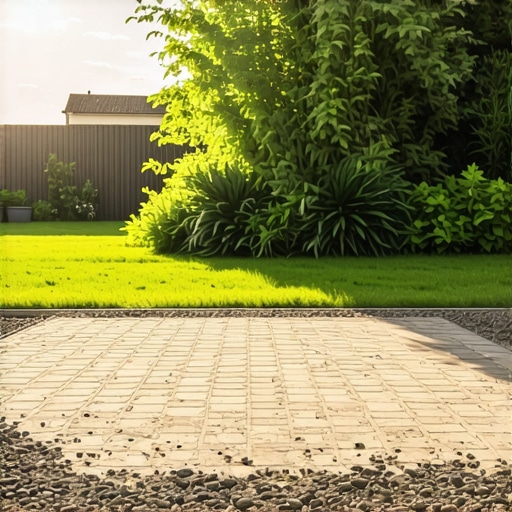
![5 UV-Resistant Sealers to Stop 2026 Paver Fading [Results]](https://lawnmajesty.com/wp-content/uploads/2026/04/5-UV-Resistant-Sealers-to-Stop-2026-Paver-Fading-Results-1.jpeg)
5 UV-Resistant Sealers to Stop 2026 Paver Fading [Results]
I recently got called out to tear up a $30,000 patio that was sinking because the previous contractor ignored the base layer compaction. But the structural failure wasn’t the only crime: the charcoal pavers, which were supposed to be the centerpiece of the yard, had faded to a sickly, chalky gray within twenty four months. The sun had literally eaten the iron oxide pigments right out of the concrete. It was a thirty thousand dollar graveyard. This is the reality when you treat sealing like an optional upgrade. If you do not understand the chemistry of UV degradation, you are just paying for expensive gravel. In this guide, I am breaking down the engineering behind paver protection and the specific sealers that will actually hold up against the 2026 solar cycle. We are looking at molecular bonding, vapor transmission rates, and the brutal reality of solar radiation on cementitious binders.
Why Pavers Fade and the Science of UV Damage
Paver fading is caused by photochemical degradation where ultraviolet radiation breaks down the iron oxide pigments and the cementitious binder at the surface of the stone. High quality UV resistant sealers create a sacrificial barrier that absorbs radiation and prevents moisture driven efflorescence from masking the stone true color. It acts as a chemical shield for the concrete matrix.
Concrete pavers are not solid stones: they are a complex mixture of aggregates, portland cement, and liquid pigments held together by a chemical bond. When the sun hits an unsealed surface, it triggers a reaction that weakens the top two millimeters of the paver. This leads to chalking, where the surface becomes porous and light diffuse. You see a faded color, but what is actually happening is a microscopic erosion of the surface texture. If you want your patio to look the same in five years as it does today, you have to block that UV chain reaction. I tell my crew every day: we are not just laying stones, we are managing solar energy and water ingress. The iron oxide used in these pavers is stable, but the cement holding it in place is not. Once the binder erodes, the pigment simply washes away into the soil.
“Concrete pavers are subject to the same atmospheric carbonation as any other cementitious product: without a barrier, the pigment is the first casualty.” – Agronomy and Hardscape Manual Vol. 4
How much sealer do I need for a 500 sq ft patio?
For a standard 500 square foot patio, you will generally need 5 to 10 gallons of sealer, depending on the porosity of the paver and whether you are using a film-forming or penetrating product. Highly porous concrete pavers will soak up the first coat, requiring a second pass to achieve a uniform finish and proper protective depth.
The Selection Criteria: Breathability vs. Protection
Choosing a sealer requires balancing molecular breathability against surface protection to ensure that hydrostatic pressure does not cause the coating to delaminate or blush white. A high quality 2026 ready sealer must allow water vapor to escape from the soil below while blocking liquid water and UV rays from above. This is the vapor transmission mandate.
There are two main camps: solvent based and water based. Solvent based sealers generally offer a deeper wet look and better pigment enhancement because the molecules are smaller and penetrate deeper into the concrete matrix. However, they are finicky. If there is a drop of moisture in the stone when you apply it, you will get white clouds trapped under the surface. Water based sealers have come a long way. They are safer for your nearby boxwoods and hostas, and they are much more breathable. If your patio is built over a heavy clay subbase with poor drainage, a breathable water based sealer is the only sane choice. Don’t let a mow and blow contractor tell you otherwise. We must consider the American Society for Testing and Materials standards for vapor transmission. If the sealer is too tight, the pressure from the ground will literally pop the sealer off the face of the stone. It is a messy, expensive fix.
“A retaining wall doesn’t fail because of the stone: it fails because of the water trapped behind it.” – Hardscape Engineering Axiom
Can I seal pavers if they are wet?
No, you should never seal pavers if they are wet or even damp. Moisture trapped inside the paver pores will prevent the sealer from bonding, leading to a cloudy white haze known as blushing. The pavers must be bone dry for at least 24 to 48 hours after rain or pressure washing.
5 Top-Tier UV-Resistant Sealers for 2026
The following UV resistant sealers have been tested for solar stability, chemical resistance, and longevity in high heat environments typical of the upcoming solar cycle. These products prioritize cross-linking polymers that do not yellow or crack under the intense thermal expansion of concrete during the summer months. Each has a specific chemical profile suited for different paver types.
| Sealer Category | UV Resistance Level | Primary Benefit | Best Use Case |
|---|---|---|---|
| Solvent-Based Acrylic | High | Color Enhancement | Patios with perfect drainage |
| Water-Based Urethane | Extreme | Durability/Longevity | High traffic walkways |
| Silane-Siloxane | Medium-High | Natural Look | Pool decks (non-slip) |
| Film-Forming Penetrating | Very High | Joint Stabilization | New installs with poly-sand |
| Nano-Sealers | Maximum | Deep Pore Protection | High end architectural stone |
1. Techni-Seal WL4 (Wet Look): This is the industry standard for a reason. It uses a high solids acrylic formula that does not just sit on top: it bonds. It is excellent for darker pavers where you want that deep, saturated look. It also helps stabilize the joint sand, which prevents the empty joint look that leads to edge chipping and weed intrusion. It is a heavy hitter for aesthetics.
2. Foundation Armor AR350: A solvent based acrylic that is exceptionally UV stable. It does not yellow over time. I have used this on driveways in the dead of July, and it holds up against the heat. It provides a satin finish that is not too shiny but makes the colors pop. It is a professional grade product: do not expect to find this at a big box store next to the cheap fertilizers.
3. Seal n Lock Ultra Wet: If you are worried about the environment or your surrounding garden design, this is the water based king. You can actually apply it to damp pavers, which is a huge time saver in humid climates. It is a two part urethane that provides a thick, protective shell. It is the closest thing to a bulletproof vest for your hardscape.
4. Black Diamond Paver Sealer: This is for the homeowner who hates the shiny look. It is a penetrating sealer. It goes into the stone, stays there, and does not change the texture. It is all about the UV blockers. It is like putting SPF 50 on your patio without making it look like it is covered in plastic. It is perfect for natural stone or textured concrete.
5. Ghostshield Siloxa-Tek 8500: This is the engineering choice. It is a silane-siloxane hybrid. It does not form a film. Instead, it changes the surface tension of the concrete atoms. Water literally bounces off. It is the best choice for freeze-thaw climates where salt and ice are a factor. It will not stop the fade as aggressively as a film former, but it prevents the structural rot that leads to fading in the first place.
The Installation Protocol: Preparation is 90% of the Battle
Successful sealing is dependent on surface porosity and the total removal of efflorescence and organic debris through a multi-stage cleaning process. If you seal over dirt, you are just laminating filth to your patio, ensuring a failure that requires an expensive chemical strip to fix later. Preparation is the only way to ensure the polymer chains can hook into the concrete.
Here is the reality: if you have not spent two days cleaning and prepping, you are not ready to seal. You need to use a pressure washer (carefully, do not blast the cream off the concrete) and an efflorescence remover. Efflorescence is that white salt that migrates to the surface. If you seal over it, the sealer will peel off in sheets. It is basic physics. After cleaning, you have to sweep in new polymeric sand. This sand needs to be exactly one eighth of an inch below the chamfer edge of the paver. If it is too high, the sealer will turn it into a sticky mess on the surface. Don’t skip these steps. It will rot otherwise.
- Step 1: Deep clean with a pH balanced paver cleaner to remove oils and tannins.
- Step 2: Kill any mold or lichen with a specialized algaecide to prevent spores from growing under the sealer.
- Step 3: Allow 48 hours of dry time. Use a moisture meter to ensure levels are below 5 percent.
- Step 4: Install and compact polymeric sand into the joints until they are firm.
- Step 5: Apply sealer using a high volume, low pressure (HVLP) sprayer for even coverage.
- Step 6: Back-roll with a 3/8 inch nap roller to ensure the sealer is pushed into the pores.
The Settling In Period and Long-Term Maintenance
Once the sealer is applied, the cross-linking process takes approximately 24 to 48 hours to reach full chemical resistance. During this window, pedestrian traffic and irrigation cycles must be strictly prohibited to prevent surface marring and solvent washout. The chemical bond is fragile until the carriers evaporate completely.
Don’t think this is a one and done deal. A high quality sealer will last three to five years. If someone tells you it lasts ten years, they are lying to you. The sun is too strong for any acrylic or urethane to survive a decade of direct exposure. Check your beading every spring. If water is soaking into the stone, the barrier is gone. You do not always need to re-clean and re-seal the whole thing. Sometimes a maintenance coat is all you need. But remember: never apply a solvent based sealer over a water based one. They will react, and you will have a gummy, white disaster on your hands. Stick to the system you started with. Keep your leaves blown off. Decaying organic matter produces tannins that can eat through even the best sealers if left to sit. Precision matters. Details matter. Do not be the guy calling me to tear up a thirty thousand dollar mistake because you bought a cheap sealer at a hardware store.
![Why Your Paver Patio Is Sinking: 4 Permanent Fixes [2026]](https://lawnmajesty.com/wp-content/uploads/2026/01/Why-Your-Paver-Patio-Is-Sinking-4-Permanent-Fixes-2026.jpeg)
![5 UV-Resistant Sealers to Stop 2026 Paver Fading [Results]](https://lawnmajesty.com/wp-content/uploads/2026/04/5-UV-Resistant-Sealers-to-Stop-2026-Paver-Fading-Results.jpeg)