Fixing Loose Flagstones in Your 2026 Walkway
The Forensic Autopsy of a Failing Walkway
When you step on a flagstone and hear that dreaded click-clack sound, you aren’t just dealing with a loose rock. You are witnessing a structural failure of the interface between the stone and its bedding layer. By 2026, many older walkways installed during the ‘quick-fix’ DIY booms are reaching their breaking point. That hollow thunk is the sound of air pockets where there should be compacted aggregate. Water has migrated under the stone, likely through cracked joints, and washed away the ‘fines’ that provide stability. If you ignore it, the stone will eventually crack under the uneven pressure. It will fail. Don’t wait for the trip hazard to become a lawsuit.
“A retaining wall doesn’t fail because of the stone; it fails because of the water trapped behind it.” – Hardscape Engineering Axiom
I recently got called out to tear up a $30,000 patio that was sinking because the previous contractor thought they could skimp on the sub-base by using ‘crusher run’ without checking the Proctor density. The clay underneath was saturated, and without a proper geotextile fabric to separate the subgrade from the base, the expensive pavers were literally swallowed by the mud. We had to excavate 14 inches of muck just to reach stable ground. It was a $30,000 lesson in why the stuff you don’t see is more important than the stone you do see.
Identifying the Root Cause of Loose Flagstones
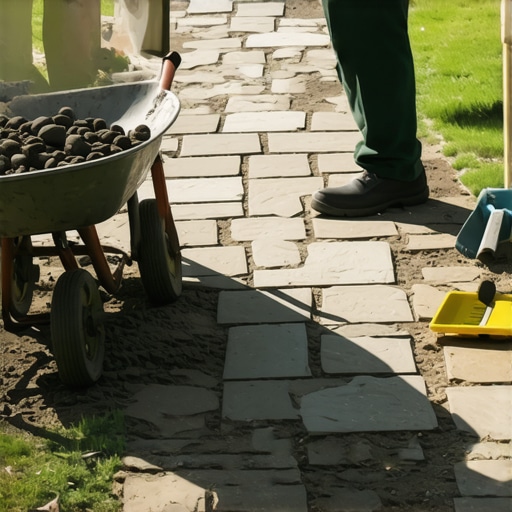
Fixing loose flagstones requires diagnosing the sub-base stability, removing the compromised stone, and replacing the bedding layer with ASTM C33 washed sand or #8 aggregate to ensure proper drainage and load distribution. Simply pouring more sand into the cracks is a temporary patch that ignores hydrostatic pressure and soil movement. You must address the foundation.
How much modified gravel do I need for a patio base?
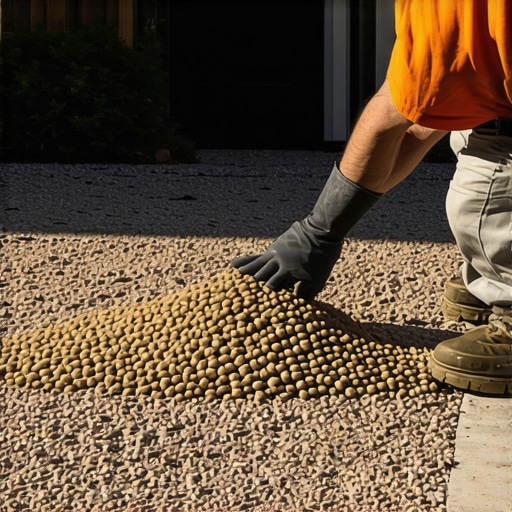
For a standard pedestrian walkway, you need a minimum of 4 to 6 inches of compacted 21A or 3/4-inch modified gravel. To calculate the volume, multiply the square footage of your path by the depth in feet (e.g., 0.5 feet for 6 inches) and divide by 27 to get the cubic yardage. Always add a 10% ‘fluff factor’ for compaction. If you have heavy clay soil, go deeper. Compaction is non-negotiable. We use vibrating plate compactors that deliver at least 3,000 lbs of centrifugal force. A hand tamper is a toy. Don’t use it for the main base. Use it only for the tight corners.
| Material Type | Best Use Case | Drainage Rating | Compaction Stability |
|---|---|---|---|
| #57 Stone (Clean) | Deep base layers / Drainage | Excellent | Medium |
| 21A (Modified Gravel) | Primary structural base | Fair | High |
| Polymeric Sand | Jointing / Weed prevention | Low | N/A |
| ASTM C33 Sand | Bedding layer (1 inch) | Good | High (when confined) |
How do you stop flagstones from wobbling?
To stop flagstones from wobbling, you must create a level, compacted bedding plane using one inch of coarse washed sand over a solid gravel base. If the stone has an irregular underside, you may need to ‘back-butter’ the stone with a thin layer of stone dust or use a semi-rigid bedding mortar specifically designed for natural stone. The goal is 100% contact between the stone and the base. Air is your enemy. If there is a gap, the stone will rock. If the stone rocks, the joints will fail. If the joints fail, water gets in. It is a cycle of destruction.
The Step-by-Step Remediation Process
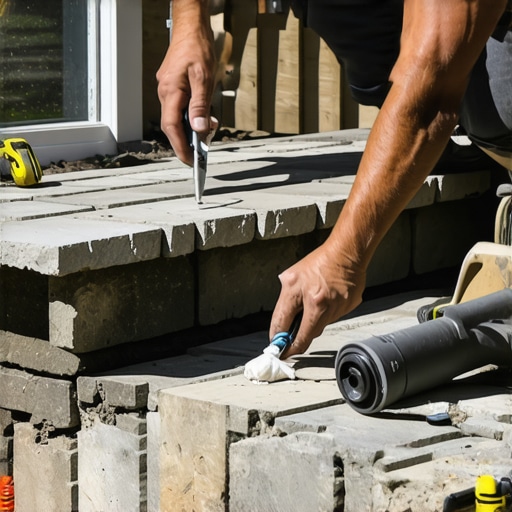
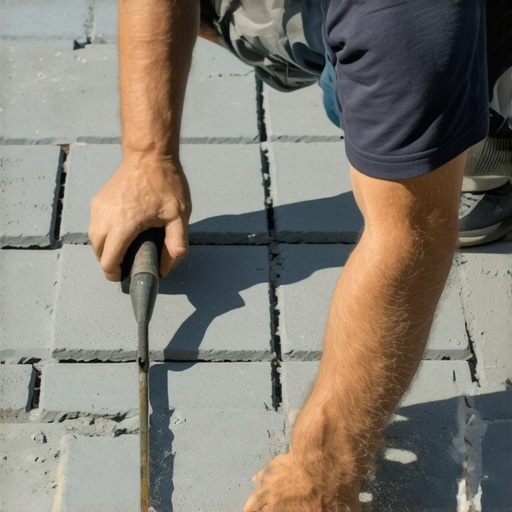
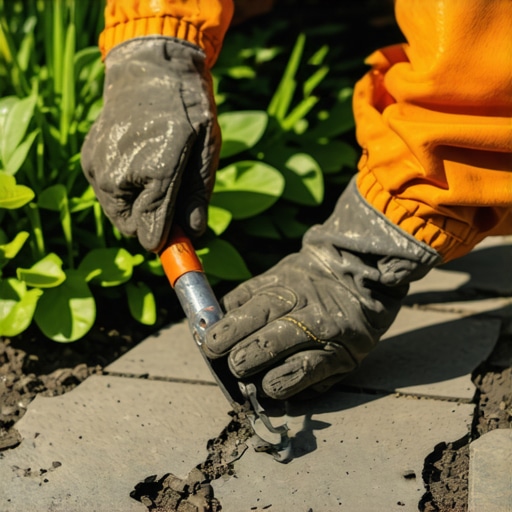
First, remove the loose stone and all surrounding jointing material. Do not use a screwdriver; use a narrow masonry chisel. You need to see the ‘bed.’ If the sand underneath is wet and mushy, it’s contaminated with soil. Dig it out. You need to reach the structural gravel. If there is no gravel, you are fighting a losing battle against frost heave. In regions with freeze-thaw cycles, the ground expands. Without a gravel ‘cushion’ to absorb that movement, the stones will pop every spring.
- Clear the Bed: Remove 2 inches of old material below the stone’s bottom surface.
- Leveling: Add 1 inch of fresh, dry bedding sand. Use a small scrap of wood to screed it perfectly flat.
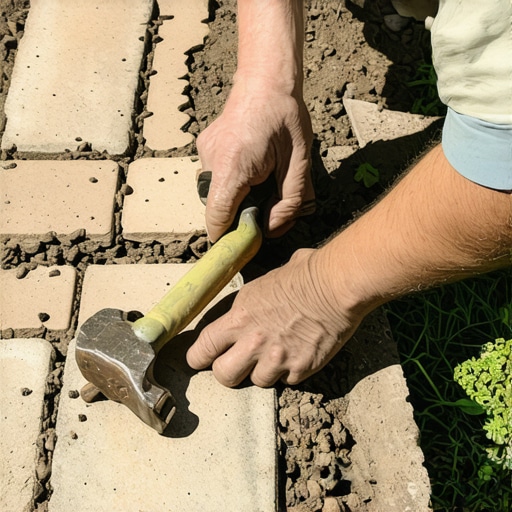
- Set the Stone: Place the stone and use a dead-blow rubber mallet. Hit it dead center, then work toward the edges.
- Check the Grade: Use a 4-foot level. Ensure a 1/8-inch pitch per foot away from the house foundation.
- Jointing: Use a high-quality polymeric sand with G3 technology. It contains long-chain polymers that remain flexible but resist wash-outs.
“Soil moisture tension and capillary action are the primary drivers of sub-grade instability in residential hardscapes.” – Penn State Agricultural Extension
Advanced Polymeric Chemistry in 2026
The industry has moved beyond basic sand and glue. Modern polymeric jointing compounds are now vapor-permeable. This means they allow the sub-base to ‘breathe,’ letting moisture evaporate rather than trapping it underneath where it can freeze. When applying these, the stone must be 100% dry. If there is a hint of moisture on the surface, the polymers will activate prematurely and leave a white, hazy film called efflorescence. It is nearly impossible to remove without caustic acids. Be patient. Wait for a two-day dry window. Sweep the sand in, then use a backpack blower on idle to remove every single grain of dust from the stone surface before you mist it with water. Mist, don’t soak. You want to trigger the chemical bond, not wash the glue to the bottom of the joint.
The Maintenance Schedule for Hardscape Longevity
A walkway is a living engineering project. Check your joints every spring. If you see cracks, top them off immediately. Letting a crack sit for a season allows thousands of gallons of runoff to undermine your base. Avoid using rock salt in the winter. The sodium chloride penetrates the pores of natural flagstone (especially bluestone or limestone) and causes spalling, where the top layers of the stone flake off. Use calcium magnesium acetate (CMA) instead. It’s more expensive, but so is replacing a walkway. Keep your lawn edges trimmed back; grass roots will find their way into the joints and exert enough pressure to shift a 100-pound stone. Landscaping isn’t a one-time event. It’s a discipline.