![4 Tactics to Stop 2026 Boxwood Root Rot [Tested]](https://lawnmajesty.com/wp-content/uploads/2026/04/4-Tactics-to-Stop-2026-Boxwood-Root-Rot-Tested.jpeg)
The first thing you notice is not the yellowing leaves. It is the smell. It is a sour, swamp-like odor that hits you when you peel back the heavy, water-logged mulch from the base of a failing shrub. You see the Buxus sempervirens leaves turning a sickly bronze, then straw-colored, but the real crime is happening six inches underground. As a landscaper with two decades in the trenches, I have seen thousands of boxwoods die because people treat them like plastic decorations rather than living, breathing organisms. Root rot, specifically from the Phytophthora and Pythium genera, is becoming more aggressive as we head toward 2026 due to shifting precipitation patterns and compacted suburban soils. This is not a matter of a few yellow leaves; it is a structural failure of the plant’s vascular system. When you pull up a diseased boxwood, the roots do not snap. They slough off. The outer cortex slides away from the white vascular core like a wet noodle. That is the visual of a landscape in systemic collapse.
“A retaining wall doesn’t fail because of the stone; it fails because of the water trapped behind it.” – Hardscape Engineering Axiom
I always drill into my new crew members: if you don’t fix the soil grading first, every plant you put in the ground is just expensive compost. I remember a project in a high-end development where the homeowner had spent six figures on masonry, but the hardscape crew had graded the entire limestone patio to drain directly into a 40-foot row of English Boxwoods. Within one season, the soil was an anaerobic soup. The roots were literally suffocating in standing water because the clay content was so high it acted like a bathtub. We had to rip out $15,000 worth of plant material, excavate two feet down, and install a dedicated drainage system before a single new plant could go in. It was a brutal lesson in physics. Biology always loses to bad engineering.
Understanding the 2026 Pathogen Landscape
To stop 2026 boxwood root rot, you must understand that Phytophthora pathogens thrive in saturated soils where drainage is compromised. Identifying the symptoms early, such as leaf bronzing and root necrosis, allows for cultural interventions and systemic fungicide applications that prevent the total collapse of the shrub’s vascular system.
The pathogens we are dealing with are zoospores. These are microscopic organisms that literally swim through the film of water in your soil. In the heavy clay soils common in many residential developments, water molecules cling to the soil particles, leaving no room for oxygen. This is where the disaster starts. Boxwood roots require a gas exchange. When the soil is saturated for more than 24 to 48 hours, the root cells begin to die from lack of oxygen. This cellular death releases sugars that act as a dinner bell for Phytophthora. It is a biological ambush. By the time you see the top of the plant wilting, the root system is likely 60 percent necrotic. You cannot fix that with a garden hose or a bag of 10-10-10 fertilizer. You have to change the environment.
Tactic 1: Engineering the Hydraulic Exit
Stopping root rot requires grading the soil to a 2 percent slope away from the root ball to prevent water pooling. Installing French drains or perforated PVC pipes ensures that excess moisture is diverted from the rhizosphere, maintaining the critical oxygen-to-water ratio needed for root health.
If your soil feels like sponge three hours after a rain, your grade is wrong. In my firm, we use a laser level for every planting bed. We are looking for that 2 percent fall. If we can’t get it naturally, we build up. We create “micro-mounds” using a 50/50 mix of native soil and coarse, unscreened sand. This raises the root flare of the boxwood above the surrounding grade. This ensures that even in a torrential 2026 downpour, the crown of the plant stays dry. We also utilize 4-inch perforated pipes wrapped in a silt sock, buried in a trench of 3/4-inch clean stone. This isn’t just landscaping; it is civil engineering for your garden. If the water has nowhere to go, it will stay and kill your plants. Every single time.
How do I know if my boxwood has root rot or just needs water?
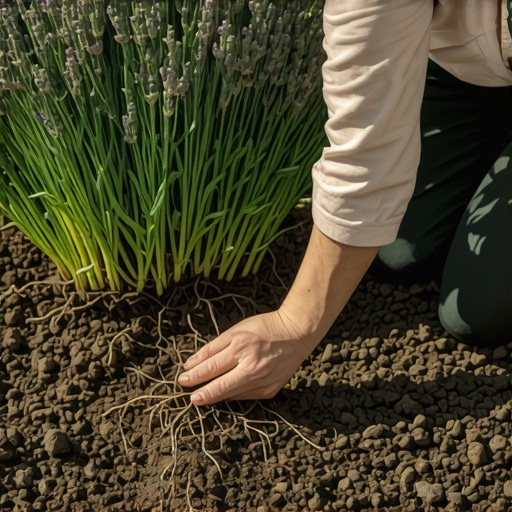
This is the most common mistake homeowners make. A plant with root rot wilts because its roots are dead and cannot move water, so it looks thirsty. However, if you add more water, you accelerate the rot. To tell the difference, dig a small hole 4 inches deep near the drip line. If the soil is soaking wet and the plant is wilting, it is root rot. If the soil is bone dry and dusty, it is drought stress. Also, check the root color. Healthy roots are white or light tan; rotted roots are dark brown, black, and slimy.
Tactic 2: Restoring Rhizosphere Equilibrium
To combat soil pathogens, you must introduce beneficial mycorrhizal fungi and Trichoderma species into the rhizosphere to outcompete Phytophthora. These biological controls create a protective barrier around the root system, improving nutrient uptake and increasing the plant’s natural resistance to fungal infections.
The soil is not just dirt; it is a battlefield. In a healthy forest, boxwoods would have a symbiotic relationship with fungi. In a sterilized, over-fertilized suburban lawn, that biology is gone. We use high-grade mycorrhizal inoculants during every installation. We want these beneficial fungi to colonize the root surface before the pathogens arrive. Furthermore, we avoid high-nitrogen synthetic fertilizers. Fast, succulent growth caused by high N-P-K ratios is weak. It has thin cell walls that are easily penetrated by fungi. We prefer slow-release organic matter that feeds the soil, not just the plant. We aim for a soil pH between 6.5 and 7.2. If the pH drops too low, the boxwood becomes stressed, and stress is the precursor to infection.
“Phytophthora root rot is often called the ‘silent killer’ because by the time the canopy shows stress, 70% of the root system is already necrotic.” – Penn State Extension
Tactic 3: Root Flare Exposure and Mulch Physics
Preventing boxwood root rot involves keeping the root flare visible above the mulch line to allow for gas exchange. Applying only 2 inches of hardwood mulch while keeping it 3 inches away from the main stem prevents excessive moisture retention and bark decay at the base.
I see “mulch volcanoes” everywhere, and they make my blood boil. People pile mulch six inches deep against the trunk of the boxwood. This creates a dark, moist environment that is a breeding ground for rot. The bark on the trunk is not designed to be submerged in wet mulch. It will rot, and the fungal pathogens will enter the plant’s vascular system directly through the stem. We use a “donut” method. Two inches of mulch out at the drip line, tapering down to zero as you get to the trunk. You should be able to see where the trunk flares out into the roots. If it looks like a telephone pole sticking out of the ground, it is planted too deep. Fix it now or buy a replacement next year.
Tactic 4: Chemical Suppression and Systemic Defense
Using systemic fungicides containing Mefenoxam or Phosphite provides a chemical shield against 2026 root rot strains when used as a soil drench. These treatments should be applied during peak moisture seasons in the spring and fall to suppress pathogen populations before they reach critical thresholds.
While I prefer cultural controls, sometimes you need the heavy artillery. For high-value boxwood hedges, we run a preventative program. We use Phosphite drenches (like Agri-Fos) twice a year. Phosphites are unique because they are systemic; the plant absorbs them and moves them down into the roots. They don’t just kill the fungus; they stimulate the plant’s own immune response, a process called Systemic Acquired Resistance (SAR). It is essentially a vaccine for your hedge. However, chemicals are not a substitute for drainage. If your boxwoods are sitting in a pond, no amount of Mefenoxam will save them. You have to fix the water first.
What is the best fungicide for boxwood root rot?
For residential use, products containing Phosphorous acid (Phosphites) are the most effective and safest for the environment. For professional-grade intervention, Mefenoxam (found in Subdue MAXX) is the gold standard for controlling Phytophthora and Pythium. Always follow the label precisely. More is not better; it can lead to chemical burn or pathogen resistance.
| Boxwood Variety | Root Rot Resistance | Ideal Soil Type |
|---|---|---|
| Buxus microphylla ‘Little Missy’ | High | Well-drained Loam |
| Buxus sempervirens ‘Dee Runk’ | Moderate | Sandy Loam |
| Buxus x ‘Green Mountain’ | Low | Loam with 2% Slope |
| Buxus microphylla ‘Winter Gem’ | High | Amended Clay |
- Inspect plants weekly for any leaf bronzing or tip dieback.
- Check soil moisture levels with a 6-inch probe before watering.
- Clear all debris and fallen leaves from the center of the shrubs to increase airflow.
- Sanitize all pruning tools with 70% isopropyl alcohol between every single plant.
- Apply a thin layer of compost tea in early spring to boost microbial life.
Landscape management is a game of inches and percentages. You don’t lose a boxwood hedge overnight; you lose it through a hundred small mistakes in grading, planting depth, and irrigation timing. If you follow these four tactics, you aren’t just gardening. You are performing biological engineering to ensure your landscape survives the challenges of the coming years. Keep the roots dry, keep the flares visible, and keep your tools clean. It is as simple and as difficult as that.
![Stop Killing Your 2026 Boxwoods with 3 Root Rot Fixes [Zone 7]](https://lawnmajesty.com/wp-content/uploads/2026/04/Stop-Killing-Your-2026-Boxwoods-with-3-Root-Rot-Fixes-Zone-7.jpeg)

![Stop Killing Heat-Stressed Hydrangeas: 3 Watering Fixes [2026]](https://lawnmajesty.com/wp-content/uploads/2026/04/Stop-Killing-Heat-Stressed-Hydrangeas-3-Watering-Fixes-2026.jpeg)
This post really drives home how critical proper soil grading and drainage are for the health of boxwoods, especially as climate patterns shift and new challenges like root rot become more prevalent. I’ve seen projects where poor surface grading led to standing water around the roots, and it’s clear that effective landscape engineering can make or break plant survival. I appreciate the emphasis on biological controls like mycorrhizal fungi and fungi inoculants — I’ve had good success with these in my own work to strengthen plant resilience naturally. The tip about keeping the root flare visible and mulch properly applied is something I’ve also practiced, and it consistently prevents bark decay issues. Has anyone tried combining systemic fungicide application with biological treatments for added protection? I wonder if integrating both approaches enhances overall resistance without relying solely on chemicals.