Why slate is a risky choice for wet patios
Why Slate is a Risky Choice for Wet Patios
I recently got called out to tear up a $30,000 patio that was sinking and delaminating because the previous contractor didn’t understand the basic geology of the stone he sold the homeowner. The client wanted a high-end look, but within two seasons, the slate was popping off in thin shards and the surface was a literal ice rink every time it rained. This wasn’t a failure of the stone’s beauty; it was a failure of engineering. If you are considering slate for a wet area, you are fighting a battle against physics and chemistry that you will likely lose.
The Structural Porosity and Delamination Risks of Slate
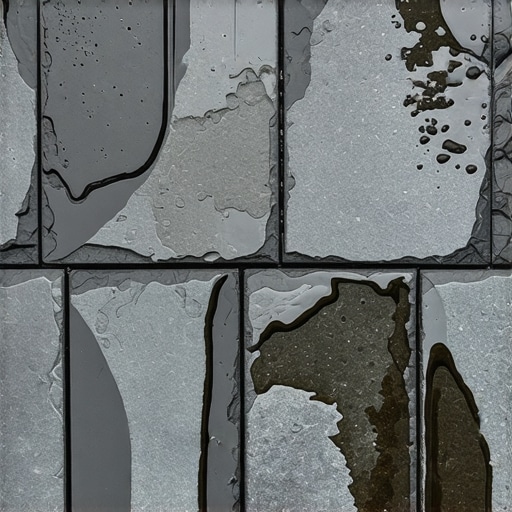
Slate is a metamorphic rock formed from shale that is highly prone to delamination and spalling when exposed to frequent moisture and freeze-thaw cycles. Because it is a foliated stone, water penetrates its micro-layers, causing internal pressure that forces the stone to split, crack, and flake, eventually compromising the structural integrity of the entire patio surface.
How Water Physics Destroys Slate Layers
When we talk about slate, we are talking about planes of cleavage. This is a stone built like a stack of paper. In a wet environment, capillary action draws water into these microscopic gaps. If you live in a climate with any temperature fluctuation, that water expands as it nears the freezing point, exerting thousands of pounds of pressure per square inch from the inside out. I have seen 2-inch thick slabs reduced to potato chips because the installer didn’t account for the absorption rate. Unlike granite or high-density sandstone, slate’s mineral composition often includes iron sulfides. When these get wet, they oxidize. That means your expensive patio starts bleeding rust streaks that no chemical cleaner can truly erase. It is a chemical decay that starts at the molecular level. Don’t ignore the ASTM C97 standards for water absorption. Most slate falls into a category that makes it a liability in poorly drained areas.
“The presence of pyrite or other iron sulfides in slate can lead to significant staining and structural decay when exposed to persistent moisture.” – National Building Stone Institute Manual
The Physics of Friction: Why Slate is a Liability
Wet patios must maintain a specific Coefficient of Friction (COF) to be safe for foot traffic. Slate, particularly when honed or naturally smooth, has a notoriously low COF when wet. Algae and biofilm thrive in the moist, shaded crevices of cleft-finish slate. This creates a biological lubricant. You aren’t just walking on stone; you are walking on a layer of wet microorganisms. In my 20 years of hardscaping, I’ve seen more slip-and-fall incidents on slate than on any other natural material. If the patio doesn’t have a 2% minimum slope to shed water immediately, it becomes a hazard.
Comparative Material Performance for Wet Environments
Selecting the right material requires looking at the data, not the brochure. This table compares slate against industry standards for wet-area performance.
| Material Type | Water Absorption Rate | Slip Resistance (Wet) | Durability (Freeze-Thaw) | Maintenance Level |
|---|---|---|---|---|
| Natural Slate | High (0.5% – 3%) | Low/Dangerous | Poor (Spalling risk) | High |
| Full-Color Bluestone | Moderate (0.1% – 1%) | High (Thermal finish) | Excellent | Moderate |
| Porcelain Pavers | Very Low (<0.05%) | High (R11 Rating) | Impervious | Low |
| Concrete Pavers | Low (Approx 3%) | Moderate/High | Good | Low |
Is slate too slippery for a patio?
Slate is significantly more slippery than other natural stones because its fine-grained surface and low porosity prevent water from dispersing, creating a thin film that reduces traction. For wet patios, a stone with a thermal or sandblasted finish is required to ensure a safe Coefficient of Friction of 0.60 or higher.
Does slate absorb water?
Slate absorbs water through capillary action along its foliation planes, leading to subsurface saturation. Over time, this moisture causes efflorescence (salt deposits) and spalling, where the surface layers of the stone literally peel away from the main body, especially in freeze-thaw climates.
The Engineering Checklist for Patio Success
- Verify Soil Compaction: Ensure the subgrade is compacted to at least 95% Proctor density to prevent stone snapping.
- Install a True Base: Use 6 inches of 3/4-inch modified crushed stone, not just
![Build a $400 Flagstone Walkway in One Weekend [DIY]](https://lawnmajesty.com/wp-content/uploads/2026/06/Build-a-400-Flagstone-Walkway-in-One-Weekend-DIY.jpeg)